How to Read Cat Food Labels: Decoding Pet Food Marketing Claims
Decode cat food labels in five steps: ingredient splitting, the 95% and 25% naming rules, guaranteed analysis, AAFCO statements and unregulated marketing words.
By the Cleos team · 10 August 2026 · 9 min read
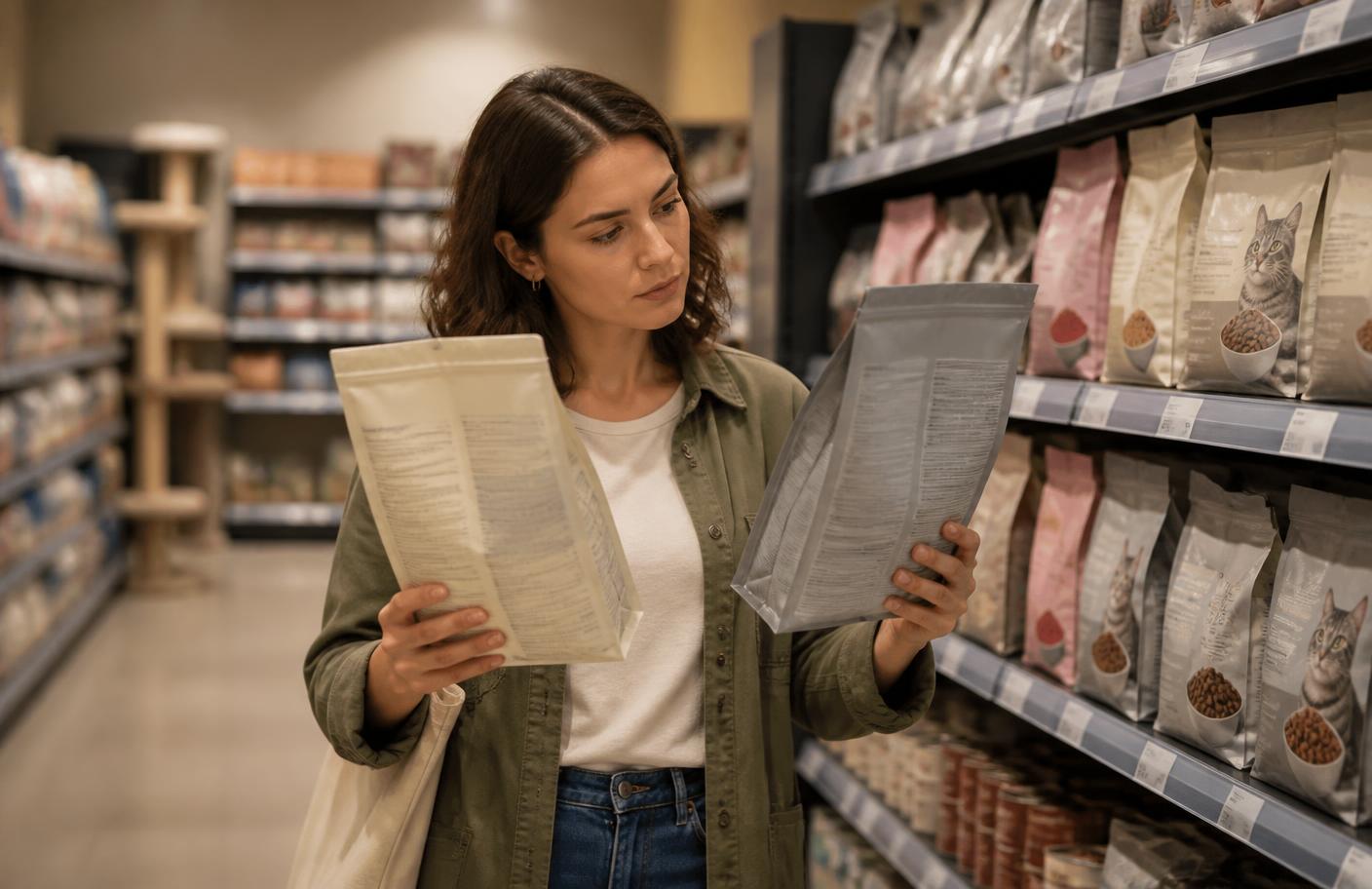
Choosing the right food for your cat often feels like navigating a minefield of glossy photography and confusing technical jargon. While the front of the pack promises "premium nutrition" and "gourmet flavours," the real story is hidden in the fine print on the back.
In short: Effective cat food label reading requires looking past unregulated marketing buzzwords to scrutinise the specific order of ingredients, the AAFCO nutritional adequacy statement, and the moisture-adjusted protein levels.
The Psychology of the Front Label: Marketing vs. Reality
When you walk down the pet food aisle in an Indian supermarket or browse online, you are bombarded with images of fresh salmon fillets and whole chicken breasts. However, many of these visual cues are governed by marketing psychology rather than nutritional science. Terms like "Premium," "Super-Premium," "Holistic," and "Gourmet" are currently unregulated in the pet food industry. This means any brand can use them regardless of the quality of the ingredients inside.
Another common term is "Human-grade." While it sounds reassuring, for a product to truly be human-grade, every ingredient must be edible for humans and the product must be manufactured, packed, and held in accordance with federal regulations for human food. Most commercial cat foods do not meet these rigorous standards, even if they use the term loosely. As a cat parent, your focus should shift from these decorative adjectives to the mandatory information required by regulatory bodies like AAFCO (Association of American Feed Control Officials).
Decoding the Naming Rules: The 95%, 25%, and 'With' Rules
The way a product is named is perhaps the most strictly regulated part of the label. Understanding these rules helps you identify exactly how much of a specific protein you are paying for.
The 95% Rule (The "Chicken Cat Food" Rule)
If a label says "Chicken Cat Food" or "Tuna for Cats," the named ingredient (chicken or tuna) must make up at least 95% of the total product by weight, excluding water added for processing. If you count the water, the named ingredient must still account for 70% of the product. This is the highest standard for meat content.
The 25% Rule (The "Dinner" or "Entrée" Rule)
If the label includes descriptive terms like "Dinner," "Platter," "Entrée," or "Formula," the named ingredient only needs to make up 25% of the product (excluding water). For example, "Chicken Dinner for Cats" may contain significantly less chicken than "Chicken Cat Food."
The "With" Rule (The 3% Rule)
This is where many cat parents get caught out. A label that reads "Cat Food with Salmon" only requires that salmon makes up 3% of the total weight. The difference between "Salmon Cat Food" (95%) and "Cat Food with Salmon" (3%) is enormous, yet the packaging often looks similar.
The "Flavour" Rule
If a product is labelled "Tuna Flavour," there is no minimum percentage of tuna required. It only needs to contain an amount sufficient to be detected by the cat, often achieved through digests or synthetic flavourings. When choosing Cleos, you’ll notice we focus on real named ingredients rather than these ambiguous naming conventions.
The Ingredient List: Ordering and Splitting
By law, ingredients must be listed in descending order of weight before cooking. This sounds straightforward, but manufacturers often use "ingredient splitting" to make a product look better than it is.
The Problem with Ingredient Splitting
Imagine a cat food that is primarily corn, but the manufacturer wants chicken to appear first. They might list "Chicken" as the first ingredient, followed by "Corn Gluten Meal," "Ground Corn," and "Corn Flour." Because the corn has been split into three categories, each individual corn component weighs less than the chicken. However, if you added all the corn together, it would far outweigh the meat.
Real Meat vs. Meat Meal
Seeing "Chicken" as the first ingredient is excellent, but remember that fresh meat is about 75% water. During the high-heat extrusion process used to make kibble, that water is lost, meaning the actual protein content is much lower than it appeared on the raw ingredient list.
Conversely, meat meal (like chicken meal) is meat that has been rendered and dried. It is a concentrated protein source. However, "meat meal" or "poultry meal" is an anonymous term. You should always look for "named" meals like "Chicken Meal" or "Lamb Meal." To understand why specific naming matters, read our guide on The Science Behind Named Ingredients vs Mystery Meat in Cat Treats.
Understanding By-Products and Fillers
The term "by-products" often scares cat owners, but it requires nuance. By-products are the non-muscle parts of an animal, such as organs (liver, kidneys, heart). In the wild, cats eat these first because they are nutrient-dense. The issue arises when the source is unnamed (e.g., "Meat By-products") or when the product relies too heavily on low-quality "fillers" like wheat, soy, or cellulose to bulk out the calories.
If you are concerned about what goes into your cat's bowl, you might want to review our checklist on Harmful Ingredients to Avoid in Cat Food or learn about the prevalence of Fillers in Premium Cat Treats.
Want to move away from mystery ingredients and fillers? Join the Cleos waitlist today for treats made with real chicken and tuna. Sign up for the waitlist here.
The Guaranteed Analysis: Doing the Math
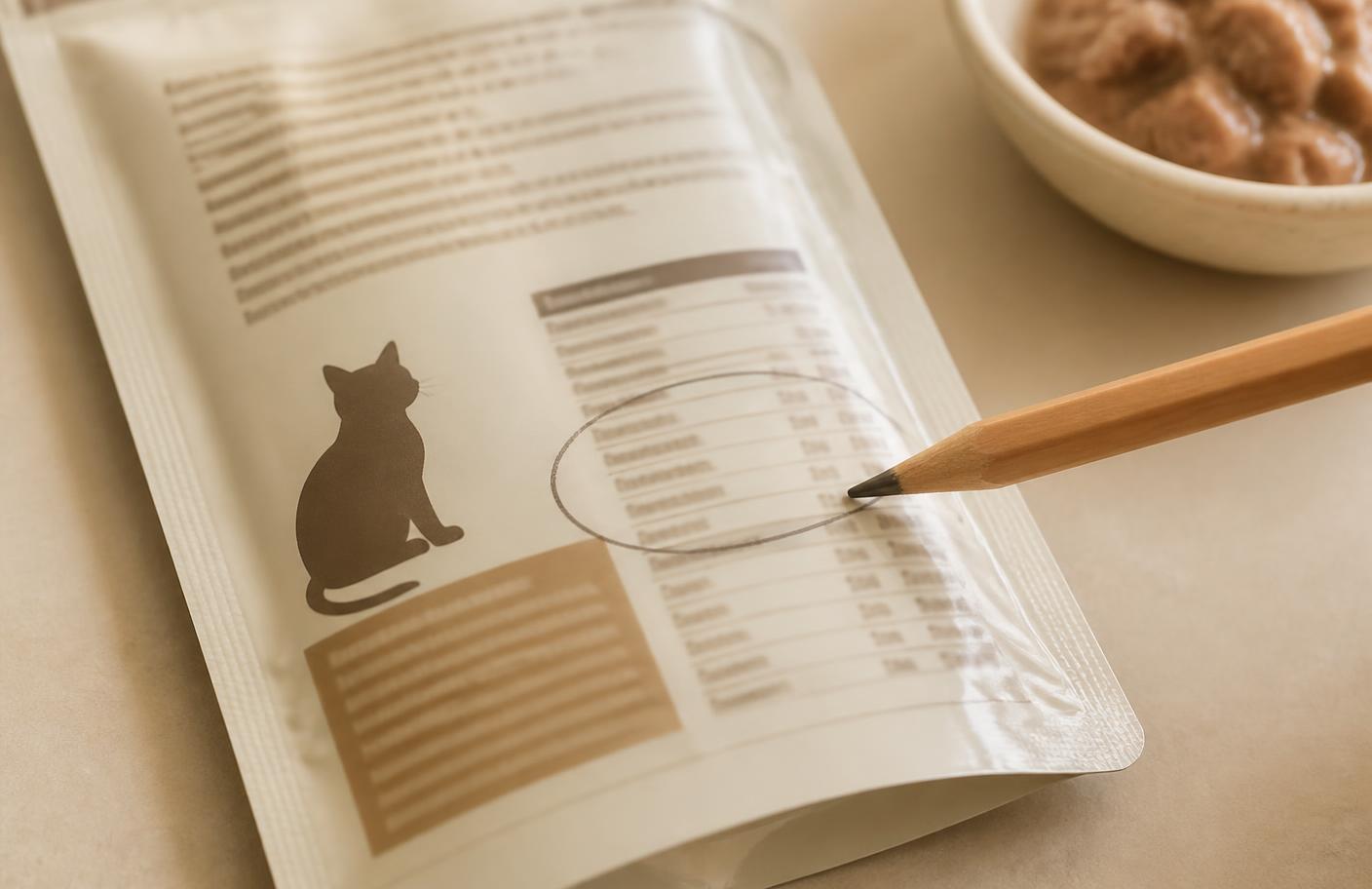
The Guaranteed Analysis table provides the minimum percentages of crude protein and crude fat, and the maximum percentages of crude fibre and moisture. However, these numbers are misleading when comparing wet food to dry food because of the water content.
To compare them accurately, you must convert the numbers to a "Dry Matter Basis" (DMB). DMB Calculation:
- Subtract the moisture percentage from 100 to get the total dry matter.
- Divide the listed protein percentage by the dry matter percentage.
- Multiply by 100.
| Nutrient | Wet Food (As Fed) | Dry Food (As Fed) |
|---|---|---|
| Crude Protein | 10% | 30% |
| Moisture | 80% | 10% |
| Protein (Dry Matter) | 50% | 33.3% |
In this example, the wet food actually contains significantly more protein than the dry food once the water is removed. For a deeper dive into these numbers, see The Complete Guide to Protein Content in Cat Treats.
AAFCO Nutritional Adequacy: The "Gold Standard" Statement
Somewhere in the small print, you will find a statement that says the food is "complete and balanced." This is the most important sentence on the label.
- Complete and Balanced: This means the food contains all the nutrients a cat needs in the correct proportions. It must also specify the life stage: "Adult Maintenance," "Growth and Reproduction" (for kittens and pregnant cats), or "All Life Stages."
- Intermittent or Supplemental Feeding: If the label says this, the food is not a complete meal. It is a treat or a topper. Feeding this as a primary diet will lead to severe nutritional deficiencies.
Cleos treats are designed for supplemental feeding—they are high-protein rewards meant to complement a balanced diet, providing the hydration and taste cats crave without the fillers found in many commercial treats.
5-Step Label Walkthrough: How to Vet Your Cat's Food
Follow these five steps every time you pick up a new bag or tin of cat food:
- Check the first three ingredients: In a high-quality food, at least two of these should be a named meat source (e.g., "Tuna" or "Chicken"). Avoid products where the first ingredient is a carbohydrate like corn or wheat.
- Look for "Named" Proteins: Avoid "Meat Meal," "Animal Fat," or "Poultry Digest." You want to see "Chicken Fat" or "Salmon Meal."
- Find the AAFCO Statement: Ensure it matches your cat's life stage. A kitten should not be eating "Adult Maintenance" food as it lacks the necessary nutrients for growth.
- Identify Fillers and Additives: Scan for artificial colours (like Red 40), chemical preservatives (BHA, BHT, Ethoxyquin), and excessive thickeners like Carrageenan. Learn more about Real Protein vs Meat Meal in Cat Treats.
- Examine the "Best Before" Date: Natural preservatives (like Vitamin E/Tocopherols) have a shorter shelf life than chemicals. A very long shelf life can sometimes be a red flag for heavy synthetic preservation.
Why "Lickable" Matters: Treats and Hydration
Brands such as Whiskas, Purina Friskies, Sheba, Temptations and Royal Canin all sell cat treats in India, ranging from hard kibble-style biscuits to wet pouches. Increasingly, cat parents are moving toward "lickable" formats. Because cats have a low thirst drive, getting moisture through their diet is crucial for kidney health.
Lickable treats serve a dual purpose: they are highly palatable for picky eaters and they provide a hydration boost. At Cleos, our formulations focus on real chicken and tuna in a smooth puree, avoiding the starches and sugars often used to bind dry treats. You can read more about this in our article on Why Cats Love Lickable Treats.
A Note on Sensitive Stomachs
If your cat frequently experiences digestive upset, the label becomes even more critical. Many cats are sensitive to the thickeners and gums (like guar gum or xanthan gum) used in wet foods. Looking for "Limited Ingredient" labels or treats with simple, whole-food compositions can help. For more advice, check out Best Cat Treat Ingredients for Sensitive Stomachs.
Ready to treat your cat to the gold standard of nutrition? Cleos is launching soon with a range of treats featuring real tuna, shrimp, and chicken. Join our exclusive waitlist here to be the first to know when we go live.
Explore more insights on the Cleos Blog.
Frequently Asked Questions
What does "crude" mean in crude protein?
"Crude" refers to the method of measuring the nutrient, specifically by measuring the nitrogen content. It doesn't refer to the quality of the protein. Because it measures nitrogen, it can sometimes be "fooled" by non-protein nitrogen sources, which is why checking the ingredient list for high-quality meat sources is just as important as the percentage.
Is "grain-free" always better for cats?
Not necessarily. Cats are obligate carnivores and don't need grains, but some "grain-free" foods replace wheat or corn with large amounts of peas, lentils, or potatoes, which are also high in carbohydrates. The goal should be high protein and low carbohydrates, regardless of whether the carbs come from grains or vegetables.
Why is moisture content so high in lickable treats?
Lickable treats often have 85-90% moisture. This is intentional. Cats naturally get their hydration from their prey. High-moisture treats help support urinary tract health and make the treat easy to digest. They are meant to be a hydrating reward, not a calorie-dense meal replacement.
Can I trust the "Vet Recommended" claim?
"Vet Recommended" is a marketing term with no legal definition. While many reputable brands are formulated based on veterinary research, the claim itself doesn't guarantee quality. Look for specific information, such as whether the recipe follows vet-reviewed formulation principles rather than just a generic seal.
What is the difference between "Chicken" and "Chicken Meal"?
"Chicken" refers to clean flesh and skin, containing high water weight. "Chicken Meal" is chicken that has been cooked and dried (rendered) to remove moisture, resulting in a concentrated protein powder. Both are good sources of protein, provided they are specifically named (e.g., not "Meat Meal").
How do I know if a treat is safe for my kitten?
Always check the label for the AAFCO statement. Most treats are for "intermittent or supplemental feeding" and are safe for kittens once they are weaned (around 8 weeks), but they should never exceed 10% of the kitten's daily caloric intake to avoid unbalancing their growth.
Keep Cleos close
Get more Cleos stories on Google
Add Cleos as a preferred source to make our cat care guides easier to find in Google.
Add to Preferred SourcesFound this useful? Share it
Treats worth reading the label for.
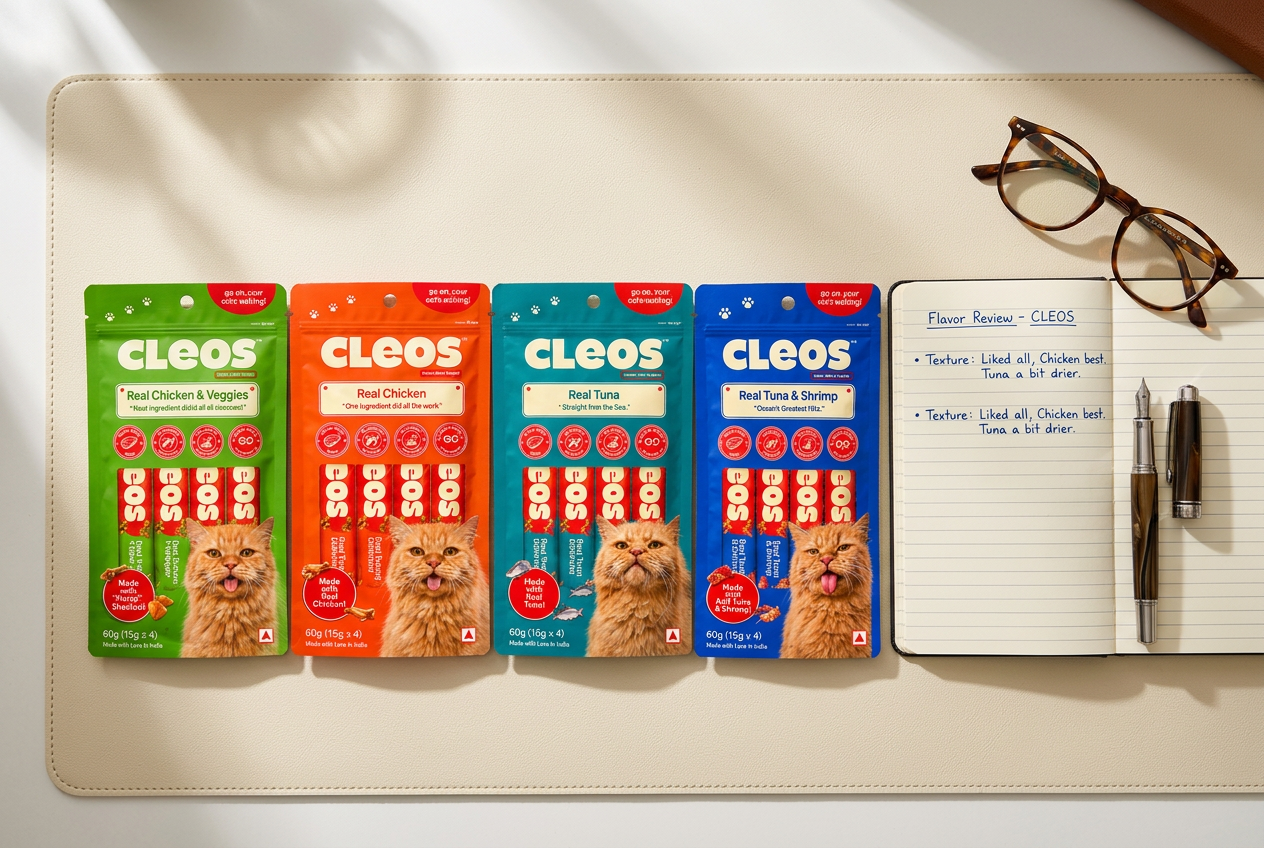
Cleos lickable treats are built on real, named ingredients — Real Chicken, Real Tuna, Tuna & Shrimp and Chicken & Veggies — with zero artificial fillers.
Join the Cleos waitlistKeep reading
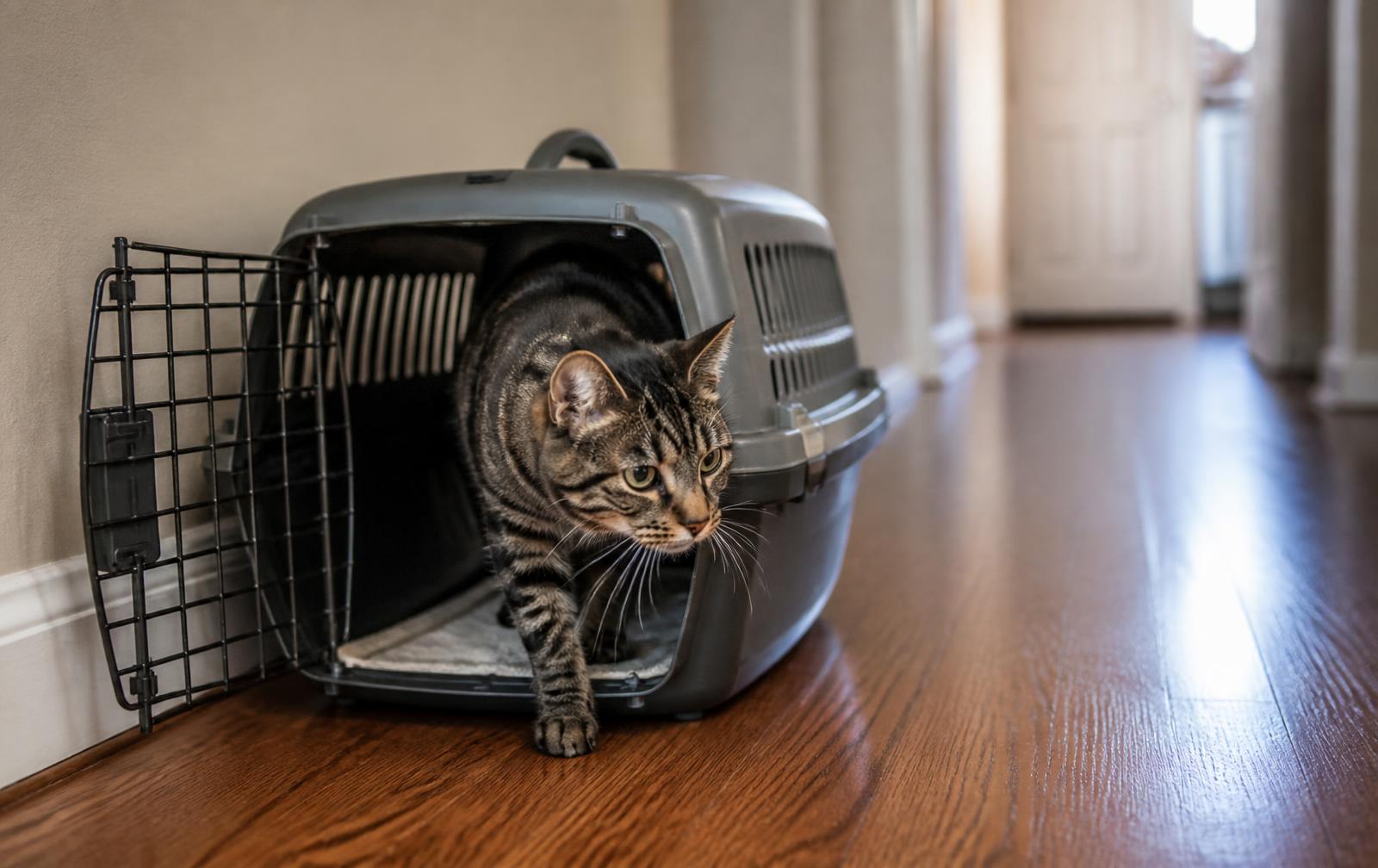
Travel Carriers and Cat Crates: Stress-Free Transport
Choose the right cat carrier or crate and learn practical tips for calmer vet visits, car trips, and moves with your feline companion.
Read more →
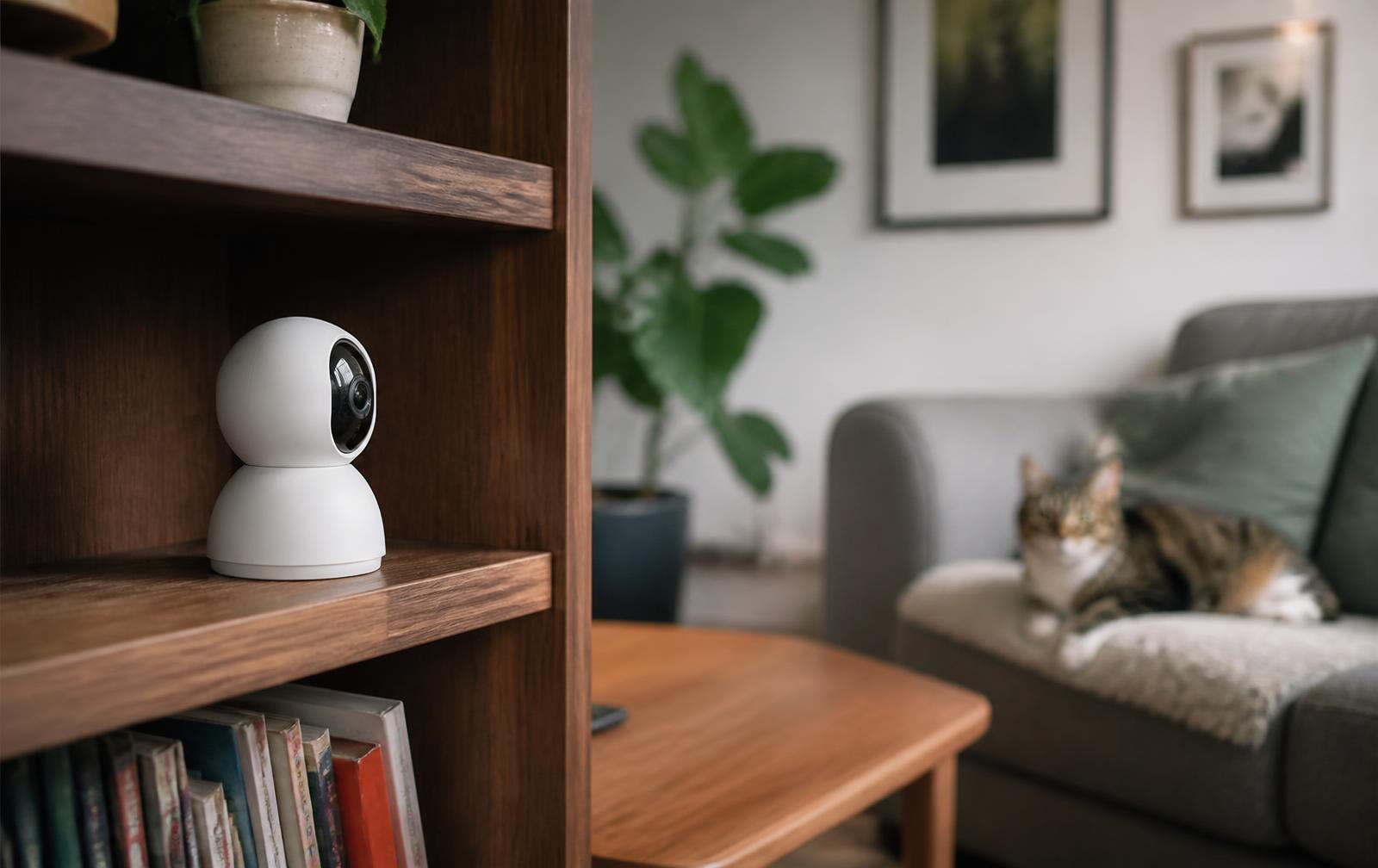
Pet Cameras and Monitoring: Tech for Checking on Your Cat
A practical guide to pet cameras and monitoring systems for cats, covering features, placement, and how to use them without over-worrying.
Read more →
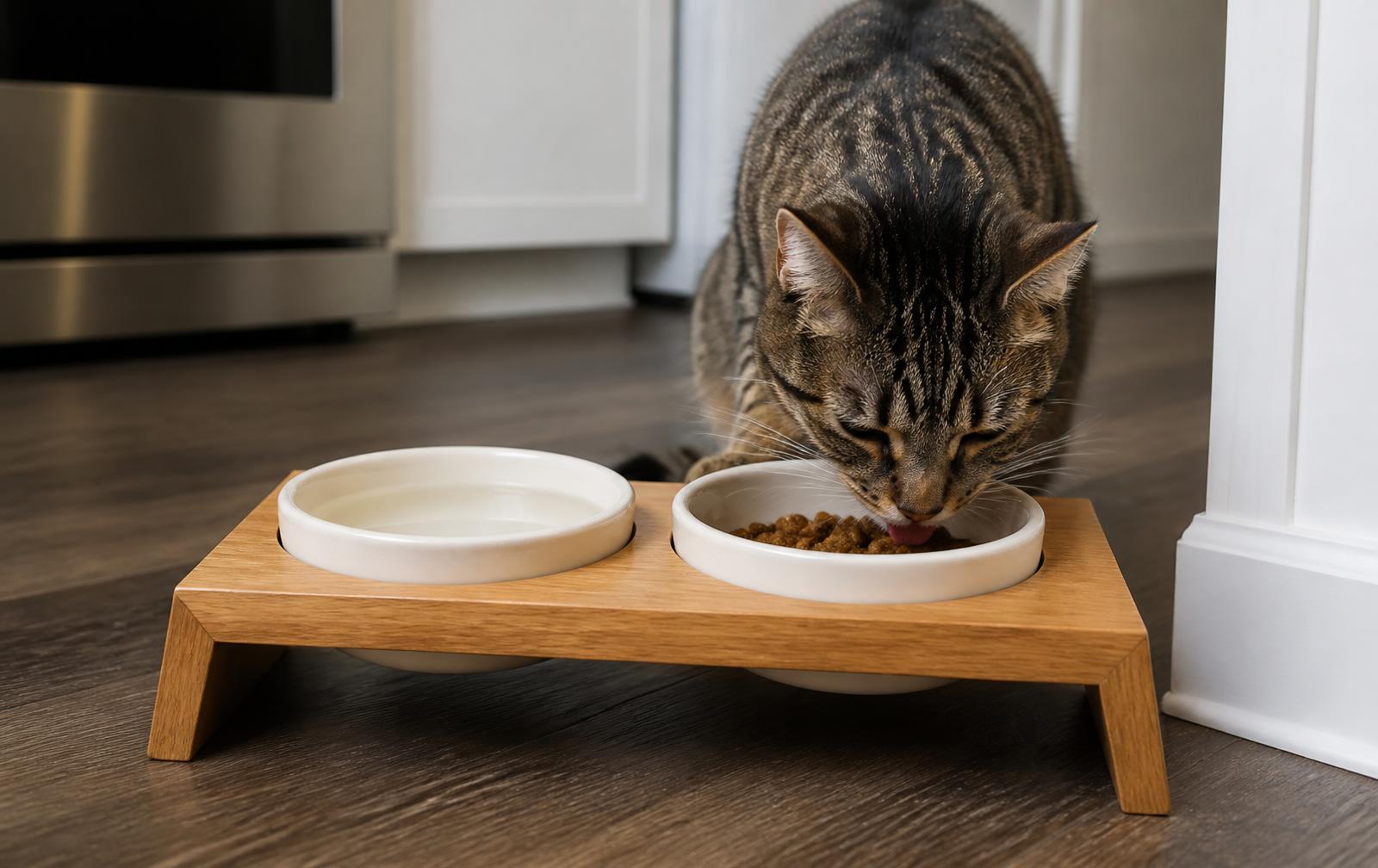
Food and Water Bowls: Material, Design, and Health Considerations
Compare cat food bowls and water bowls by material and design, including stainless steel bowls, to protect whisker health and hygiene.
Read more →