Clicker Training Your Cat: Step-by-Step Guide
Learn cat clicker training step by step, from charging the clicker to teaching sit and recall, with proven cat training methods and troubleshooting tips.
By the Cleos team · 22 March 2027 · 8 min read
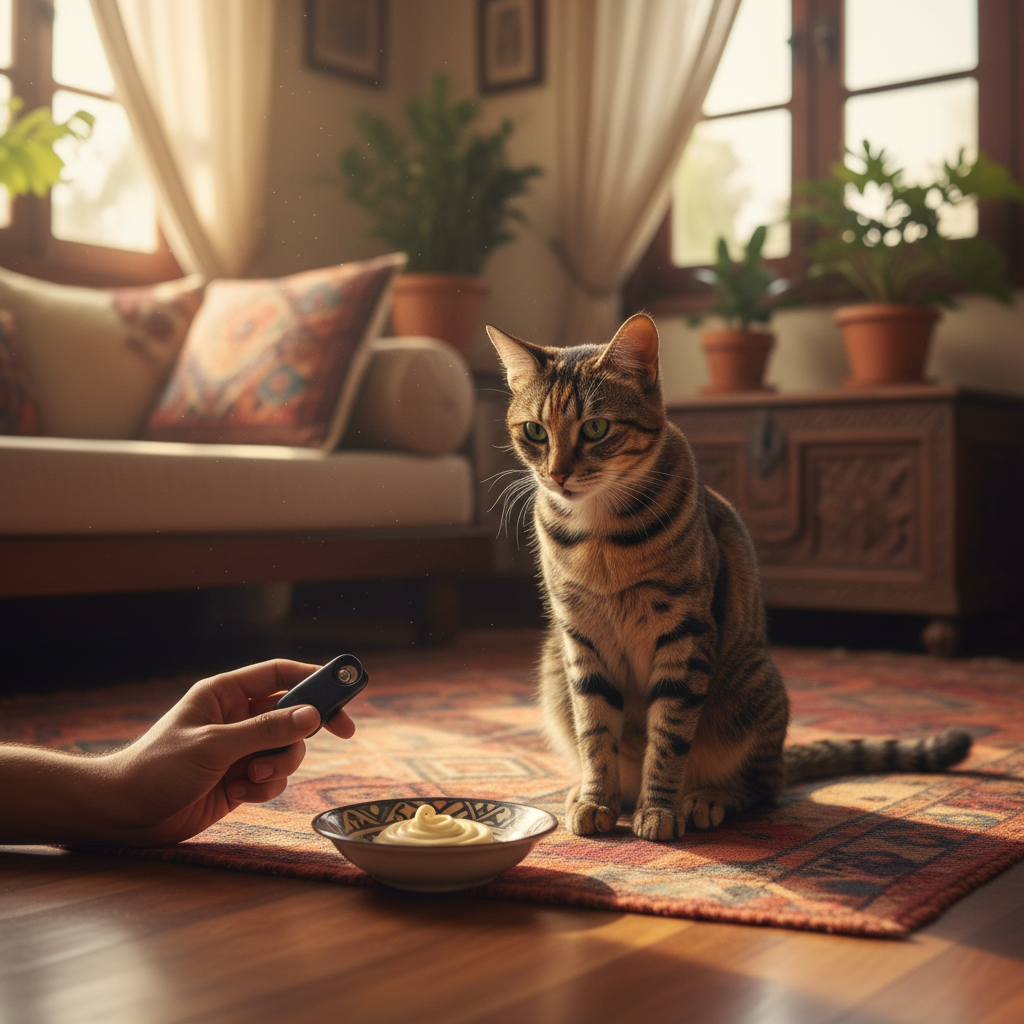
Cats have a reputation for being untrainable, wilful little creatures who do exactly as they please. Anyone who has tried clicker training a cat will tell you this reputation is undeserved. Cats learn extremely well when the method suits how they think, and clicker training, built on the same operant conditioning principles used with dolphins and dogs, works beautifully with feline brains too.
This guide walks through exactly how to start, from choosing your clicker to teaching your first few behaviours, and how to troubleshoot the common stumbling blocks. In short: clicker training uses a distinct sound to mark the precise moment your cat does something right, followed immediately by a reward, so your cat learns faster and with far less confusion than with praise alone. With patience, short sessions, and a treat your cat genuinely wants, most cats can learn to sit, target, high-five, or come when called within a few weeks.
Why Clicker Training Works So Well for Cats
Cats do not respond to correction-based training the way some other animals do. Punishing a cat for doing the "wrong" thing tends to create anxiety and damage trust rather than teach anything useful. Clicker training sidesteps this entirely because it is purely reward-based. You are not telling your cat what not to do, you are showing them precisely what earns a reward.
The clicker itself is simply a marker signal. It bridges the gap between the exact moment of the desired behaviour and the arrival of the treat, which might be a second or two later. Without a marker, your cat has to guess which part of what they just did earned the reward. The click removes the guesswork.
According to Cornell Feline Health Center, cats are highly capable learners and mental stimulation through training can meaningfully improve wellbeing, particularly for indoor cats. It is not just a party trick, it is enrichment.
What You Need to Get Started
- A clicker (a small plastic device that makes a sharp, consistent click) or a verbal marker word like "yes" if your cat is noise-sensitive
- Very high-value treats, cut small enough for many repetitions in one sitting
- A quiet room with minimal distractions
- Five to ten minutes at a time, ideally once or twice a day
- Patience and a willingness to end sessions on a success
Treat choice matters more than most guides admit. A treat that is merely acceptable will get a lukewarm response, but something genuinely exciting, like a lickable treat your cat cannot get enough of, keeps engagement high across a whole session. Many owners find that why cats love lickable treats so much makes them ideal for this kind of rapid, repeated rewarding, since your cat can get a taste in a second or two and be ready to try again. A tub of Cleos works nicely here precisely because it is quick to dispense and cats tend to find it worth working for.
Step One: Charge the Clicker
Before teaching any actual behaviour, you need your cat to understand that the click means "reward is coming." This is called charging the clicker.
Simply click once, then immediately give a treat. Repeat this ten to fifteen times across a short session, with no expectation of any particular behaviour from your cat. You will know the clicker is charged when your cat's head turns towards you or towards the treat hand the instant they hear the click.
Do this over one or two sessions before moving on. Rushing this step is the single most common reason clicker training stalls early on.
Step Two: Teach Targeting
Targeting is the foundation skill that makes almost everything else easier. You teach your cat to touch their nose to a target, usually your fingertip or a target stick (a chopstick or spoon works fine).
- Hold the target a couple of inches from your cat's nose
- The moment their nose touches or moves towards it, click and treat
- Gradually increase the distance they must move to reach the target
- Once reliable, add a verbal cue such as "touch"
Targeting is useful because you can then lure your cat into almost any position or through any obstacle just by moving the target, which makes teaching sit, spin, or even walking through a hoop far simpler.
Common Early Behaviours to Try
| Behaviour | How to Start | Typical Time to Learn |
|---|---|---|
| Touch (targeting) | Click the moment nose meets target | 2–4 sessions |
| Sit | Lure with target held above head, click when hindquarters lower | 3–6 sessions |
| High five | Click any paw lift, then shape towards touching your hand | 1–2 weeks |
| Come when called | Click and treat for approaching on a consistent cue word | 2–3 weeks |
| Spin | Lure in a circle with target, click on completion | 1–2 weeks |
Every cat learns at a different pace, and these are rough guides rather than guarantees. Some confident, food-motivated cats will fly through several behaviours in a single week, while a more cautious cat may need considerably longer, and that is entirely normal.
Building Up to Sit, Stay, and Beyond
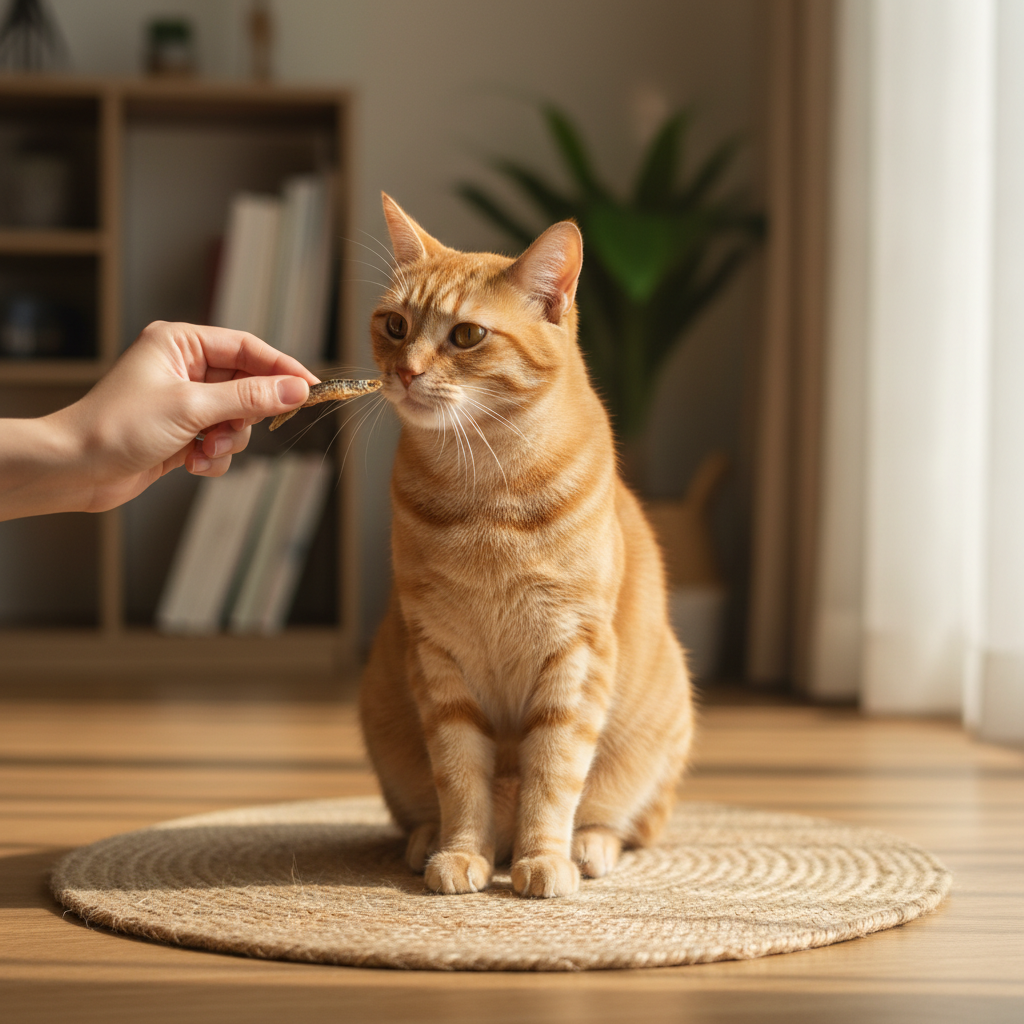
Once targeting is solid, sit becomes much easier. Hold the target just above and slightly behind your cat's head so that following it naturally tips their head back and lowers their bottom to the floor. Click the instant they sit, even briefly, then treat.
Stay is trickier for cats than for dogs, since cats are naturally less inclined to hold a static position for its own sake. Build it gradually by extending the pause between the sit and the click by a second at a time. Rushing this leads to frustration on both sides.
If you want to teach recall, or "come," pick a consistent word or sound (not the same word you would use to call them for dinner necessarily, though that can also work) and click and treat every single time they approach on cue, even from just a foot away at first.
Troubleshooting Common Problems
- My cat walks away mid-session. Sessions may be too long, or the treat isn't exciting enough. Shorten to two or three minutes and try a higher-value reward.
- My cat won't engage with the clicker sound. Some cats find the sharp click startling. Try a retractable pen click, a softer clicker, or a verbal marker instead.
- My cat only performs for treats and never generalises the behaviour. This is expected early on. Gradually thin out reinforcement once a behaviour is reliable, rewarding every second or third correct response rather than every single one.
- My cat gets frustrated and swats at my hand. Slow down. You may be asking for too much progress in one step. Break the behaviour into smaller pieces.
The ASPCA notes that patience and consistency are the two biggest predictors of success in any cat behaviour modification, and clicker training is no exception. Little and often beats long, infrequent sessions every time.
Keeping Sessions Fun and Sustainable
Training should never feel like a chore for your cat. Watch for early signs of disengagement, such as tail flicking, ears turning back, or simply walking off, and end the session before frustration sets in. Always try to finish on a successful repetition so the last thing your cat experiences is a win.
It also helps to rotate which behaviour you are working on across the week rather than drilling the same one every day. This keeps sessions mentally stimulating rather than repetitive, and mirrors advice from International Cat Care on providing varied enrichment for indoor cats.
If your cat seems to lose interest in treats generally partway through training, it may be worth reading about cat refuses to eat treats for possible underlying reasons, since a genuine drop in appetite or interest is sometimes a sign worth mentioning to your vet rather than purely a training issue.
A Note on Consistency Across the Household
If more than one person in your home is training the same cat, agree on the same cues and the same click-then-treat timing. Cats can become confused if one person clicks before treating and another delays, or if cue words differ. A shared one-page list of behaviours and their exact cues, stuck to the fridge, solves this quickly.
Training also pairs naturally with other bonding rituals. Many owners find it works well alongside a regular play or feeding routine, similar to the ideas discussed in bonding treat time rituals, where consistency of timing does much of the heavy lifting for building trust.
At Cleos, we hear from many customers that training sessions became one of the more enjoyable parts of their day with their cat, not just a means to an end. A cat who is mentally engaged and confidently working for a reward is often a calmer, more contented cat overall.
Frequently Asked Questions
How long does it take to clicker train a cat?
Most cats can learn a first simple behaviour, such as targeting, within a handful of short sessions over one to two weeks. More complex behaviours, or cats who are naturally more cautious, can take several weeks of consistent practice.
Do I need a special clicker device?
No. A dedicated clicker is convenient because its sound is sharp and consistent, but a verbal marker word or even a consistent tongue click works just as well provided you are consistent with it.
What if my cat is not food motivated?
Try different treat textures and flavours, and experiment with timing sessions before a meal rather than after one, when your cat is likely to be more motivated to work for a reward.
Can older cats learn clicker training?
Yes. Age is rarely a barrier to learning, though older cats or those with joint discomfort may need behaviours adapted, such as avoiding jumping-based tricks, and sessions may need to be gentler and shorter.
Is clicker training safe for anxious or nervous cats?
Generally yes, and it can even help build confidence, since the cat is always in control of whether to engage. Start with a very quiet setting, use a softer marker sound if the click seems to startle them, and keep early sessions extremely short.
If you would like more practical, vet-informed guidance on caring for your cat delivered straight to your inbox, along with early access to our treats, join the Cleos waitlist today.
Keep Cleos close
Get more Cleos stories on Google
Add Cleos as a preferred source to make our cat care guides easier to find in Google.
Add to Preferred SourcesFound this useful? Share it
Treats worth reading the label for.
Cleos lickable treats are built on real, named ingredients — Real Chicken, Real Tuna, Tuna & Shrimp and Chicken & Veggies — with zero artificial fillers.
Join the Cleos waitlistKeep reading
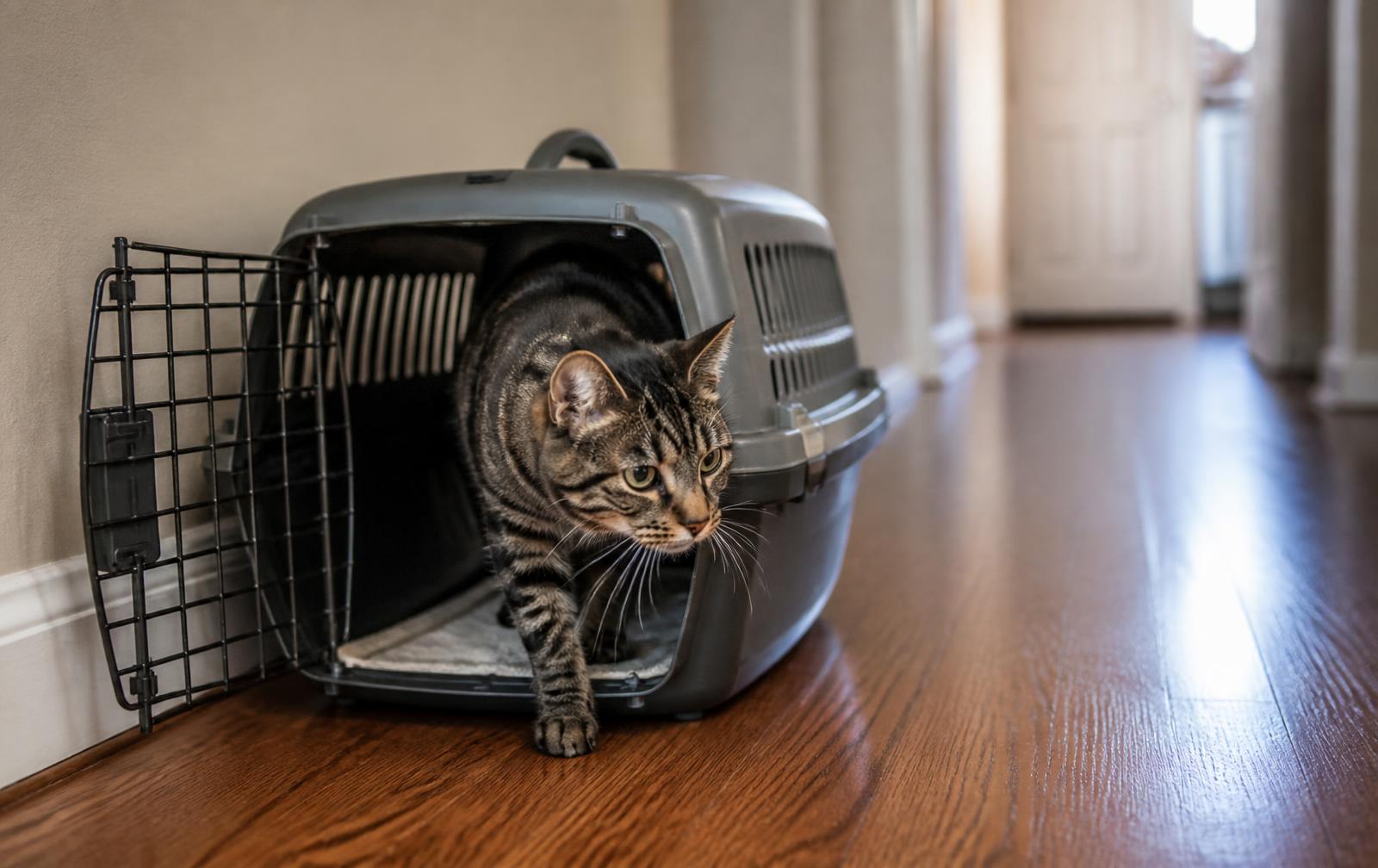
Travel Carriers and Cat Crates: Stress-Free Transport
Choose the right cat carrier or crate and learn practical tips for calmer vet visits, car trips, and moves with your feline companion.
Read more →
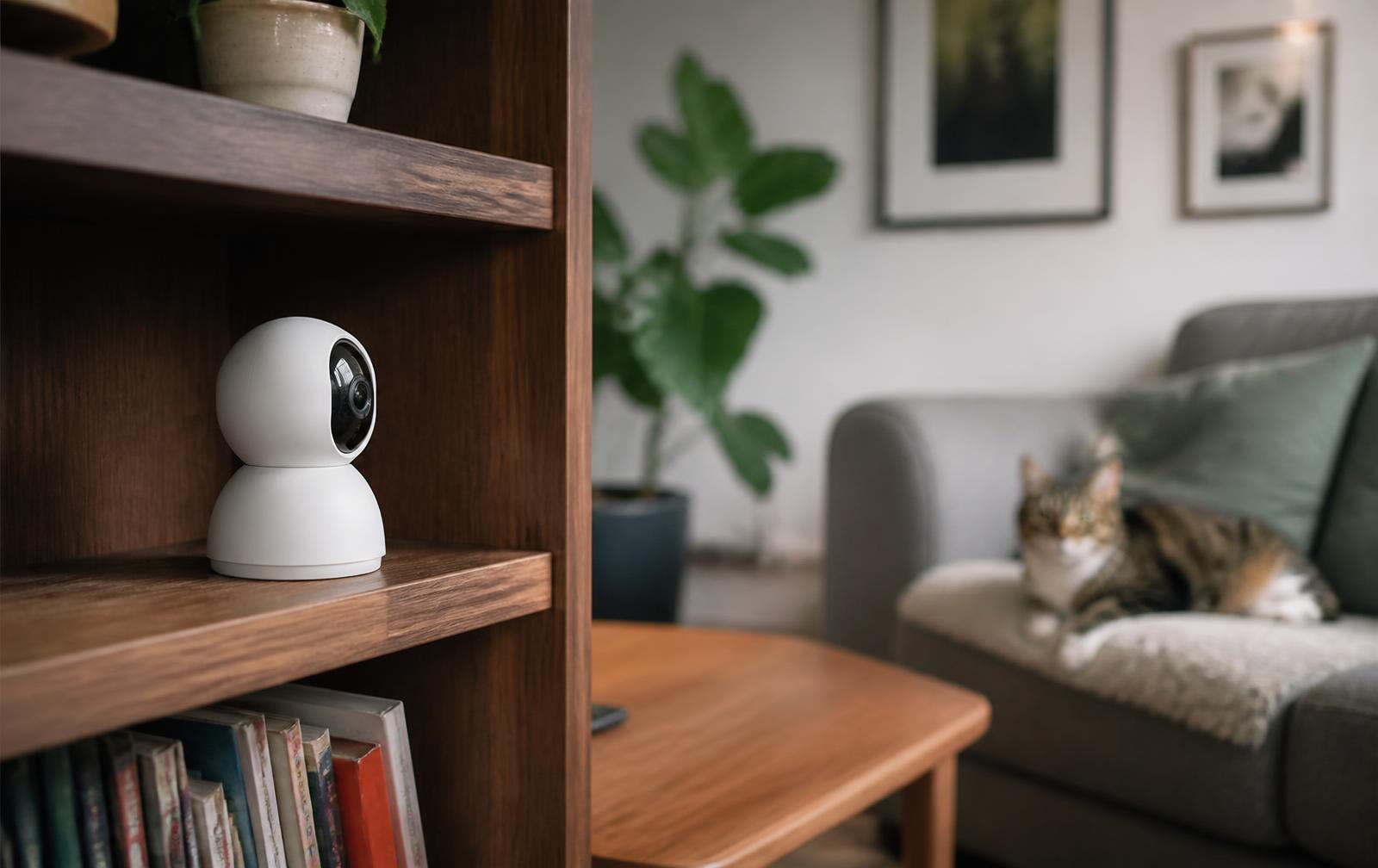
Pet Cameras and Monitoring: Tech for Checking on Your Cat
A practical guide to pet cameras and monitoring systems for cats, covering features, placement, and how to use them without over-worrying.
Read more →
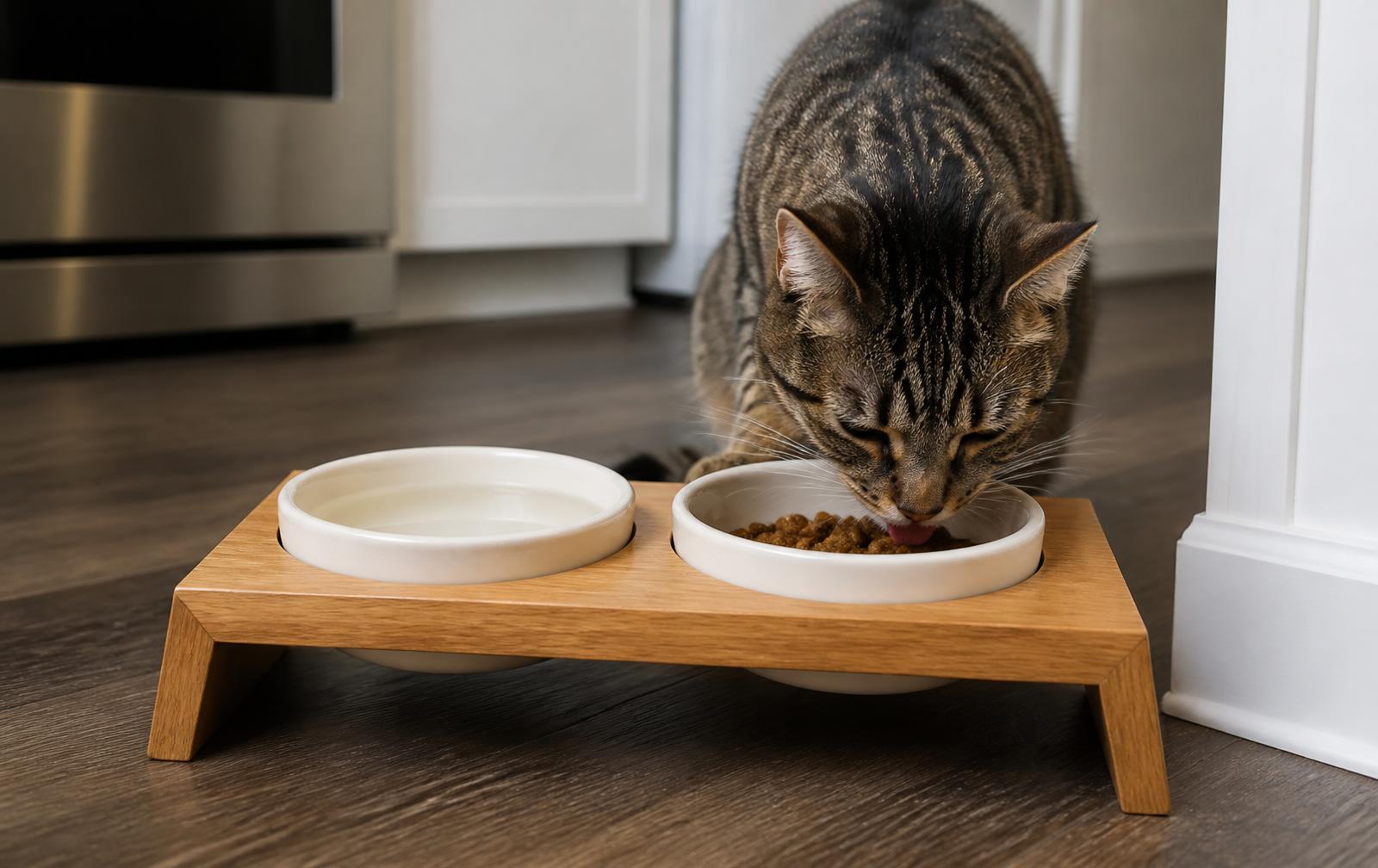
Food and Water Bowls: Material, Design, and Health Considerations
Compare cat food bowls and water bowls by material and design, including stainless steel bowls, to protect whisker health and hygiene.
Read more →