Cat Body Language: What the Tail, Ears, and Whiskers Tell You
Decode cat body language: tail positions, ear signals, whisker cues and postures explained, so you always know what your cat is telling you.
By the Cleos team · 14 February 2028 · 5 min read
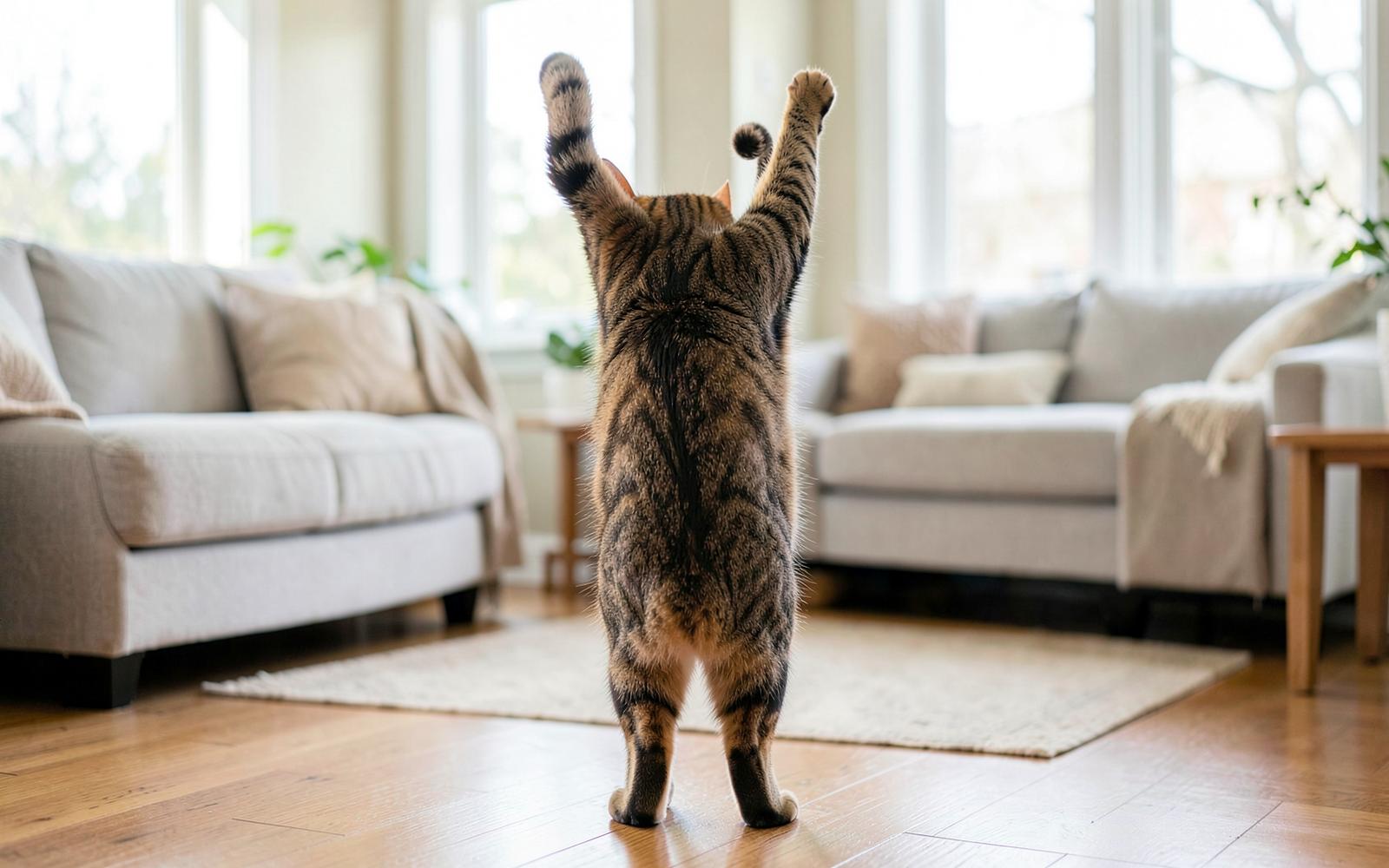
Cats are talking to you constantly, just not with words. Every tail position, ear angle, whisker shift, and body posture is a sentence in a language most humans only half understand. Learning to read it transforms your relationship: you'll know when to approach, when to give space, and when something's wrong before it becomes serious.
In short: A raised, gently curved tail signals a happy, confident cat; a low or tucked tail signals fear; a lashing tail warns of irritation; a puffed tail signals extreme fear. Ears forward mean interest, flattened means fear or aggression. Read signals in combination, the whole cat tells the story, never one body part alone.
The Tail: A Mood Barometer
Tail High, Tip Curved (The "Question Mark")
The greeting tail. A cat approaching with tail vertical and tip curled like a question mark is confident, friendly, and pleased to see you. This is the best moment for interaction, treats, and affection.
Tail High and Quivering
Intense happiness, often seen when you come home or at mealtime anticipation. (A quivering tail held against a vertical surface can also be spraying posture in unneutered cats, but in context the difference is obvious.)
Tail Low or Tucked
Fear or submission. A cat with their tail wrapped tight against their body is frightened. Don't approach forcefully; lower yourself, speak softly, offer a slow blink, and let them come to you.
Tail Lashing or Thumping
Irritation rising. The lashing tail is a warning light: stop what you're doing. This is the signal most often ignored before "my cat bit me out of nowhere", the cat told you clearly; the language just wasn't heard.
Tail Puffed (Halloween Cat)
Extreme fear or defensive arousal. The cat is making themselves look bigger. Combined with an arched back and sideways stance, it means the cat feels seriously threatened and may defend themselves.
Tail Wrapped Around You
Affection. A cat draping their tail over your arm or around your leg is the feline equivalent of holding hands.
The Ears: Radar Dishes of Emotion
- Forward and upright: interested, alert, content
- Swivelling: monitoring sounds, processing the environment
- Sideways ("airplane ears"): uncertainty, anxiety, or overstimulation building
- Flattened against the head: fear or aggression, a cat preparing to defend. Combined with hissing, give immediate space
The Whiskers: Subtle but Telling
- Relaxed, fanned slightly sideways: calm
- Pushed forward: engaged, hunting, curious (you'll see this during play)
- Pulled back flat against the cheeks: fear or defensive tension
Eyes and Vocalisation
- Slow blinks: trust and affection, blink back (see why cats slow blink)
- Dilated pupils: arousal, excitement during play, or fear in threatening contexts
- Staring: between cats, a challenge; at you near the kitchen, usually a demand (see why cats meow so much)
Reading the Whole Cat
Individual signals mislead; combinations tell the truth:
| Mood | Tail | Ears | Body |
|---|---|---|---|
| Happy, social | High, curved tip | Forward | Loose, approaching |
| Playful | Twitching tip | Forward, alert | Crouched, hind wiggle |
| Irritated | Lashing | Sideways | Tense, skin may ripple |
| Frightened | Tucked or puffed | Flattened | Crouched low or arched |
| Relaxed | Still, extended | Neutral | Loaf, side-lying, belly showing |
| Aggressive | Low, rigid, or puffed | Flat | Stiff, direct stare, growling |
A note on the belly: a cat rolling to show their belly is displaying deep trust, the belly is their most vulnerable area. But for most cats it's a display of trust, not an invitation to touch. The ones who enjoy belly rubs are the exception; the trap is the rule.
When Body Language Signals Illness
Cats hide pain, but body language leaks it:
- Hunched posture with head lowered, abdominal pain or nausea
- Hiding in unusual places, the classic "something's wrong" sign
- Squinting one or both eyes persistently: pain or eye issues (see eye health in cats)
- Sudden irritability at being touched in specific spots, localised pain
- Changes in normal patterns: a social cat going distant, or a distant cat going clingy
You know your cat's baseline vocabulary better than anyone. A sustained change from that baseline deserves attention and often a vet check.
Using Body Language in Daily Life
Reading your cat turns interactions collaborative:
- Approach when the tail is high and ears forward. These are your bonding windows
- Pause petting when the tail starts twitching or ears rotate sideways, stopping before overstimulation keeps touch positive
- Offer treats during relaxed states, calm, receptive moments build the strongest positive associations, which is why quiet evening treat rituals work so well
- Respect the tucked tail and flattened ears, space given during fear builds trust that lasts
Join the Cleos Waitlist: The best treat moments start with reading the room. Or rather, the cat. Cleos lickable treats are made for those relaxed, tail-high moments of connection. Be first to try them at https://getcleos.in/#waitlist.
Frequently Asked Questions
Why does my cat's tail twitch while they're lying next to me purring?
Usually mild overstimulation building during petting, or contented excitement, context decides. If the purring continues and the body stays loose, it's often just happy energy; watch for escalation (thumping, skin rippling, ears rotating) as the sign to pause. Some cats simply have expressive tails that narrate everything.
Why does my cat wag their tail like a dog?
Cat tail wagging means something quite different from dog wagging. It's arousal, conflict, or irritation rather than happiness. A lying cat thumping their tail is usually saying "I'm reaching my limit." The exception is the gentle tip-twitch of a relaxed, engaged cat watching something interesting, which is just focused excitement.
How do I approach a cat whose body language says fearful?
Don't approach directly, let them come to you. Sit or crouch at a distance, angle your body sideways (less threatening), avoid staring, speak softly, and offer slow blinks. Extending a finger at cat-nose height from a respectful distance lets them close the gap if they choose. Treats tossed gently nearby, not at them, build positive association without pressure.
Why does my cat suddenly bite during petting when they seemed relaxed?
This is petting-induced overstimulation, and it's rarely "sudden", the signals (twitching tail, rippling skin, rotating ears, tensing body) are usually there moments before. Each cat has a personal touch threshold. Learn your cat's countdown signals, end sessions while they're still enjoying them, and the "sudden" bites disappear.
Keep Cleos close
Get more Cleos stories on Google
Add Cleos as a preferred source to make our cat care guides easier to find in Google.
Add to Preferred SourcesFound this useful? Share it
Treats worth reading the label for.
Cleos lickable treats are built on real, named ingredients: Real Chicken, Real Tuna, Tuna & Shrimp and Chicken & Veggies. No artificial fillers.
Join the Cleos waitlistKeep reading
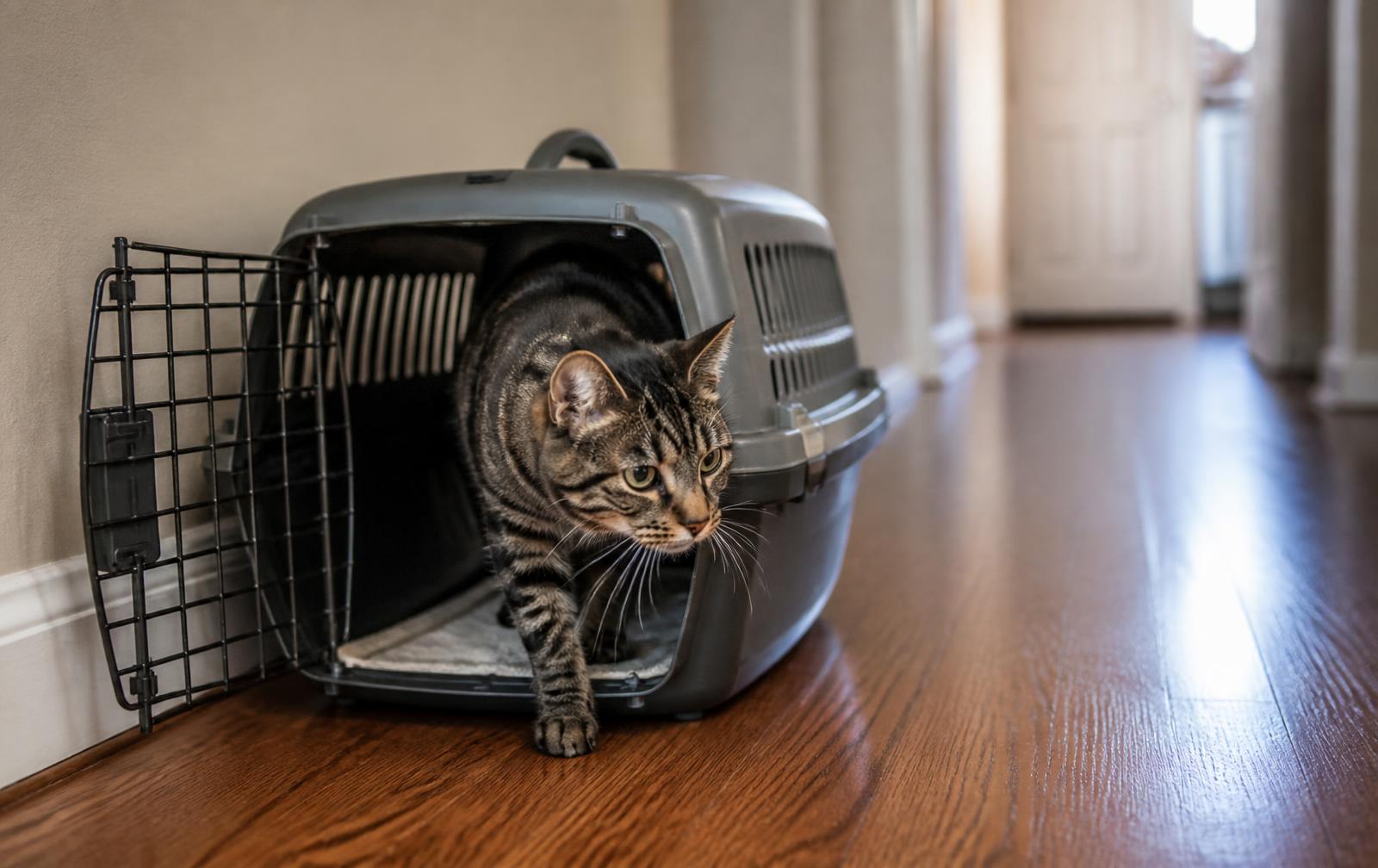
Travel Carriers and Cat Crates: Stress-Free Transport
Choose the right cat carrier or crate and learn practical tips for calmer vet visits, car trips, and moves with your feline companion.
Read more →
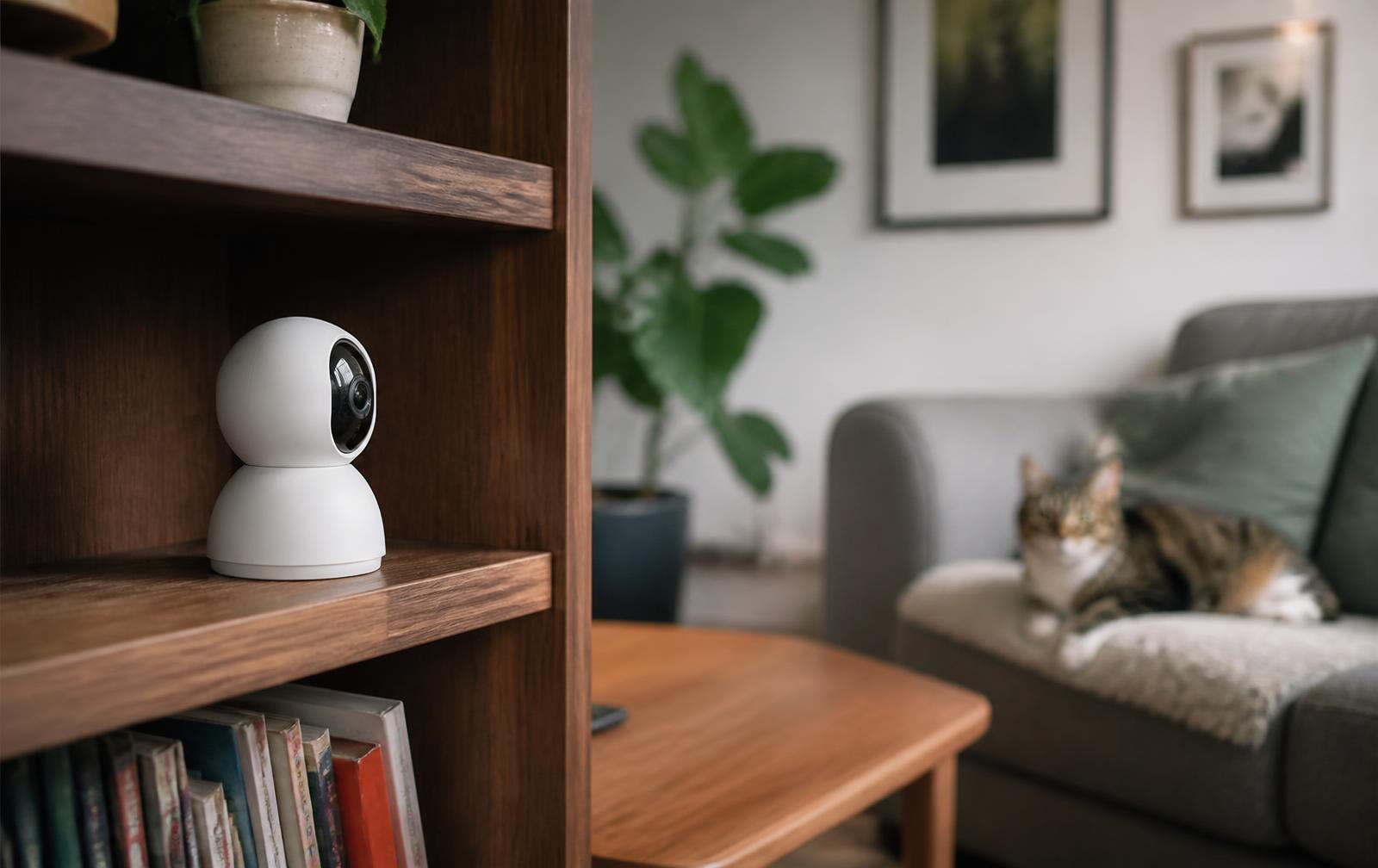
Pet Cameras and Monitoring: Tech for Checking on Your Cat
A practical guide to pet cameras and monitoring systems for cats, covering features, placement, and how to use them without over-worrying.
Read more →
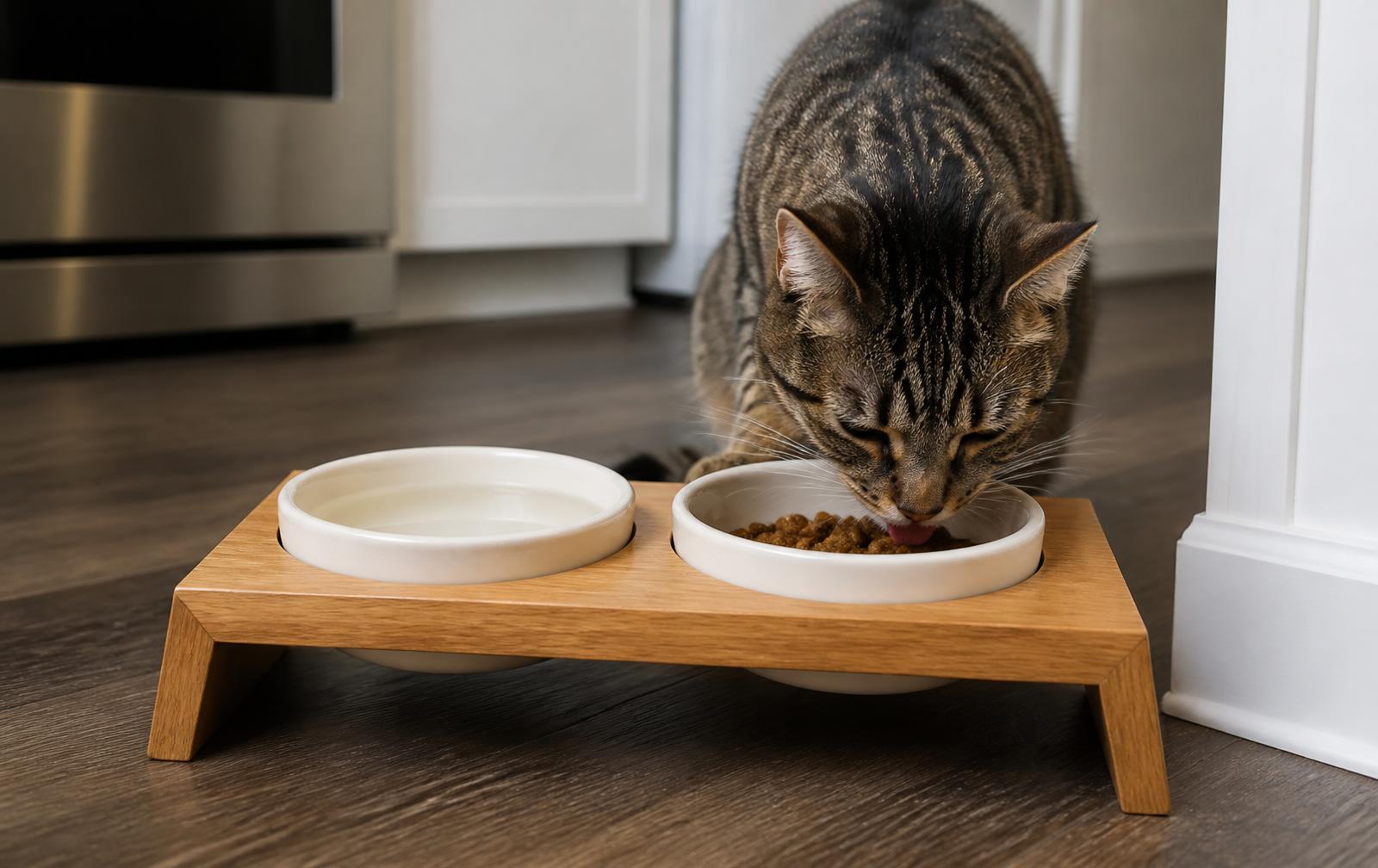
Food and Water Bowls: Material, Design, and Health Considerations
Compare cat food bowls and water bowls by material and design, including stainless steel bowls, to protect whisker health and hygiene.
Read more →