Travel Carriers and Cat Crates: Stress-Free Transport
Choose the right cat carrier or crate and learn practical tips for calmer vet visits, car trips, and moves with your feline companion.
By the Cleos team · 4 October 2027 · 7 min read
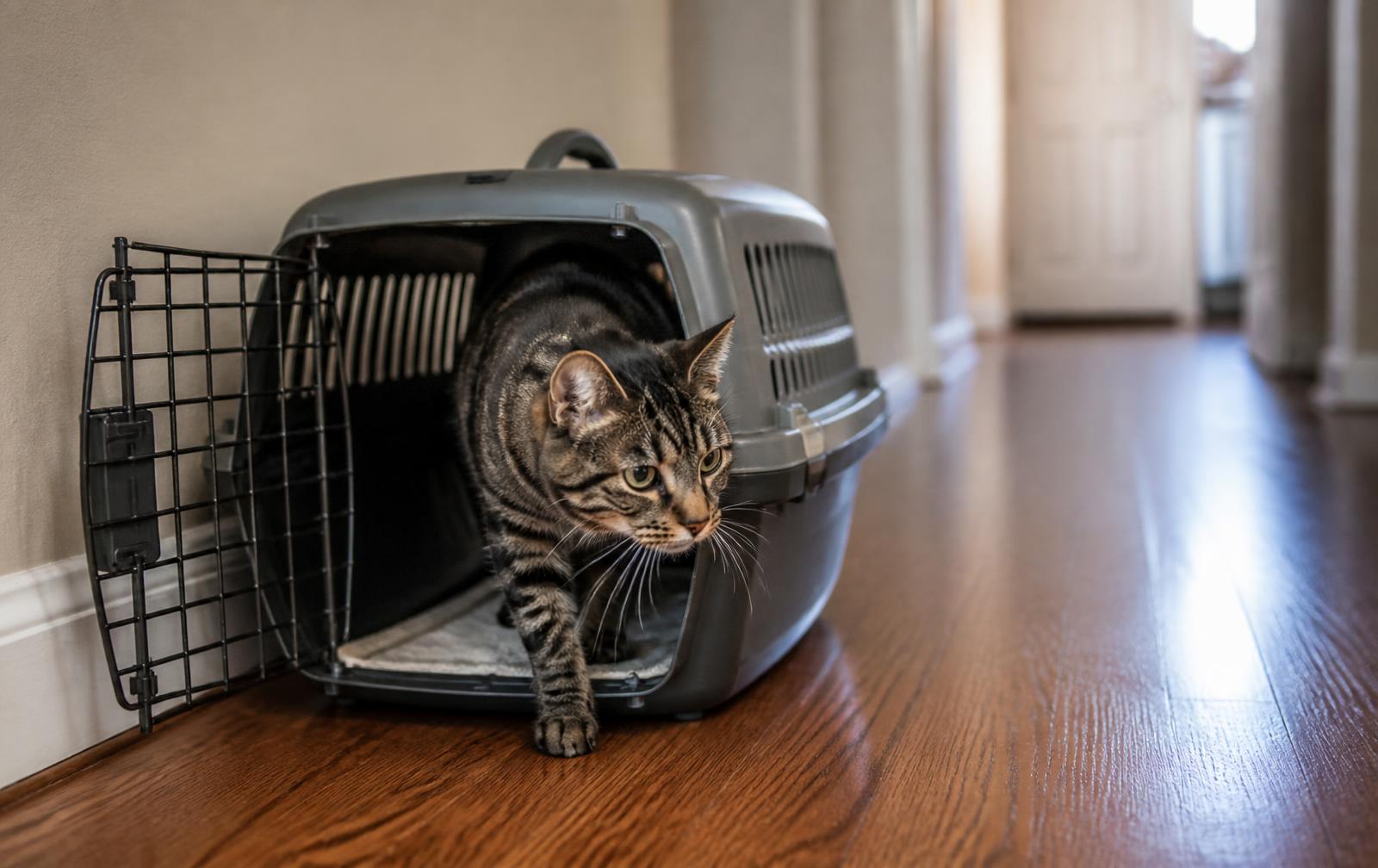
Few things unsettle a cat more reliably than being tipped into a carrier and driven somewhere unfamiliar. Yet vet visits, house moves, and holidays are simply part of life, and the right carrier, used the right way, can turn a dreaded ordeal into a manageable, even calm, experience for both of you.
This guide covers how to choose a carrier, how to acclimatise your cat to it, and practical tips for car journeys and longer moves. In short: pick a sturdy, well-ventilated carrier that opens from the top and the front, leave it out at home as a familiar object long before you need it, and use calm, gradual introductions rather than last-minute grabbing.
Why the Right Carrier Matters
A poorly chosen carrier can make an already stressful trip worse. Flimsy sides flex and feel unstable, narrow openings force an owner to push a resistant cat through a small hole, and poor ventilation makes a cat overheat on a warm day. The International Cat Care organisation notes that reducing fear and stress during transport is important not just for welfare on the day, but because a single bad experience can make every future carrier encounter harder.
Choosing well the first time saves a great deal of frustration later.
Types of Carriers and Crates
Hard-Sided Carriers
These are typically made of durable plastic with a wire door, often with a removable top half. The best models allow full top access, which is enormously helpful for a cat who is reluctant to walk in through the front, and also useful at the vet, where the top can sometimes be removed entirely so your cat can be examined without being fully pulled out.
Soft-Sided Carriers
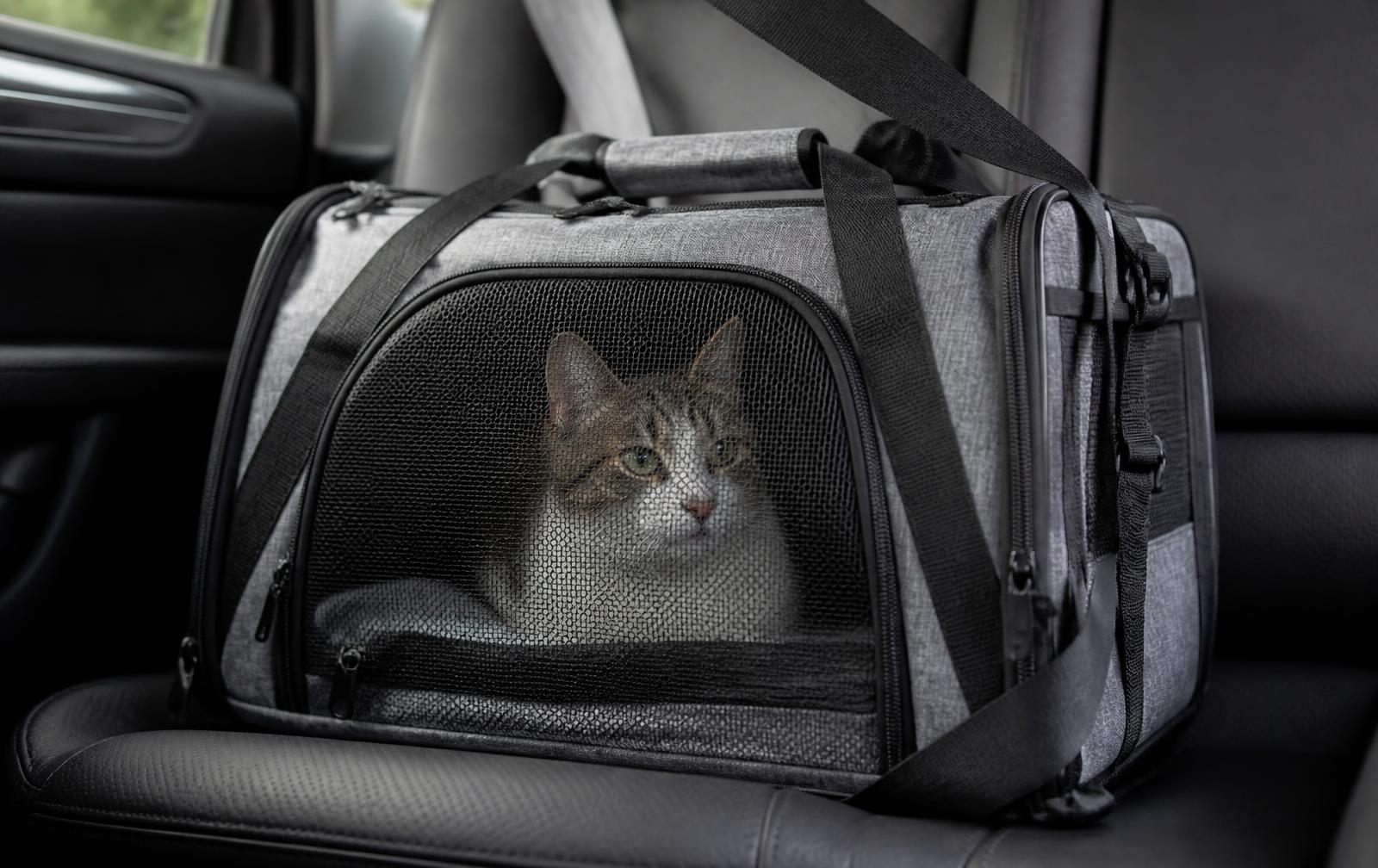
Lighter and easier to store, soft carriers are good for calm cats and shorter trips. Look for reinforced sides so the carrier does not collapse, and multiple entry points (top, front, and sometimes side).
Backpack Carriers
Increasingly popular for cats who travel frequently or go on outdoor adventures with their owners. These offer good ventilation and let your cat see out, though they suit confident, well-acclimatised cats better than nervous ones.
Crates
Larger wire or plastic crates are generally used for home confinement (after surgery, during a move, or when introducing a new pet) rather than transport, though some double as a larger, more comfortable travel option for bigger cats or those needing extra space, such as for a litter tray on a long journey.
| Carrier type | Best for | Ventilation | Ease of cleaning | Portability |
|---|---|---|---|---|
| Hard-sided, top-loading | Vet visits, most general use | Good | Very easy | Moderate |
| Soft-sided | Calm cats, short trips | Moderate to good | Moderate | Excellent |
| Backpack | Adventurous or well-trained cats | Good | Easy | Excellent |
| Wire crate | Home confinement, recovery, moves | Excellent | Easy | Poor |
Getting Your Cat Used to the Carrier
The single biggest factor in stress-free transport is not the carrier itself but the preparation beforehand. Cats generalise quickly: if a carrier only ever appears right before something unpleasant, it becomes a signal for fear.
- Leave the carrier out permanently in a familiar room, with the door open, rather than storing it away between trips
- Place a soft blanket, and occasionally a favourite treat, inside so your cat associates it with comfort rather than dread
- Encourage voluntary exploration; do not force your cat inside during the acclimatisation phase
- Practise short, low-stakes "trips": a few minutes in the carrier in the living room, then a short walk around the house, gradually building up to a short car ride
- Use a small amount of a favourite treat as a reward for calm behaviour near or inside the carrier; something like a lickable treat can work well here since it takes a little time to consume and encourages a relaxed pause. If your cat is generally food-motivated, why cats love lickable treats explains why these tend to be more engaging than a dry biscuit dropped in a bowl
This process takes patience and is best started well before you actually need to travel, not the night before a vet appointment.
On the Day: Practical Tips
For Vet Visits
- Cover the carrier with a light towel to reduce visual stimulation from the waiting room
- Keep the carrier off the floor where possible, on a chair or your lap, since floor level can feel exposed and threatening to a cat, particularly if there are dogs nearby
- Bring a familiar-smelling blanket rather than a fully clean one, since scent is reassuring
For Car Journeys
- Secure the carrier with a seatbelt or place it in the footwell so it cannot slide or tip during braking
- Keep the car at a moderate, steady temperature; cats can overheat quickly in a warm, poorly ventilated car
- Avoid feeding a large meal immediately before travel to reduce the chance of motion sickness, though a small treat as positive reinforcement beforehand is generally fine
- Never leave a cat unattended in a parked car, even briefly, and even with windows cracked, since temperatures inside a car can rise dangerously fast
For House Moves
Moving house is one of the more disruptive events in a cat's life, and a carrier plays a role beyond just the physical trip. On moving day itself:
- Confine your cat to a quiet, carrier-ready room early, away from the chaos of removalists and open doors
- Transport your cat separately from furniture and boxes if possible, ideally in your own car rather than a moving van
- At the new home, set up one small, quiet room first with familiar bedding, litter tray, food, and water, and keep your cat confined there before gradually expanding access to the rest of the house
- Avoid letting an indoor-outdoor cat outside for at least two to three weeks in a new home, to allow proper acclimatisation and reduce the risk of them trying to return to the old address
The AVMA has useful general guidance on relocating with pets, and it is worth reading alongside advice on settling a cat into a new routine, such as bonding through treat time rituals, which can help re-establish a sense of normality once you have arrived.
Choosing the Right Size
A carrier that is too small is cramped and stressful; one that is too large allows a cat to be thrown around during sudden stops. As a general guide, your cat should be able to stand up, turn around, and lie down comfortably, but the space should not be so large that they slide from one end to the other during a drive. Measure your cat from nose to base of tail and add a little extra room rather than guessing.
Frequently Asked Questions
How early should I start carrier training?
As early as possible, ideally as a kitten, but adult cats can absolutely learn to accept a carrier with patient, gradual introduction over a period of several weeks rather than days.
My cat panics every time regardless of preparation. What can I do?
Speak to your vet. Some cats benefit from pheromone sprays applied to the carrier interior in advance, and in some cases a vet may recommend a mild anti-anxiety medication for particularly stressful trips. This should always be a vet-led decision rather than self-medicated.
Should I feed my cat before a car trip?
A light meal or small treat several hours beforehand is generally fine; avoid a large meal immediately before travel, particularly for cats prone to motion sickness.
Is it safe to let my cat roam free in the car instead of using a carrier?
No. A loose cat in a moving vehicle is a safety risk both to the cat and to the driver, since a frightened cat may dart under pedals or become a dangerous distraction. Always use a secured carrier.
What size crate do I need for a house move?
For confinement during a move, choose a crate large enough for a small litter tray, a bed, and food and water bowls if your cat will be confined for more than a few hours, rather than the smaller carrier used for the actual transport.
Ready to make treat time part of your cat's calm, happy routine, on the road or at home? Join the Cleos waitlist for early access to our premium lickable treats.
Keep Cleos close
Get more Cleos stories on Google
Add Cleos as a preferred source to make our cat care guides easier to find in Google.
Add to Preferred SourcesFound this useful? Share it
Treats worth reading the label for.
Cleos lickable treats are built on real, named ingredients — Real Chicken, Real Tuna, Tuna & Shrimp and Chicken & Veggies — with zero artificial fillers.
Join the Cleos waitlistKeep reading
Pet Cameras and Monitoring: Tech for Checking on Your Cat
A practical guide to pet cameras and monitoring systems for cats, covering features, placement, and how to use them without over-worrying.
Read more →
Food and Water Bowls: Material, Design, and Health Considerations
Compare cat food bowls and water bowls by material and design, including stainless steel bowls, to protect whisker health and hygiene.
Read more →
Window Perches and Cat Hammocks: Entertainment for Indoor Cats
Discover how cat window perches and hammocks boost enrichment for indoor cats, with buying tips, safety notes, and DIY ideas for happier cats.
Read more →