Transitioning from Kitten Food to Adult Cat Food
When and how to switch your kitten to adult cat food with a gradual 7-10 day plan, portion changes, and what to watch during the transition.
By the Cleos team · 6 December 2027 · 5 min read
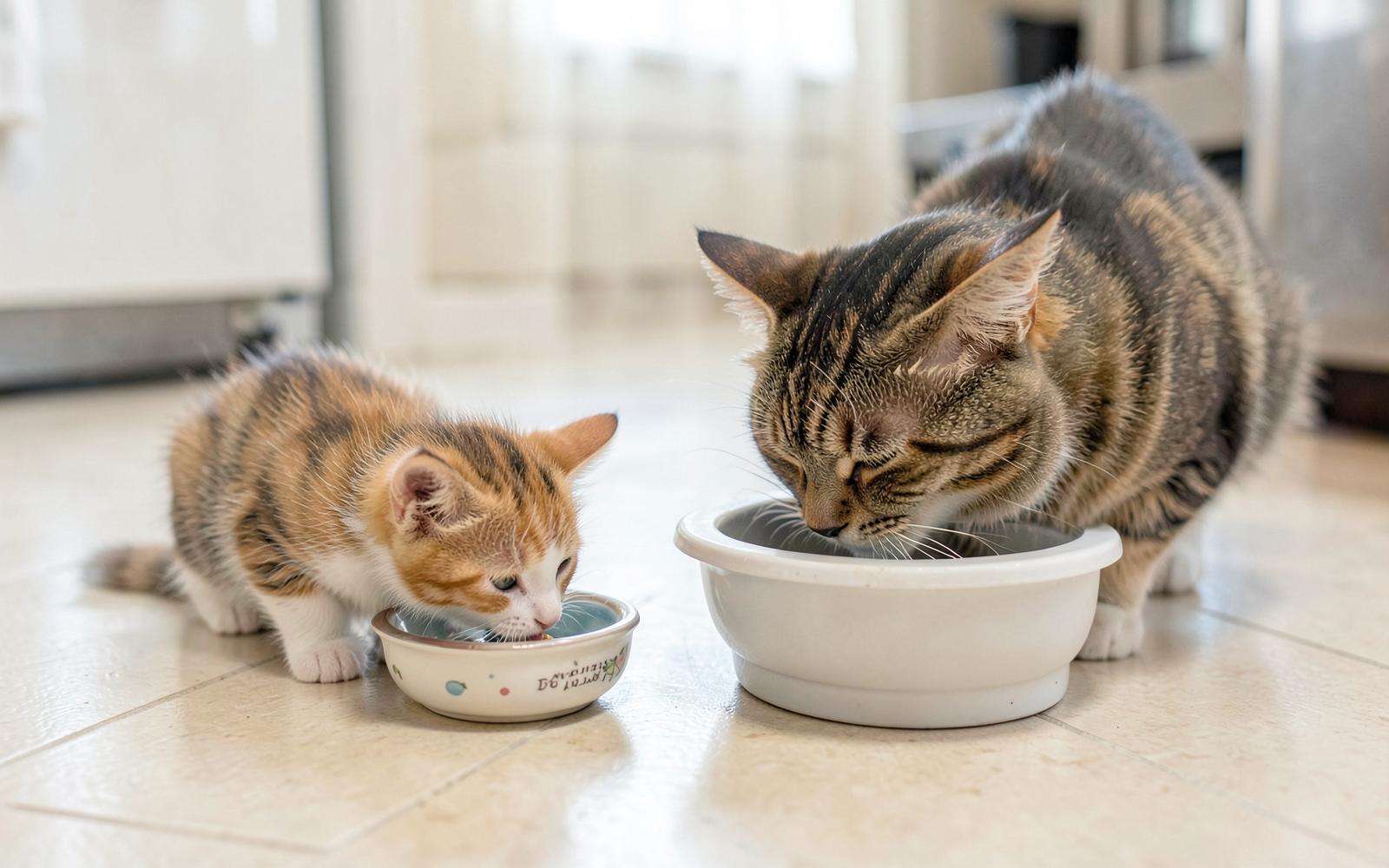
Somewhere around your cat's first birthday, a quiet milestone arrives: it's time to switch from kitten food to adult food. Done right, the transition is seamless. Done abruptly, it can mean an upset stomach, food refusal, or a finicky adult eater in the making.
In short: Most cats should transition from kitten to adult food around 12 months of age (large breeds like Maine Coons may stay on kitten food until 15-18 months). Switch gradually over 7-10 days by mixing increasing proportions of adult food into kitten food. Watch stool quality and appetite during the change, keep treat habits consistent to provide familiarity, and adjust portions since adult food is less calorie-dense than kitten food.
Why Kitten and Adult Foods Differ
Kitten food isn't just smaller kibble. It's a fundamentally different nutritional formula:
| Nutrient | Kitten Food | Adult Food | Why |
|---|---|---|---|
| Calories | High | Moderate | Kittens need 2-3x more calories per kg of body weight |
| Protein | Higher | High | Growth demands extra amino acids |
| Fat | Higher | Moderate | Fuel for development and energy |
| Calcium & phosphorus | Elevated | Maintenance levels | Bone growth |
| DHA | Often added | Optional | Brain and vision development |
Keep an adult cat on kitten food and they'll likely gain excess weight. Keep a growing kitten on adult food and they may miss critical developmental nutrition.
When to Make the Switch
- Most cats: around 12 months
- Large breeds (Maine Coons, Ragdolls, Norwegian Forest Cats): 15-18 months: since they mature slowly, confirm with your vet
- Sterilised kittens: discuss timing with your vet; sterilisation drops calorie needs, so portion adjustment matters as much as the formula change
- Underweight or health-compromised kittens: your vet may extend kitten feeding
A helpful signal: your cat reaching roughly 90% of their expected adult size usually coincides with transition time.
The 7-10 Day Transition Plan
Sudden food changes are a leading cause of digestive upset in cats. Gradual mixing lets the gut adapt:
| Days | Kitten Food | Adult Food |
|---|---|---|
| 1-2 | 75% | 25% |
| 3-4 | 50% | 50% |
| 5-7 | 25% | 75% |
| 8-10 | 0% | 100% |
Tips for a smooth switch:
- Mix the foods thoroughly so your cat can't pick around the new kibble
- Warm wet food slightly to boost aroma and acceptance
- Keep mealtimes consistent, routine reassures cats during change
- If soft stools appear, hold at the current ratio for a few extra days before advancing
- If your cat refuses the mix entirely, slow down, drop back a ratio and proceed more gradually
Choosing the Right Adult Food
The transition is a natural moment to upgrade quality. Look for:
- Real named protein first: chicken, tuna, salmon listed by name, not "meat by-products" (see named ingredients vs mystery meat)
- Complete and balanced labelling for adult maintenance
- Moisture-rich options: wet food or mixed feeding supports urinary and digestive health
- No unnecessary fillers: our guide on harmful ingredients to avoid helps here
Adjusting Portions and Meal Rhythm
Adult food is less calorie-dense, but adult cats also need fewer calories than growing kittens. So portions change in both amount and frequency:
- Move from 3-4 kitten meals to 2-3 adult meals daily
- Measure portions against the new food's feeding guide, adjusted for your cat's ideal weight and activity
- Watch body condition monthly during the first few months on adult food. This is when many indoor cats begin creeping toward overweight (see feline obesity prevention)
Treats During the Transition
Familiar treats provide welcome continuity when the main diet is changing. Keep treat routines stable, same flavours, same ritual moments. So your cat experiences the food switch as a small change in an otherwise predictable world. Soft, protein-first lickable treats work across both life stages, making them an easy constant during the switch. Just keep total treats under 10% of daily calories, which matters even more once the calorie-dense kitten days end.
Join the Cleos Waitlist: From kittenhood through adulthood, Cleos lickable treats made with real named protein fit every life stage's routine. Be first to try them at https://getcleos.in/#waitlist.
Frequently Asked Questions
What if my cat refuses the new adult food?
Slow the transition down. Some cats need two weeks or more. Try mixing more thoroughly, warming wet food to enhance aroma, or sprinkling a few crushed pieces of a favourite treat on top. If refusal continues beyond a day of poor eating, consult your vet; cats shouldn't go long without food, and an alternative adult formula may simply suit your cat better.
Can I keep feeding kitten food if my adult cat loves it?
It's not advisable long-term. Kitten food's elevated calories, fat, and minerals are formulated for growth, and adult cats eating it commonly gain excess weight. Occasional exposure (an adult cat sneaking a kitten's meal in a multi-cat home) is harmless, the issue is kitten food as the primary adult diet.
Is it okay to switch brands at the same time as switching to adult food?
Yes, the transition period is actually a natural time to upgrade, and the gradual mixing method works for brand changes too. Just change one thing at a time where possible, and if your cat has a sensitive stomach, consider completing the life-stage switch first, then the brand upgrade a few weeks later.
My kitten was sterilised at 6 months. Does that change the timing?
Sterilisation reduces calorie needs by roughly 20-30%, but it doesn't mean kitten food should end early, growth continues until around 12 months. The adjustment is portion size, not timing: feed kitten food in quantities appropriate to the lower energy need, monitor body condition, and transition to adult food around the normal 12-month mark.
Keep Cleos close
Get more Cleos stories on Google
Add Cleos as a preferred source to make our cat care guides easier to find in Google.
Add to Preferred SourcesFound this useful? Share it
Treats worth reading the label for.
Cleos lickable treats are built on real, named ingredients: Real Chicken, Real Tuna, Tuna & Shrimp and Chicken & Veggies. No artificial fillers.
Join the Cleos waitlistKeep reading
Travel Carriers and Cat Crates: Stress-Free Transport
Choose the right cat carrier or crate and learn practical tips for calmer vet visits, car trips, and moves with your feline companion.
Read more →
Pet Cameras and Monitoring: Tech for Checking on Your Cat
A practical guide to pet cameras and monitoring systems for cats, covering features, placement, and how to use them without over-worrying.
Read more →
Food and Water Bowls: Material, Design, and Health Considerations
Compare cat food bowls and water bowls by material and design, including stainless steel bowls, to protect whisker health and hygiene.
Read more →