Cat Beds and Hideaways: Creating Safe Spaces at Home
How to choose cat beds and hideaways cats actually use, covering styles, sizing, placement and safe retreats for nervous or senior cats.
By the Cleos team · 2 August 2027 · 7 min read
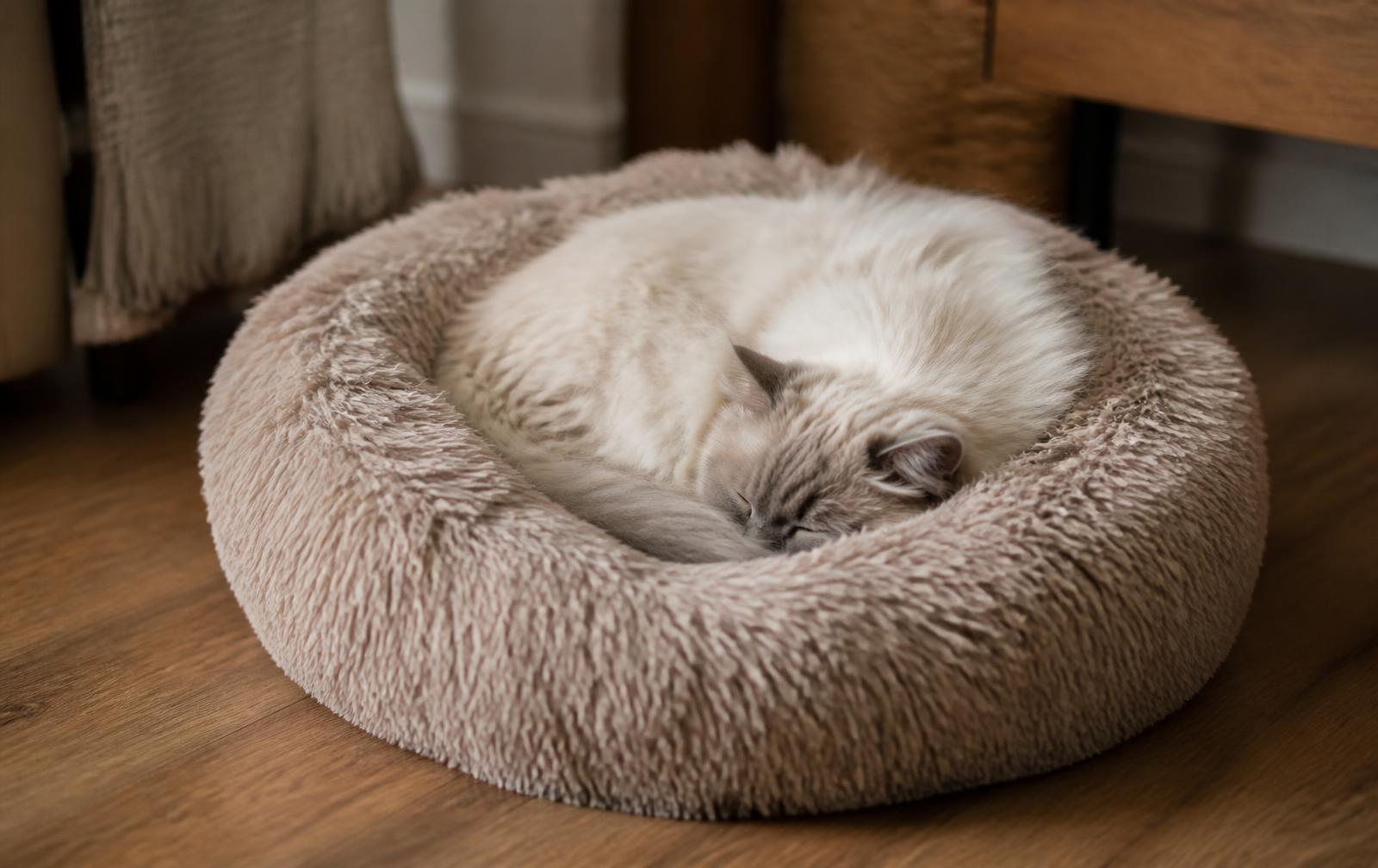
Cats sleep for somewhere between twelve and sixteen hours a day, and where they choose to do it says a great deal about how secure they feel. A cat who sprawls belly-up in the middle of the living room floor is telling you something quite different from one who spends the day wedged behind the sofa.
What makes a good cat bed? In short: cats want warmth, a sense of enclosure, and a location that feels safe from surprises. Offer several bed styles in different spots and heights, and let your cat pick — the winning bed is almost never the one the owner expected.
Why Cats Are So Particular About Sleeping Spots
A sleeping cat is a vulnerable cat, and feline instincts have not caught up with the fact that your living room contains no predators. Sleep site selection is driven by three things: thermal comfort, concealment and control of the approach.
- Warmth. A cat's thermoneutral zone sits higher than ours, roughly 30 to 38 degrees Celsius, which is why they gravitate to radiators, laptops and sun patches.
- Enclosure. Contact with sides or walls on multiple surfaces is calming. This is the same principle behind a cat squeezing into a box that is visibly too small.
- Sightlines. Many cats want either total concealment or a clear view of the room's entrance. Anything in between feels exposed.
Understanding those three drivers explains almost every strange sleeping choice your cat has ever made.
The Main Bed Styles and Who They Suit
| Style | Description | Best for |
|---|---|---|
| Donut / bolster | Round with raised padded sides | Cats who curl tightly; most universally popular |
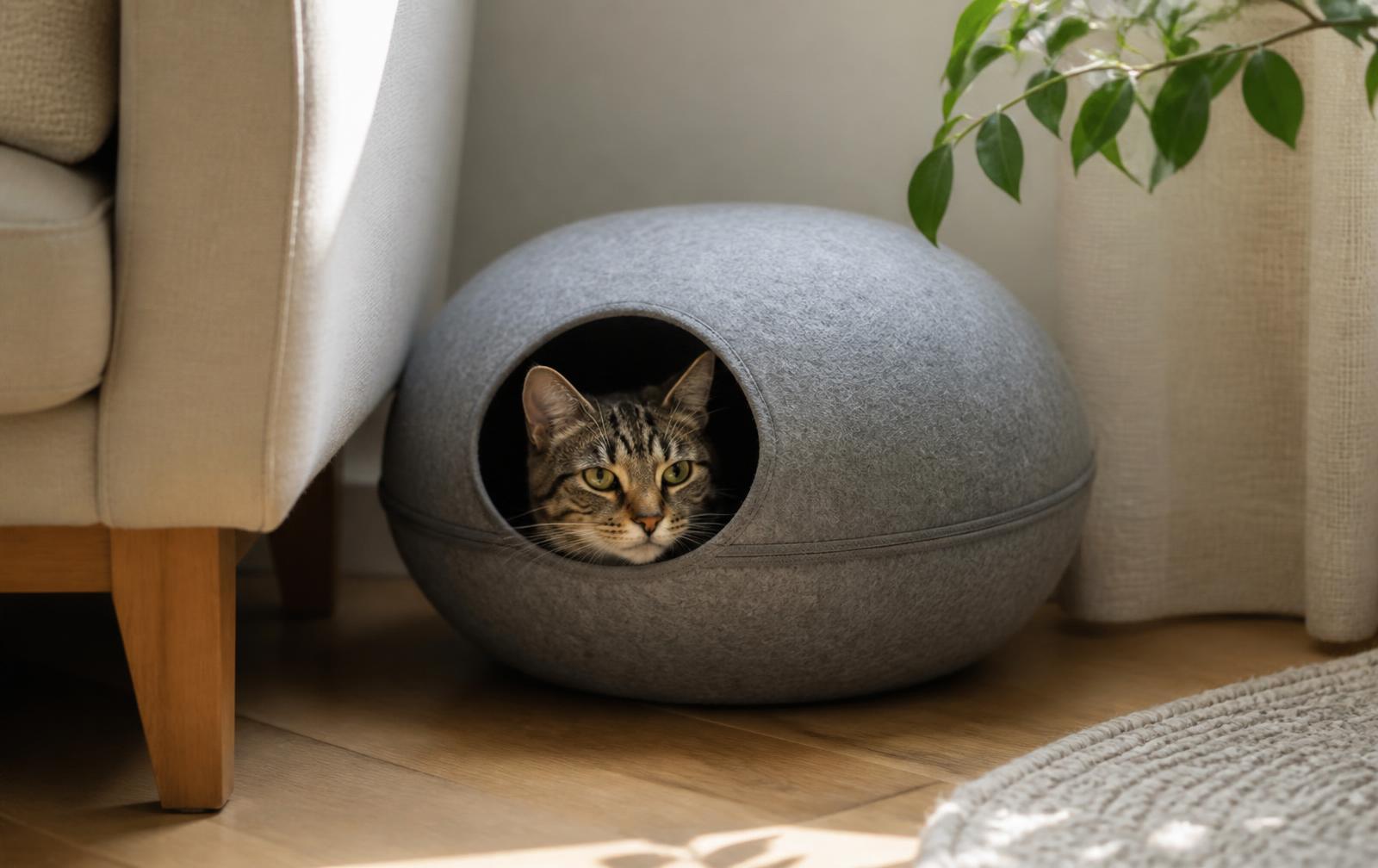
| Cave / hooded | Fully enclosed with a single opening | Nervous cats, busy households, cold rooms |
| Flat mat or pad | Simple padded rectangle | Cats who sleep stretched out; radiator and window use |
| Radiator hammock | Hangs from a radiator bar | Warmth seekers in cool climates |
| Window perch bed | Suction-cup or bracket mounted | Cats who want the view as well as the nap |
| Heated bed | Low-wattage warming pad | Senior cats, arthritic cats, thin-coated breeds |
If you only buy one, a bolster donut in a warm, quiet corner is the safest bet. If you buy two, make the second one enclosed and put it somewhere completely different.
Getting the Size Right
This is where most people go wrong in the opposite direction to what you would expect: oversized beds are frequently rejected. A cat curled in a nose-to-tail circle occupies a surprisingly small area, and a bed that dwarfs her offers no reassuring contact with the sides.
Measure your cat curled up, add roughly ten centimetres, and buy to that. For cats who sleep stretched out — often larger breeds and cats in warm homes — a longer flat mat is a better match than a bigger donut.
Hideaways: The Underrated Half of the Equation
A hideaway is not a bed with a lid. It is a defensible retreat, and every cat should have at least one, particularly in homes with children, dogs, frequent visitors or other cats.
Good hideaways share a few features. They are enclosed on most sides, positioned away from thoroughfares, and — ideally — either elevated or tucked into a corner where nothing can approach from behind. Two exits are a bonus in multi-cat homes, since a single-entrance hide can be blocked by a more confident cat.
Cardboard boxes work extremely well, which is mildly insulting to the pet furniture industry but worth knowing. A plain box with a hole cut in one side, lined with a familiar blanket, will often outperform an expensive covered bed. Research on shelter cats has found that access to a hiding box measurably reduces stress in the first days after arrival, and the same principle applies at home during building work, parties or a house move.
Placement Beats Product
Where you put the bed matters more than what you paid for it.
- Elevate where possible. A bed on a shelf, cat tree or windowsill will usually beat the identical bed on the floor.
- Choose quiet, not isolated. Cats generally want to be near their people but out of the traffic path — the edge of the living room rather than the spare room.
- Follow the sun. Observe where the sun lands at midday and place a mat there.
- Avoid the noisy appliances. Washing machines, boilers and printers are common reasons a perfectly good bed is never used.
- Spread them out. In multi-cat homes, provide more sleeping spots than cats, in different rooms and at different heights, so no one has to compete.
Introducing a New Bed
Anything new smells wrong. Rather than lifting your cat into the bed — which tends to create a negative association — make the bed smell familiar and let curiosity do the rest.
Put a worn t-shirt or an existing blanket your cat sleeps on inside it. Place it in a spot she already naps in, not a spot you would prefer she napped in. A pinch of catnip or silver vine on the bedding helps with some cats. Then reward voluntary use: a lick of a favourite treat delivered while she is settled in the bed builds the association far faster than encouragement from across the room.
Give it two weeks before concluding it has failed. Cats often need repeated passive exposure before committing to a new resting place.
Cleaning and Hygiene
Wash removable covers every one to two weeks in a non-biological, unscented detergent — heavily perfumed products are a common reason cats abandon a previously loved bed. Vacuum non-washable beds weekly. If a bed becomes soiled, wash promptly and consider whether the location itself is contributing, since inappropriate urination on bedding can indicate stress or a urinary issue rather than a preference problem.
Replace beds when the padding has compressed flat, when odour persists after washing, or when the base has worn through. For senior cats especially, a flattened bed offers little joint support and may be quietly discouraging use.
Beds for Senior and Unwell Cats
Older cats have specific needs that a standard donut may not meet. Look for a low entry point, since a high bolster wall becomes an obstacle for stiff hips. Memory-foam or orthopaedic padding helps with arthritis. A gently heated bed, thermostatically controlled and never hot to the touch, is one of the most appreciated purchases for a cat over twelve, particularly in cooler homes.
If a previously agile cat suddenly stops using an elevated bed, treat it as a possible sign of joint pain rather than a change of taste and mention it at the next veterinary check.
Seasonal Adjustments Worth Making
Cats redistribute themselves around the house as the weather changes, and a small amount of seasonal management keeps them comfortable year round. In winter, move at least one bed closer to a heat source, add a radiator hammock, or swap a thin mat for a deeper plush one; cats lose heat quickly through a hard floor, so raising a bed even ten centimetres off the ground makes a noticeable difference. In summer, the opposite applies. Provide a flat, breathable option on a cool tiled floor or in a shaded corner, and expect the plush cave that was a favourite in January to be entirely ignored in July. Rotating two or three bed styles through the year, rather than expecting one bed to serve every season, is the simplest way to keep every nap comfortable.
Beds, Boxes and the Multi-Cat Balance
In homes with more than one cat, sleeping arrangements are also social arrangements. Cats who genuinely get along may share a bed, but many pairs that appear tolerant simply take turns, and forcing proximity by providing too few options quietly raises tension. Watch for a cat who always sleeps in the least desirable spot, or one who abandons a favourite bed after a new arrival — both are signs that the resting map needs more entries. Adding a couple of elevated perches and a second hideaway in another room usually resolves it without any direct intervention, because it removes the need to compete in the first place.
Frequently Asked Questions
Why does my cat ignore her expensive bed and sleep in a box?
Boxes are enclosed, snug and smell neutral, which ticks the three boxes cats care about most. Try an enclosed cave-style bed, or line the box itself and place it where she already sleeps.
How many beds does one cat need?
Most cats rotate between three or four resting spots. Offering several options at different heights and temperatures is more effective than buying one premium bed.
Should a cat bed be washed often?
Wash covers every one to two weeks with an unscented, non-biological detergent. Strong fragrances are a frequent reason cats stop using a bed.
Do heated cat beds help older cats?
Yes. A low-wattage, thermostatically controlled heated bed can noticeably improve comfort for senior or arthritic cats, provided it never gets hot to the touch.
My cat has started hiding much more than usual. Is that normal?
A sudden increase in hiding can indicate stress, pain or illness rather than a simple preference. If it appears alongside changes in appetite, litter box habits or grooming, arrange a veterinary check.
Ready to make nap time even better? Join the Cleos waitlist for a high-protein lickable treat worth waking up for.
Keep Cleos close
Get more Cleos stories on Google
Add Cleos as a preferred source to make our cat care guides easier to find in Google.
Add to Preferred SourcesFound this useful? Share it
Treats worth reading the label for.
Cleos lickable treats are built on real, named ingredients — Real Chicken, Real Tuna, Tuna & Shrimp and Chicken & Veggies — with zero artificial fillers.
Join the Cleos waitlistKeep reading
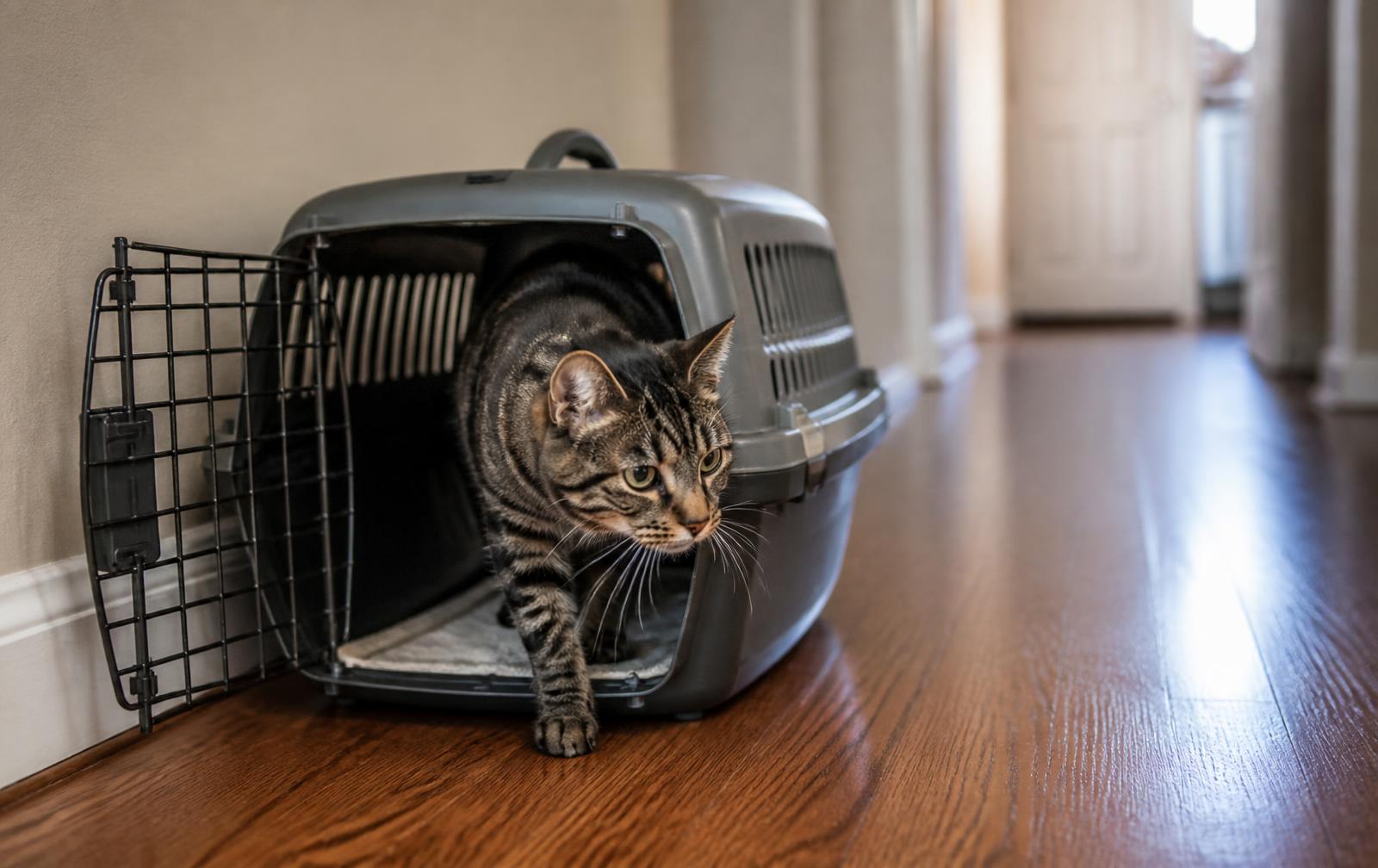
Travel Carriers and Cat Crates: Stress-Free Transport
Choose the right cat carrier or crate and learn practical tips for calmer vet visits, car trips, and moves with your feline companion.
Read more →
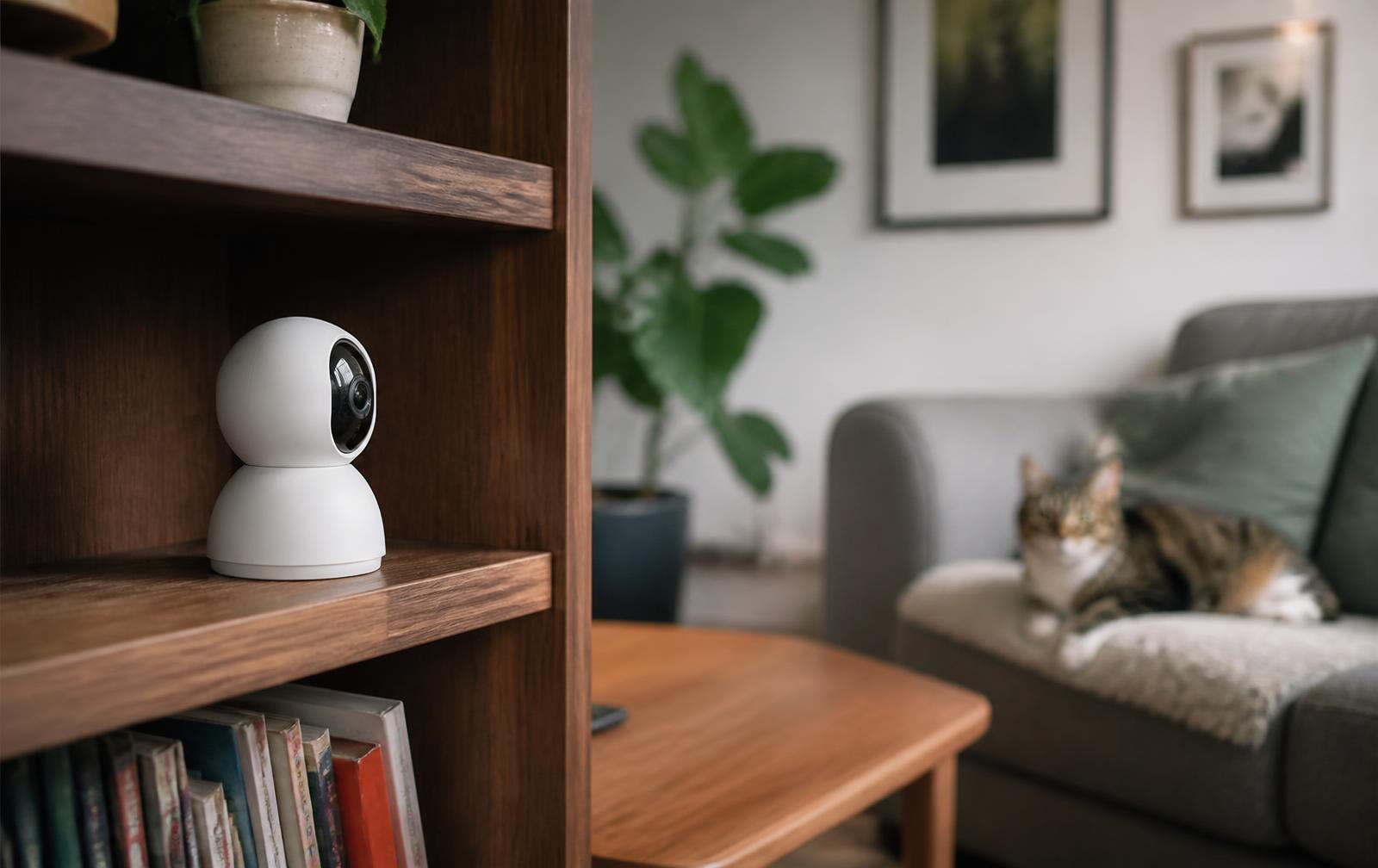
Pet Cameras and Monitoring: Tech for Checking on Your Cat
A practical guide to pet cameras and monitoring systems for cats, covering features, placement, and how to use them without over-worrying.
Read more →
Food and Water Bowls: Material, Design, and Health Considerations
Compare cat food bowls and water bowls by material and design, including stainless steel bowls, to protect whisker health and hygiene.
Read more →