New Kitten Care: First Week Essentials and Bonding
Your kitten's first week home: base room setup, feeding, litter training, the first vet visit, and gentle bonding rituals that build lifelong trust.
By the Cleos team · 29 November 2027 · 5 min read

Bringing home a kitten is pure joy wrapped in a small, chaotic package. That first week sets the foundation for your kitten's health, confidence, and your lifelong bond. And a few thoughtful choices make all the difference between a stressful transition and a smooth one.
In short: A kitten's first week home should centre on a small, safe base room, consistent food (same as the breeder/shelter used at first), a properly placed litter box, gentle handling sessions, and a vet check within the first few days. Bonding builds through play, calm presence, and positive treat rewards, never forced cuddles. Kittens learn fast; the routines you establish now become lifelong habits.
Before the Kitten Arrives: Setup
Set up a base room: a quiet, small room (a spare bedroom or bathroom works well) containing everything the kitten needs:
- Litter box: shallow-sided for tiny legs, placed away from food
- Food and water bowls: shallow, whisker-friendly (see our bowl guide)
- A cosy bed or box with soft bedding for hiding and sleeping
- A scratching post or pad
- A few toys: small soft toys and a wand toy
- Kitten-proofing: remove toxic plants, secure loose wires, block gaps behind furniture, and put away anything swallowable
Starting small isn't cruel, a whole house overwhelms a kitten who's just left their mother and littermates. Expansion comes gradually over the following weeks.
Day One: Arrival
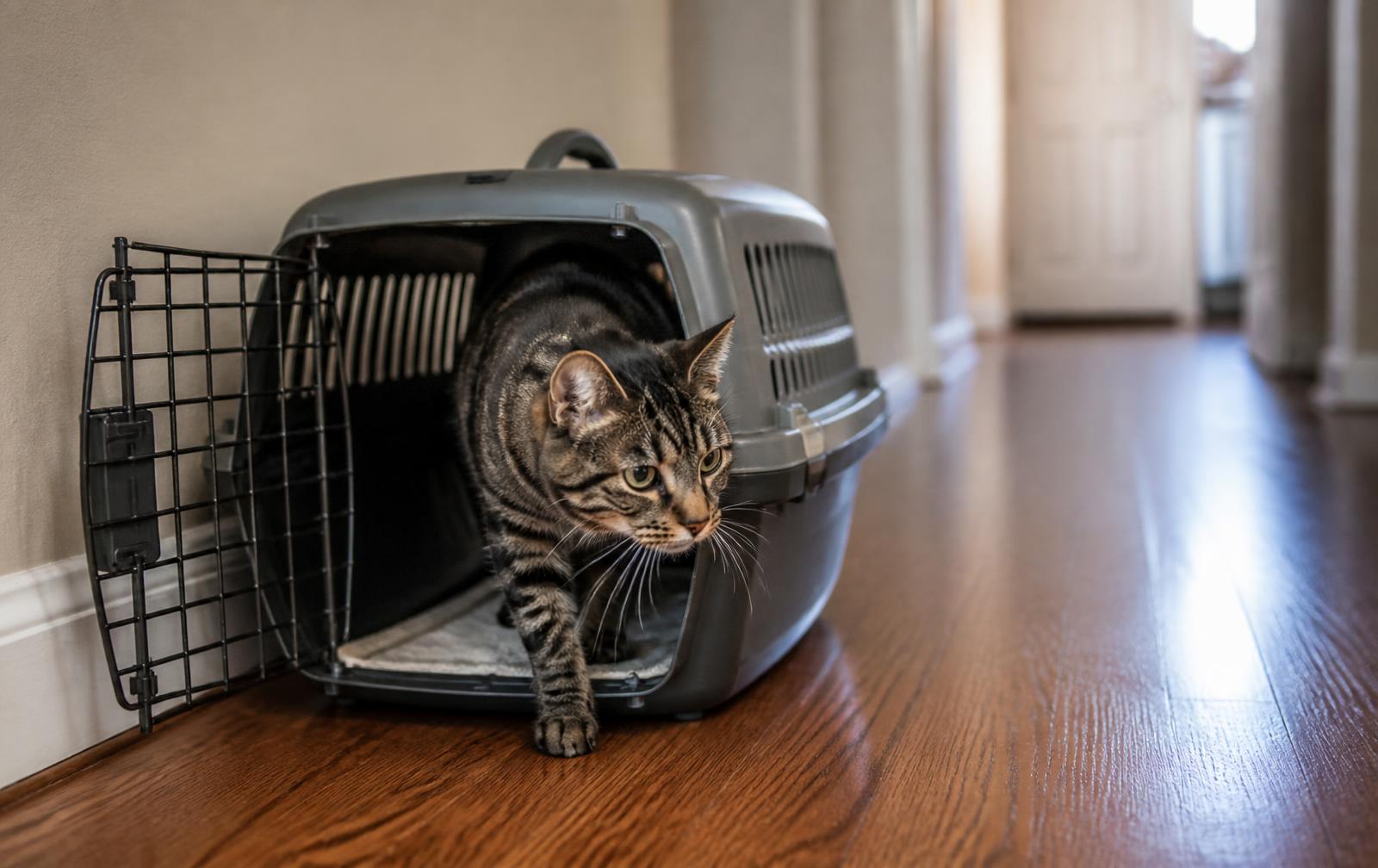
- Go straight to the base room. Open the carrier, sit quietly, and let the kitten come out on their own schedule. Some bolt out exploring; others hide for hours. Both are normal.
- Show the litter box: gently place the kitten in it once; their instincts usually do the rest (see our litter training guide).
- Offer familiar food: feed whatever the kitten was eating before, even if you plan to change it. Diet transitions come later, gradually, over 7-10 days.
- Keep it calm: limit visitors and noise. Let the kitten set the pace.
Expect some hiding, quiet mewing at night (they miss their littermates), and possibly a day of reduced appetite. If the kitten refuses food beyond 24 hours or seems lethargic, call your vet.
The First Vet Visit
Schedule within the first 3-5 days. Your vet will:
- Perform a full physical exam
- Check for parasites (fleas, worms, ear mites, common in kittens)
- Review vaccination status and schedule remaining kitten vaccines
- Discuss deworming, microchipping, and sterilisation timing
- Establish a healthy weight baseline
Bring any paperwork from the breeder or shelter, including vaccination and deworming records.
Feeding in the First Week
Kittens have enormous caloric needs. They're growing at breakneck speed:
- 8-12 weeks: 4 small meals daily of kitten-formulated food
- 3-6 months: 3 meals daily
- Always kitten food, never adult, kitten formulas carry the protein, fat, and calcium growth demands (more in our kitten-to-adult transition guide)
- Fresh water always available
- Treats: tiny amounts of soft, simple treats are fine for bonding, well under 10% of calories
Bonding: Building Trust from Day One
The first week shapes how your kitten sees humans for life. Key principles:
Let the Kitten Lead
Sit on the floor at their level and let them approach. Chasing or grabbing teaches fear. A kitten who chooses to come to you is building genuine trust.
Play Is Bonding
Two or three short wand-toy sessions daily burn energy, satisfy hunting instincts, and associate you with fun. Always let the kitten "catch" the toy sometimes.
Positive Treat Associations
Offer a small lick of a soft treat from your finger. Hand-feeding builds powerful positive associations. You're the source of good things. This is the start of the treat-time rituals we explore in bonding through treat time.
Gentle Handling Practice
Briefly touch paws, ears, and mouth daily, pairing with treats. This builds tolerance for future nail trims, ear checks, and dental care, a gift to your future self.
Nighttime Comfort
A warm blanket, a ticking clock, or a soft toy can mimic littermate comfort for those first nights. Some crying is normal; it fades within days.
First Week Red Flags
Contact your vet promptly for:
- Not eating for 24+ hours
- Vomiting or diarrhoea (kittens dehydrate fast)
- Lethargy or weakness
- Difficulty breathing
- Straining in the litter box without producing anything
Kittens are fragile, when in doubt, call. It's never an overreaction with an animal this small.
Join the Cleos Waitlist: Starting treat rituals early builds a lifetime of trust. Cleos lickable treats, real named protein in a soft, kitten-friendly texture, are made for moments like these. Be first to try them at https://getcleos.in/#waitlist.
Frequently Asked Questions
How long should my kitten stay in the base room?
Typically 3-7 days, until the kitten is eating, using the litter box reliably, and confidently exploring the room. Then open access gradually. One additional space at a time, while keeping the base room as a retreat. Confident kittens may need less time; shy ones may need two weeks.
When can my kitten meet my other pets?
Not in the first week. The new kitten needs a vet check first (to protect your existing pets from parasites or illness), followed by slow scent-swapping introductions, exchanging bedding, feeding on opposite sides of a door, before any visual contact. Full introductions usually span 1-2 weeks. Patience here prevents long-term rivalry.
Is it okay to let the kitten sleep in my bed?
It's a personal choice, but wait until the kitten is reliably litter trained and big enough to safely jump down. And be aware of the rollover risk with very young kittens. Many parents start with the kitten in the base room at night, then graduate to the bedroom. Whatever you choose, consistency matters more than the location.
How do I stop my kitten from biting during play?
Never use hands or feet as toys. That's how biting habits form. Redirect all attacks to toys. When the kitten bites skin, go still and quiet (movement excites prey drive), then offer a toy instead. Biting usually fades with age, consistent redirection, and sufficient play to burn off hunting energy.
Keep Cleos close
Get more Cleos stories on Google
Add Cleos as a preferred source to make our cat care guides easier to find in Google.
Add to Preferred SourcesFound this useful? Share it
Treats worth reading the label for.
Cleos lickable treats are built on real, named ingredients: Real Chicken, Real Tuna, Tuna & Shrimp and Chicken & Veggies. No artificial fillers.
Join the Cleos waitlistKeep reading
Travel Carriers and Cat Crates: Stress-Free Transport
Choose the right cat carrier or crate and learn practical tips for calmer vet visits, car trips, and moves with your feline companion.
Read more →

Pet Cameras and Monitoring: Tech for Checking on Your Cat
A practical guide to pet cameras and monitoring systems for cats, covering features, placement, and how to use them without over-worrying.
Read more →

Food and Water Bowls: Material, Design, and Health Considerations
Compare cat food bowls and water bowls by material and design, including stainless steel bowls, to protect whisker health and hygiene.
Read more →