Garfield Through the Ages: The Lasagna-Loving Legend
From 1978 comic strip to global icon: explore Garfield's history, personality, and what his lasagna obsession reveals about real cats.
By the Cleos team · 5 July 2027 · 7 min read
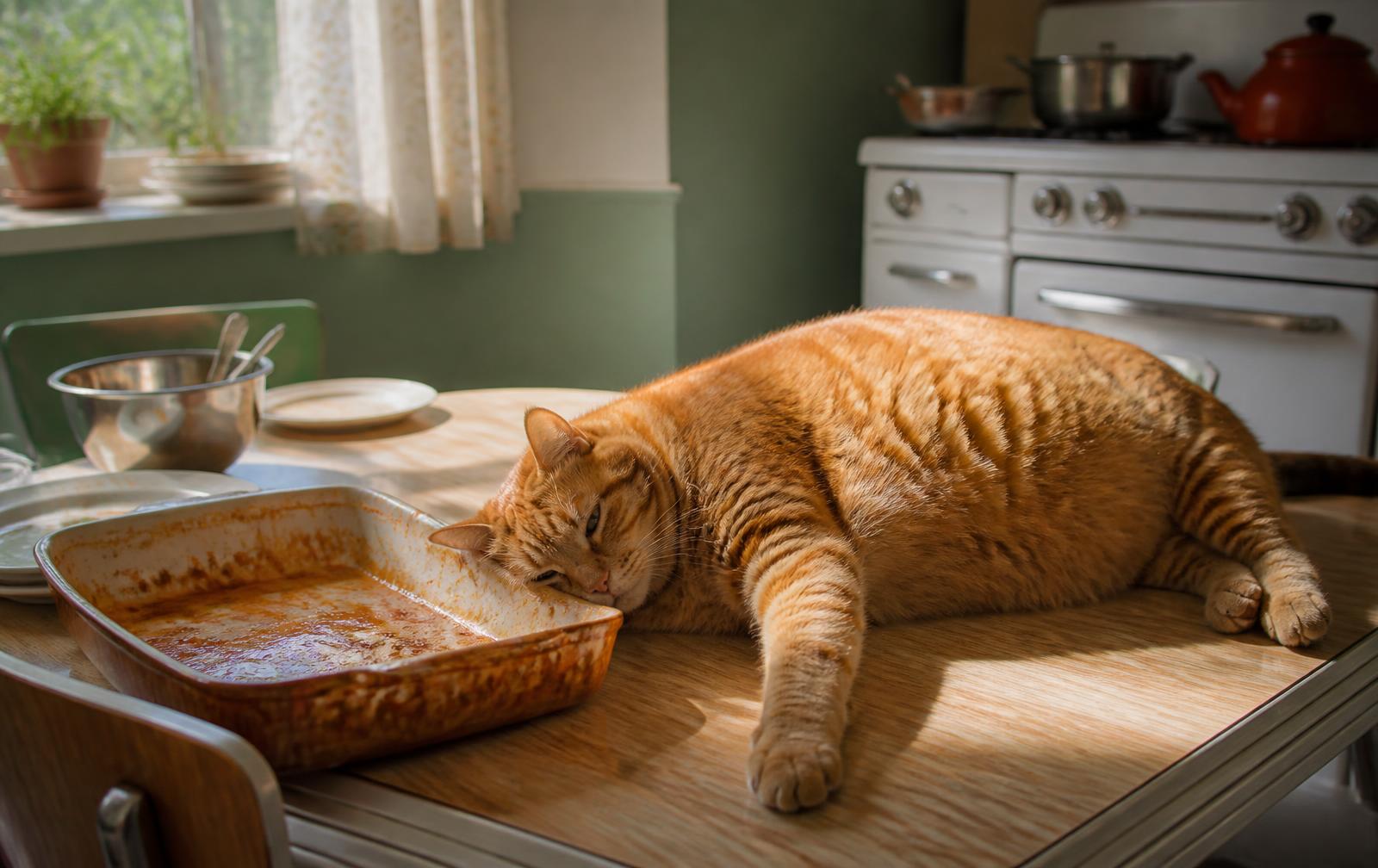
Few cartoon cats have burrowed as deeply into popular culture as Garfield. Since Jim Davis first put pen to paper in 1978, the orange, lasagna-obsessed tabby has sprawled across newspapers, television screens, cinema, and merchandise shelves the world over, becoming shorthand for every cat owner who has ever been ignored by a sofa-bound feline at dinnertime. His grumpiness, his disdain for Mondays, and his singular devotion to food have made him one of the most recognisable cartoon characters in history.
But Garfield's staying power is not an accident of nostalgia. It comes from a character built on exaggerated, but recognisable, truths about cats: their appetite, their independence, and their flair for the dramatic. In short: Garfield endures because he is a loving caricature of real cat behaviour, wrapped in nearly five decades of consistent, food-driven comedy that both cat lovers and casual readers instantly recognise.
From Comic Strip to Cultural Institution
Jim Davis launched Garfield in a small number of American newspapers, and within a few years the strip had become one of the most widely syndicated comics in the world. Its formula was simple: short, punchy gags built around Garfield's laziness, his contempt for his owner Jon Arbuckle's failed attempts at romance, and his ongoing rivalry with Odie the dog. The strip's clean, uncluttered art style and consistent joke structure made it easy to translate across languages and cultures, which helped it travel far beyond the United States.
The character's evolution over the decades tracks neatly with shifts in media itself:
- 1978–1980s: The original comic strip format establishes Garfield's core traits — sarcasm, sloth, and an insatiable appetite.
- 1980s–1990s: Animated television specials and the long-running Garfield and Friends series bring his voice (literally) to a new generation.
- 2000s: A pair of live-action/CGI hybrid films introduce Garfield to viewers who had never picked up a newspaper comic.
- 2010s–2020s: Webcomics, mobile games, and streaming content keep the character relevant for digital-native audiences.
- 2020s onward: A fully animated feature film reintroduces Garfield to cinema audiences worldwide.
This ability to adapt format without losing character identity is rare in comic strip history, and it is a large part of why Garfield remains a household name rather than a period curiosity.
Why the Lasagna Obsession Works So Well
Garfield's love of lasagna is more than a running gag; it is the engine of much of the strip's comedy. Food-driven jokes are universally accessible: everyone understands greed, everyone understands the frustration of a diet interrupted, and everyone has met an animal (or a person) who organises their entire day around the next meal.
For real cat owners, the joke lands because it is only a slight exaggeration. Cats are obligate carnivores with a strong, instinct-driven interest in food, and many genuinely do treat mealtimes as the highlight of an otherwise sedate day. According to the Cornell Feline Health Center, a cat's appetite and food-seeking behaviour are deeply tied to their evolutionary history as hunters, which explains why even a well-fed, indoor cat will still pester an owner for a snack. Garfield simply removes any restraint from that instinct and lets it run the show.
Garfield's Personality: A Study in Exaggerated Cat Traits
Part of the strip's genius lies in how accurately it captures specific, relatable cat behaviours, even while dialling them up for comic effect.
| Garfield trait | Real-world cat behaviour it exaggerates |
|---|---|
| Refuses to move on Mondays | Cats sleep 12–16 hours a day and value routine |
| Manipulates Jon for food | Cats learn to vocalise and pester for meals and treats |
| Bullies Odie affectionately | Multi-pet households often show playful dominance dynamics |
| Avoids exercise wherever possible | Indoor cats can become sedentary without enrichment |
| Shows sudden bursts of destructive energy | Cats experience short bursts of high activity, sometimes called "zoomies" |
Understanding these real behaviours matters beyond comedy. The International Cat Care organisation notes that appetite, activity levels, and routine are all useful indicators of a cat's wellbeing, and sudden changes in any of them are worth discussing with a vet. Garfield is fiction, but the traits he satirises are genuinely useful things for owners to watch.
The Business of Being a Cartoon Icon
Garfield's commercial reach is enormous, spanning plush toys, greetings cards, apparel, video games, and one of the most famous car-window suction-cup toys in pop culture history. This kind of longevity requires more than a funny drawing; it requires a character flexible enough to be licensed across countless products while staying instantly identifiable at a glance — the orange and black stripes, the half-lidded eyes, the perpetual look of mild disdain.
That visual simplicity is deliberate. Jim Davis has spoken about designing Garfield to be easy to draw and merchandise, a decision that mirrors how many successful cartoon characters, from Snoopy to Hello Kitty, prioritise clean, adaptable silhouettes. It is a useful case study for anyone curious about why some characters become timeless while others fade after a single decade.
What Garfield Gets Right (and Wrong) About Real Cats
It is worth separating the comedy from responsible cat care. Garfield's diet of lasagna, sweets, and general overindulgence is a joke, not a guideline. In real life, a rich, human-style diet can lead to obesity and related health problems in cats, and the AVMA recommends portion-controlled, nutritionally complete diets rather than free access to rich table food.
Where Garfield does get something right, even if unintentionally, is his enthusiasm for flavour. Cats are famously particular eaters, and a treat that genuinely excites a cat's palate can transform an otherwise routine day, much as lasagna transforms Garfield's. This is part of the thinking behind Cleos lickable treats, which are designed with clean, named ingredients and a texture cats find genuinely enticing, without relying on the fillers or excess that make Garfield's fictional diet so comically unhealthy. A treat time ritual, done well, can be a small daily highlight for a cat — much like bonding with your cat through treat time rituals suggests, without the cartoon consequences.
If you are curious about how real feline appetite compares to Garfield's fictional one, it is also worth reading about why cats love lickable treats, which explains the sensory reasons behind a cat's food preferences.
Garfield's Legacy in Cat Culture
Nearly five decades on, Garfield remains one of the most effective ambassadors for the idea that cats have personality, opinion, and comic timing. He has shaped how generations of non-cat-owners perceive feline behaviour, often as an entry point before they adopt a cat of their own and discover the exaggerations are, indeed, exaggerations — mostly.
His longevity is a reminder that good character comedy about animals works best when it is rooted in real behaviour. Garfield's laziness, appetite, and disdain for Mondays are funny precisely because so many cat owners have lived a milder version of the same scene in their own kitchen.
Frequently Asked Questions
When was Garfield created?
Garfield was created by Jim Davis and first appeared as a syndicated newspaper comic strip in 1978.
Is Garfield based on a real cat?
Garfield's personality was inspired by Jim Davis's own observations of cats and his grandfather's farm cats, though he is not modelled on a single specific cat.
Why does Garfield love lasagna so much?
The lasagna obsession became a running gag early in the strip's history and stuck because it gave Garfield a clear, relatable comic motivation: an insatiable love of food.
Should real cats eat a diet like Garfield's?
No. Garfield's diet is a comedic exaggeration. Real cats need nutritionally balanced, portion-controlled diets, with occasional treats rather than rich, human-style food.
What can Garfield teach real cat owners?
Garfield exaggerates real feline traits like appetite, routine, and independence, which can help owners recognise and appreciate similar (milder) behaviours in their own cats.
If you would like to give your own cat a treat-time moment worth looking forward to, minus the cartoon indulgence, join the Cleos waitlist for clean, genuinely tasty lickable treats made for real cats.
The Enduring Appeal of a Simple Idea
Part of what keeps Garfield relevant, even for readers who have never picked up a physical newspaper, is how well the character travels across cultural and generational lines. A joke about hating Mondays or loving food does not require deep knowledge of a specific setting, timeframe, or reference point, which is precisely why the strip has been translated into dozens of languages and syndicated across so many countries. Where some comic strips age quickly because they rely on topical references, Garfield's humour stays close to universal, low-stakes truths about comfort, routine, and appetite.
This simplicity also makes Garfield a useful lens for thinking about how cats are represented more broadly in popular culture. Long before internet cat videos became a global phenomenon, Garfield had already established the template: cats as wry, food-motivated, faintly superior companions who tolerate their humans rather than obey them. That template still shapes how many people, cat owners and non-owners alike, imagine feline personality today.
Keep Cleos close
Get more Cleos stories on Google
Add Cleos as a preferred source to make our cat care guides easier to find in Google.
Add to Preferred SourcesFound this useful? Share it
Treats worth reading the label for.
Cleos lickable treats are built on real, named ingredients — Real Chicken, Real Tuna, Tuna & Shrimp and Chicken & Veggies — with zero artificial fillers.
Join the Cleos waitlistKeep reading
Travel Carriers and Cat Crates: Stress-Free Transport
Choose the right cat carrier or crate and learn practical tips for calmer vet visits, car trips, and moves with your feline companion.
Read more →

Pet Cameras and Monitoring: Tech for Checking on Your Cat
A practical guide to pet cameras and monitoring systems for cats, covering features, placement, and how to use them without over-worrying.
Read more →
Food and Water Bowls: Material, Design, and Health Considerations
Compare cat food bowls and water bowls by material and design, including stainless steel bowls, to protect whisker health and hygiene.
Read more →