Cheshire Cat: The Most Mysterious Feline in Literature
Explore the Cheshire Cat's origins in Alice in Wonderland, its riddling wisdom, and why it remains literature's most mysterious feline character.
By the Cleos team · 26 July 2027 · 7 min read
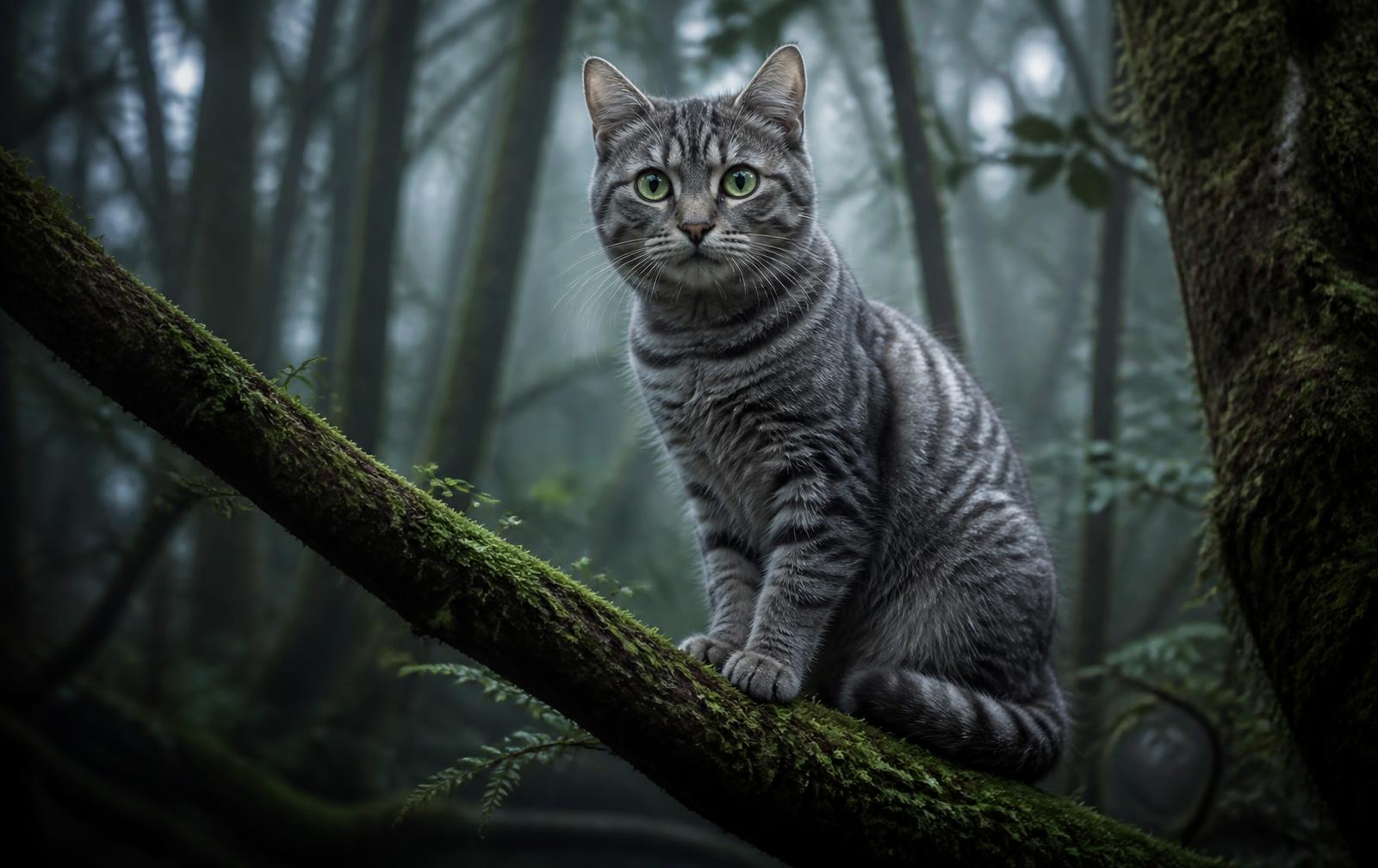
Long before internet cats made mischief famous, one grinning feline had already perfected the art of being delightfully unsettling. The Cheshire Cat, first introduced by Lewis Carroll in his 1865 novel Alice's Adventures in Wonderland, has become one of the most quoted, most illustrated, and most philosophically curious characters in English literature. He appears and disappears at will, speaks in riddles, and leaves behind nothing but a floating grin, and more than a century and a half later, readers are still trying to work out exactly what he means.
Part of the character's staying power is that he refuses to be pinned down, quite literally. In short: the Cheshire Cat endures as literature's most mysterious feline because Carroll wrote him as a walking paradox, a creature who is both helpful and unhelpful, present and absent, sane and mad, and who uses playful logic to needle at Alice's, and the reader's, assumptions about identity and reality, all while embodying the genuinely elusive, independent-minded nature that real cats are famous for.
Where the Cheshire Cat came from
Lewis Carroll, the pen name of mathematician and writer Charles Dodgson, introduced the Cheshire Cat partway through Alice's journey through Wonderland, where she encounters the cat sitting in a tree, grinning enigmatically at the Duchess's house before offering the confused heroine some decidedly unhelpful directions. The character's name likely draws on an old English expression, "grinning like a Cheshire cat," which was already in use before Carroll's novel and is thought to reference either the shape of Cheshire cheeses once moulded with a grinning cat's face, or the countenance of cats bred in the English county of Cheshire, though the precise origin of the phrase is genuinely uncertain and Carroll never clarified it definitively.
What Carroll did with the phrase, however, was entirely his own invention. He turned an idiom about an expression into a character built around vanishing, so that only the cat's smile lingers after the rest of him has faded from view, one of the most memorable single images in children's literature.
The riddles and wisdom of a very odd cat
Logic that unravels logic
The Cheshire Cat's most famous exchange with Alice, in which she asks which way she ought to go and he replies that it depends a great deal on where she wants to get to, before adding that if she does not much care where, then it does not much matter which way she goes, is often cited well outside literary criticism, including in discussions of decision-making and purpose. It is deceptively simple advice dressed up as nonsense, which is very much the character's signature move throughout the book.
Madness as a badge of honour
When Alice protests that she does not want to go among mad people, the cat calmly informs her that everyone in Wonderland is mad, including Alice herself, since she would not have come there otherwise. This casual dismantling of the line between sanity and madness is one of the more subversive ideas tucked inside what looks, on the surface, like a children's story.
Appearing and disappearing at will
Unlike other Wonderland characters, the Cheshire Cat is not bound by ordinary rules of presence. He fades in and out of scenes, sometimes leaving only his grin behind, famously appearing above the croquet ground during a tense confrontation with the Queen of Hearts, where his half-visible head causes considerable confusion among characters trying to work out how to behead a creature that has no body to behead.
Cheshire Cat compared with other famously mysterious literary and folkloric cats
Cats have long been used in storytelling to represent independence, cunning, and a certain otherworldliness. The Cheshire Cat sits within a broader tradition, though his particular brand of mystery is distinct.
| Character | Source | Defining Trait | Nature of the Mystery |
|---|---|---|---|
| Cheshire Cat | Alice's Adventures in Wonderland (1865) | Grins, vanishes, speaks in riddles | Existential, philosophical wordplay |
| Puss in Boots | European folk tale | Clever schemer who elevates his master | Trickster cunning, not otherworldliness |
| The Master's Cat, Behemoth | The Master and Margarita | Talking, gun-wielding demon cat | Supernatural chaos and satire |
| Church, from Pet Sematary | Stephen King's Pet Sematary | Returns from death subtly changed | Horror, uncanny wrongness |
Readers who enjoy tracing how fictional cats capture our imagination might also like our piece on cartoon cats ranked, which looks at more recent animated feline icons, and our roundup of which cartoon cat are you, a lighter look at feline archetypes in popular culture.
Why cats made the perfect vessel for this kind of mystery
Carroll's choice of a cat, rather than another animal, for this particular role was not accidental. Cats have long occupied an unusual cultural space, seen throughout history as aloof, independent, and only partly domesticated, in contrast to more overtly loyal companion animals. Organisations such as International Cat Care note that cats retain many independent, self-directed behaviours even after thousands of years alongside humans, which may partly explain why they have so often been cast in folklore and fiction as creatures who operate on their own terms, appearing and vanishing, watching quietly, and revealing only what they choose to.
This same real-world independence is part of what makes living with a cat so rewarding. A cat's affection often feels earned rather than automatic, and moments of connection, whether a chosen lap-sit or an eager greeting at treat time, carry a certain weight precisely because they are offered freely. At Cleos, we think that unpredictable, independent charm is part of what makes cats so endlessly fascinating, and it is one of the reasons we care so much about making treat time genuinely enjoyable, using clean, named ingredients and real protein your cat can actually taste and want, rather than relying on novelty alone. If you are curious about the format itself, our article on why cats love lickable treats explains more about what makes this style of treat so appealing to cats.
The Cheshire Cat's afterlife in popular culture
Few literary cats have had a cultural afterlife as rich as the Cheshire Cat's. He has been reimagined in numerous film and television adaptations of Alice in Wonderland, most notably in animated and live-action versions that have taken considerable creative liberties with his design, sometimes rendering him as a striped, almost psychedelic figure, and sometimes leaning into a more sinister, unpredictable persona than Carroll's original grinning philosopher.
Beyond direct adaptations, the character's central visual trick, a disembodied grin lingering after everything else fades, has become a shorthand reference used across advertising, animation, and even scientific writing, where "Cheshire Cat" is sometimes used as a descriptive term for phenomena that leave a visible trace after their source has disappeared. Few nineteenth-century fictional creations have proven so useful, and so enduring, as a piece of cultural vocabulary.
A character built for endless interpretation
Literary scholars have spent considerable energy debating what exactly the Cheshire Cat represents, from a symbol of madness and relativism to a stand-in for the reader's own uncertain footing in a story that constantly changes its own rules. Carroll, a mathematician fascinated by logic and its limits, likely intended at least some of this ambiguity deliberately, using the cat as a device to gently mock rigid, self-important logic through a character who bends rules while sounding perfectly reasonable throughout.
Frequently Asked Questions
Is the Cheshire Cat based on a real cat breed?
No specific breed is confirmed. The character's name most likely comes from the older English phrase "grinning like a Cheshire cat," which predates Carroll's novel, rather than from any particular breed associated with the English county of Cheshire.
What is the significance of the Cheshire Cat's smile?
The lingering grin, which remains visible even after the rest of the cat has vanished, has come to symbolise the idea of an impression or trace outlasting its source. It is one of the most recognisable single images to emerge from Alice's Adventures in Wonderland.
Why does the Cheshire Cat speak in riddles?
Carroll used the character's riddling style to explore ideas about logic, madness, and perspective, often through exchanges that sound like nonsense but contain a kernel of genuine philosophical insight, most famously his advice to Alice about the irrelevance of direction when one has no destination in mind.
Does the Cheshire Cat appear in the original illustrations?
Yes. Sir John Tenniel's original illustrations for the 1865 edition depicted the Cheshire Cat with a distinctive striped body and wide grin, an image that has influenced most subsequent visual interpretations of the character.
If your own cat has a bit of that same independent, watch-you-from-a-distance charm, why not make the moments they do choose to spend with you a little more special. Join the Cleos waitlist to be among the first to try our lickable treats, made with clean, named ingredients your cat will actually want to come back for.
Keep Cleos close
Get more Cleos stories on Google
Add Cleos as a preferred source to make our cat care guides easier to find in Google.
Add to Preferred SourcesFound this useful? Share it
Treats worth reading the label for.
Cleos lickable treats are built on real, named ingredients — Real Chicken, Real Tuna, Tuna & Shrimp and Chicken & Veggies — with zero artificial fillers.
Join the Cleos waitlistKeep reading
Travel Carriers and Cat Crates: Stress-Free Transport
Choose the right cat carrier or crate and learn practical tips for calmer vet visits, car trips, and moves with your feline companion.
Read more →
Pet Cameras and Monitoring: Tech for Checking on Your Cat
A practical guide to pet cameras and monitoring systems for cats, covering features, placement, and how to use them without over-worrying.
Read more →
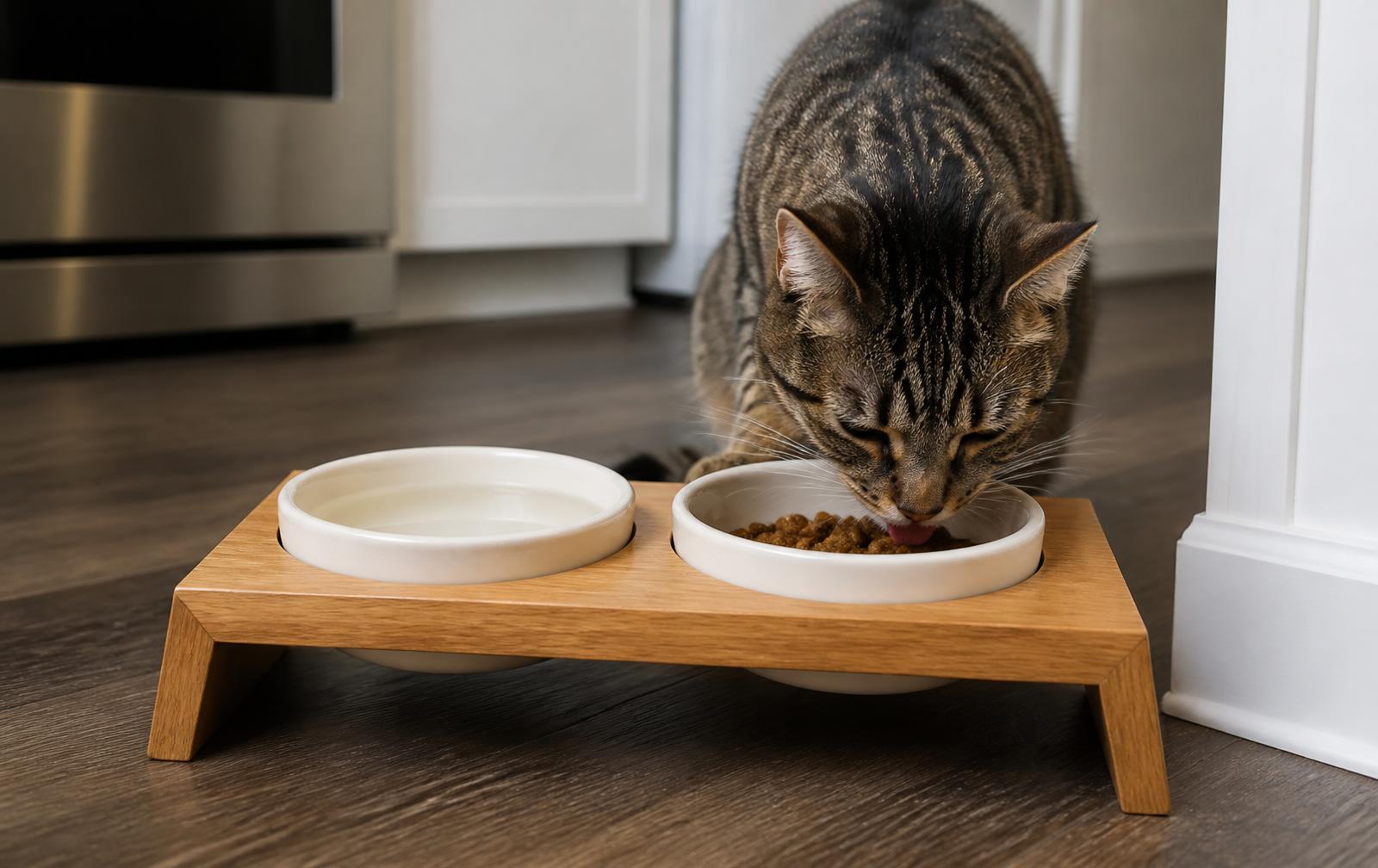
Food and Water Bowls: Material, Design, and Health Considerations
Compare cat food bowls and water bowls by material and design, including stainless steel bowls, to protect whisker health and hygiene.
Read more →