Why Cats Purr: The Meaning Behind the Sound
Cats purr when happy, but also when stressed, healing or asking for food. Learn the science of purring and how to read your cat's purrs in context.
By the Cleos team · 10 January 2028 · 4 min read
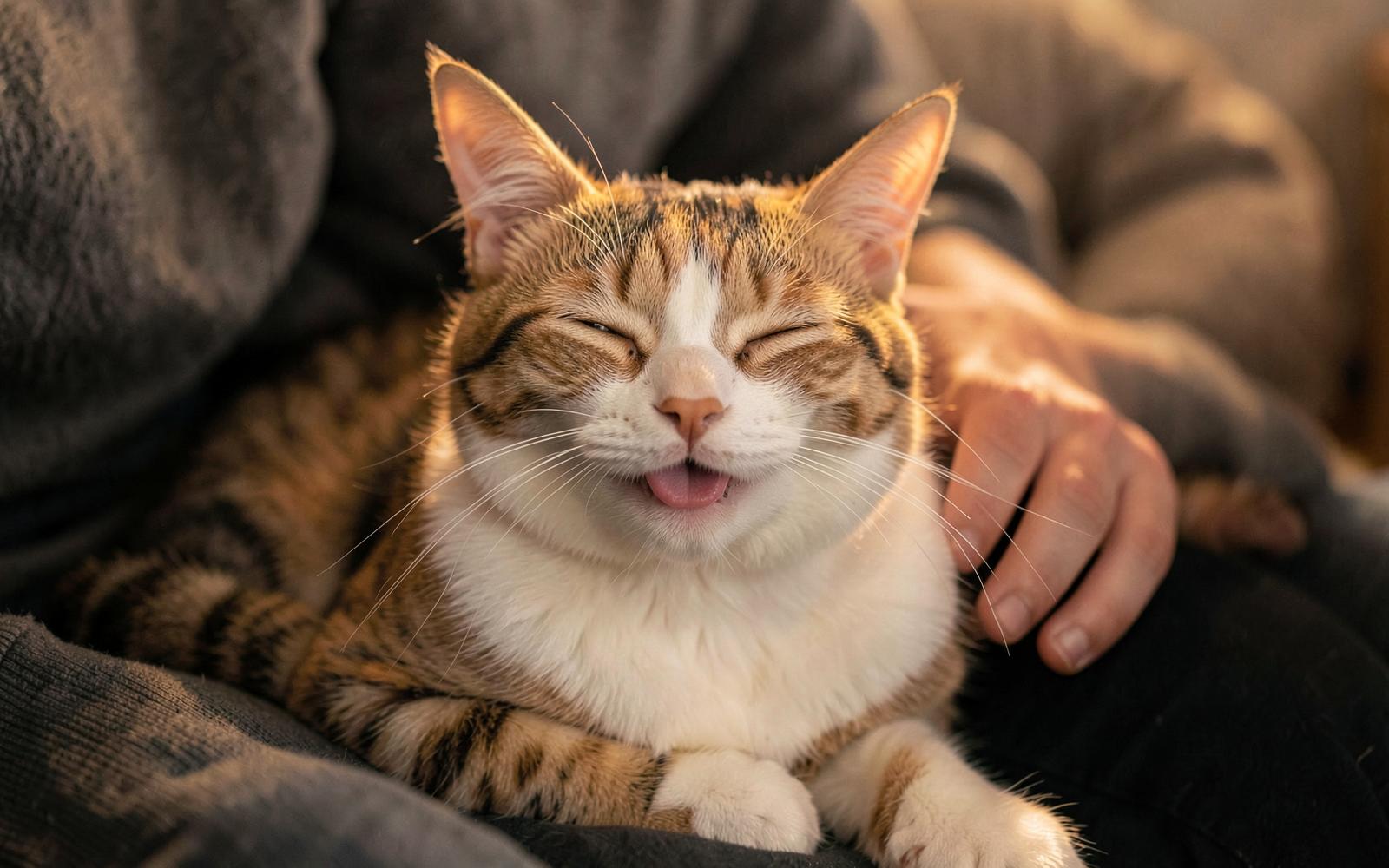
The purr is the most beloved sound in the feline repertoire. That soft, rumbling vibration that signals all is right in your cat's world. Except when it doesn't. Purring turns out to be far more complex and fascinating than simple happiness, and understanding it deepens how you read your cat.
In short: Cats purr primarily when content, but also when stressed, in pain, frightened, or even near death, purring appears to be a self-soothing and healing mechanism as much as a happiness signal. Purr frequencies (25-150 Hz) coincide with ranges shown to promote bone and tissue healing. Context tells you which purr you're hearing: relaxed body language means contentment; purring with tension, hiding, or illness signs suggests self-comfort or a vet visit.
How the Purr Works
Cats purr by rapidly contracting and relaxing the muscles of the larynx (voice box), which opens and closes the space between the vocal cords roughly 25-150 times per second. Uniquely, cats purr continuously, on both the inhale and the exhale, creating that unbroken rumble.
Kittens purr within days of birth, likely as a communication channel with their mother while nursing. Mother cats purr back. It's one of a cat's first social sounds, which hints at its deeper purpose.
The Different Reasons Cats Purr
1. Contentment
The classic. A relaxed cat, half-closed eyes, loose body, kneading paws, settled on a warm lap. This purr means exactly what you hope it means. Contentment purring often accompanies the behaviours we explore in bonding with your cat.
2. Self-Soothing
Cats purr in stressful situations: at the vet, during car rides, when frightened, even when giving birth. The leading interpretation is self-comfort, the feline equivalent of a child hugging themselves. The vibration appears to have genuine calming effects on the cat's own nervous system.
3. Healing
This is where purring gets remarkable. Purr frequencies of 25-50 Hz correspond to ranges shown in research to stimulate bone density and tissue repair, and frequencies up to 100+ Hz are used therapeutically for soft tissue healing. Some researchers theorise purring evolved partly as a low-energy healing mechanism, a built-in therapy for an animal that sleeps 12-16 hours a day. Cats do heal from bone and tendon injuries unusually well for a mammal, and purring may contribute.
4. Solicitation (The "I Want Something" Purr)
Cats have developed a special purr for manipulating humans. Researchers identified the "solicitation purr": a normal purr with an embedded high-frequency cry, similar in pitch to a human baby's cry. Humans rate these purrs as more urgent and less pleasant, and they're strikingly effective at getting owners to feed their cats. Your cat has, in a very real sense, learned to push your buttons.
5. Pain and Distress
Cats purr when injured, ill, or dying. This confuses and sometimes distresses cat parents ("they seemed happy at the end"), but it fits the self-soothing/healing function, purring when the body needs it most.
How to Read the Context
Since purring spans such different states, read the whole cat:
| Signal | Content Purr | Stress/Pain Purr |
|---|---|---|
| Body posture | Loose, stretched, kneading | Tense, hunched, tucked |
| Eyes | Half-closed, soft | Wide, dilated, or squinting in pain |
| Location | Open, on you, favourite spots | Hidden, unusual places |
| Appetite | Normal | Reduced or absent |
| Behaviour | Social, playful | Withdrawn, lethargic |
| Ears/tail | Neutral, gently moving | Flattened ears, tucked or lashing tail |
A cat purring while hiding, refusing food, or showing other illness signs needs a vet, not assumptions.
The Special Case: Purring Together
One of the best moments in cat parenthood is the mutual purr session, your cat on your lap, you stroking them, both settling into calm. These moments are genuine co-regulation: your cat's purring can lower your blood pressure and stress, while your calm presence does the same for them. Adding a small lickable treat to these rituals, offered slowly from your fingers, layers in positive association and deepens the trust being built.
Join the Cleos Waitlist: Cleos lickable treats are made for quiet lap-time moments like these. Be first to try them at https://getcleos.in/#waitlist.
Frequently Asked Questions
Do all cats purr?
Most domestic cats purr, but a small number never do. Or purr too quietly to detect. Interestingly, big cats split differently: lions, tigers, leopards, and jaguars can roar but can't truly purr, while cheetahs and cougars purr but can't roar. It comes down to the structure of the hyoid bone in the throat.
Why does my cat purr and then bite me?
Usually overstimulation. During long petting sessions, some cats hit a sensory threshold where pleasant touch becomes irritating, the purr continues while tension builds, then a quick bite says "enough." Watch for warning signs: tail twitching, skin rippling, ears rotating back. Stopping before the threshold keeps sessions positive.
Can cats purr when they're alone?
Yes, cats purr when alone, particularly when resting in favourite spots, eating, or (less happily) when ill or in pain. Purring isn't purely social communication; its self-soothing and healing functions don't require an audience.
Why does my cat's purr sound different sometimes?
Purr quality varies with emotional and physical state. The solicitation purr (with its embedded cry) sounds more urgent. Pain purrs can be rougher or more strained. Age changes purring too. Some senior cats purr more quietly as laryngeal muscles change. A sudden change in your cat's purr alongside other symptoms is worth mentioning to your vet.
Keep Cleos close
Get more Cleos stories on Google
Add Cleos as a preferred source to make our cat care guides easier to find in Google.
Add to Preferred SourcesFound this useful? Share it
Treats worth reading the label for.
Cleos lickable treats are built on real, named ingredients: Real Chicken, Real Tuna, Tuna & Shrimp and Chicken & Veggies. No artificial fillers.
Join the Cleos waitlistKeep reading
Travel Carriers and Cat Crates: Stress-Free Transport
Choose the right cat carrier or crate and learn practical tips for calmer vet visits, car trips, and moves with your feline companion.
Read more →
Pet Cameras and Monitoring: Tech for Checking on Your Cat
A practical guide to pet cameras and monitoring systems for cats, covering features, placement, and how to use them without over-worrying.
Read more →
Food and Water Bowls: Material, Design, and Health Considerations
Compare cat food bowls and water bowls by material and design, including stainless steel bowls, to protect whisker health and hygiene.
Read more →