Grooming Supplies: Brushes, Nail Clippers and Essentials
The cat grooming supplies that actually matter, from brushes and combs to nail clippers, ear care and building a calm grooming routine.
By the Cleos team · 19 July 2027 · 7 min read
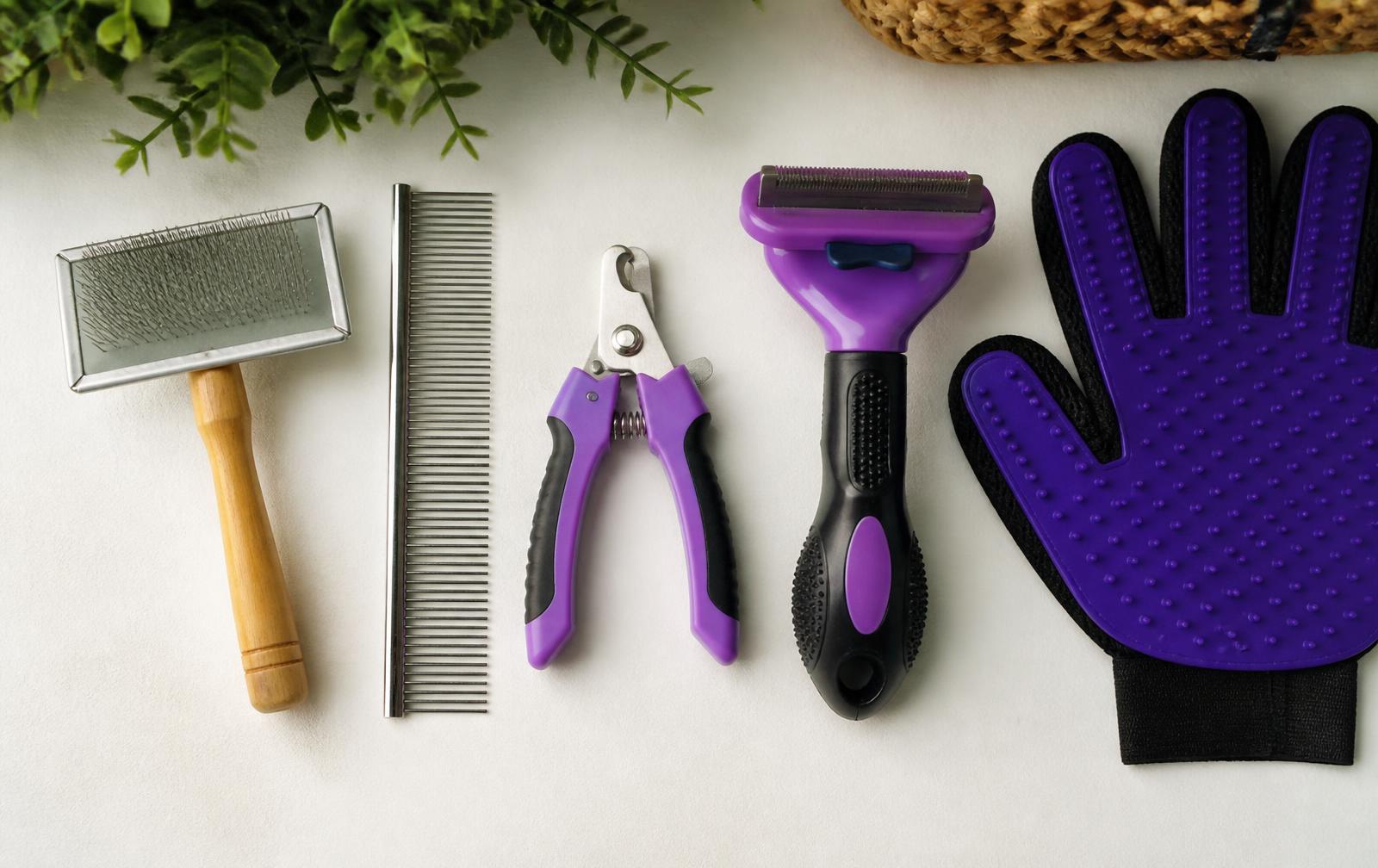
Cats groom themselves diligently, which leads a lot of owners to conclude that grooming tools are optional. They are not. Self-grooming manages surface dirt and coat alignment; it does not prevent mats in a long-haired cat, remove the volume of loose hair that ends up as hairballs, or keep claws from growing into the pads of a sedentary senior.
What grooming supplies does a cat actually need? In short: a slicker or rubber brush suited to the coat length, a metal comb for long-haired cats, scissor-style nail clippers, and a few basics like unscented wipes and a soft towel. Everything beyond that is refinement.
Why Regular Grooming Matters
- Fewer hairballs. Hair you remove with a brush is hair your cat does not swallow.
- Mat prevention. Mats pull painfully on the skin and can hide sores or parasites underneath.
- Skin monitoring. Grooming is a weekly hands-on check for lumps, scabs, fleas and sore spots.
- Claw health. Untrimmed claws can curl into the paw pad, which is painful and surprisingly common in older cats.
- Bonding. For many cats, a short brushing session becomes something they actively seek out.
The Cornell Feline Health Center and similar veterinary sources note that grooming needs increase with age, as arthritis and reduced flexibility make self-grooming harder — often first visible as a scruffy patch along the lower back.
Brushes and Combs: Matching Tool to Coat
| Tool | What it does | Best for |
|---|---|---|
| Rubber curry / grooming mitt | Lifts loose hair, gentle massage | Short-haired cats, grooming-averse cats |
| Slicker brush | Fine angled wires remove undercoat | Medium and long coats |
| Metal greyhound comb | Finds and works through tangles | Long-haired cats, essential for mat prevention |
| Deshedding tool | Removes dense undercoat | Heavy shedders, used sparingly |
| Flea comb | Very fine teeth, detects flea dirt | All cats, diagnostic use |
| Mat splitter | Cuts through small mats safely | Long-haired cats, with care |
For a short-haired cat, a rubber mitt once or twice a week is usually enough. For a long-haired cat, a metal comb every day is not excessive — long coats mat at the armpits, behind the ears, on the belly and around the britches, all places a slicker brush skims over without reaching the skin.
Deshedding tools are effective but easy to overuse. Once a week during heavy shedding season, with a light hand, is plenty; aggressive use can irritate skin and damage the guard coat.
Nail Clippers and Claw Care
Two designs dominate. Scissor-style clippers are the easiest to control on a cat and are the usual recommendation. Guillotine-style clippers require the claw to be threaded through a hole, which is fiddly on a squirming cat and can crush rather than cut if the blade is dull.
Trimming technique matters more than the tool:
- Choose a moment when your cat is relaxed and drowsy, not mid-play.
- Press gently on the top of the toe and the pad to extend the claw.
- Identify the quick — the pink triangle of blood vessel and nerve inside the claw.
- Cut only the clear hook, staying two millimetres clear of the quick.
- Do one or two claws and stop. Five short sessions beat one long battle.
Keep styptic powder in the kit for the occasional nicked quick; it stops bleeding quickly and is far calmer than improvising. Most indoor cats need a trim every two to four weeks, and front claws usually need it more often than back.
Trimming is a complement to scratching posts, not a replacement — scratching serves marking and stretching purposes that nail care does not.
Ear, Eye and Dental Basics
Ears should be pale pink and largely clean. Wipe only the visible outer ear with a damp cotton pad or a vet-approved ear cleaner; never insert anything into the canal. Dark, coffee-ground debris or a yeasty smell warrants a veterinary appointment rather than more cleaning, since ear mites and infections both present that way.
Eyes need little beyond wiping away normal crusting with a separate damp pad for each eye. Flat-faced breeds often need daily attention to tear staining.
Dental care is the most neglected area of feline grooming and arguably the most consequential. A finger brush or small soft toothbrush with a cat-specific enzymatic toothpaste, used a few times a week, meaningfully slows plaque. Never use human toothpaste, which contains fluoride and sometimes xylitol, both dangerous for cats.
Bathing: Usually Unnecessary, Occasionally Essential
Most cats never need a bath. The exceptions are worth knowing: contamination with something toxic or sticky, severe soiling in a cat unable to groom herself, certain medicated washes prescribed by a vet, and hairless breeds who need regular skin cleaning.
When a bath is genuinely needed, use lukewarm water, a cat-specific shampoo, a non-slip mat in the sink, and a second pair of hands. Dog shampoos are not automatically safe for cats. For lighter jobs, unscented pet wipes or a damp cloth handle most spot cleaning without the drama.
Handling Mats Safely
Never cut a mat out with scissors. Cat skin is thin and mobile, and it tents up into the mat far more than you would expect — accidental lacerations from mat removal are a routine veterinary presentation.
Work small mats loose with your fingers first, then a comb, holding the hair at the base so you are not pulling on the skin. A mat splitter can help with slightly larger ones. Anything tight against the skin, larger than a coin, or in a sensitive area should be shaved by a groomer or vet with clippers.
Building a Cat Who Tolerates Grooming
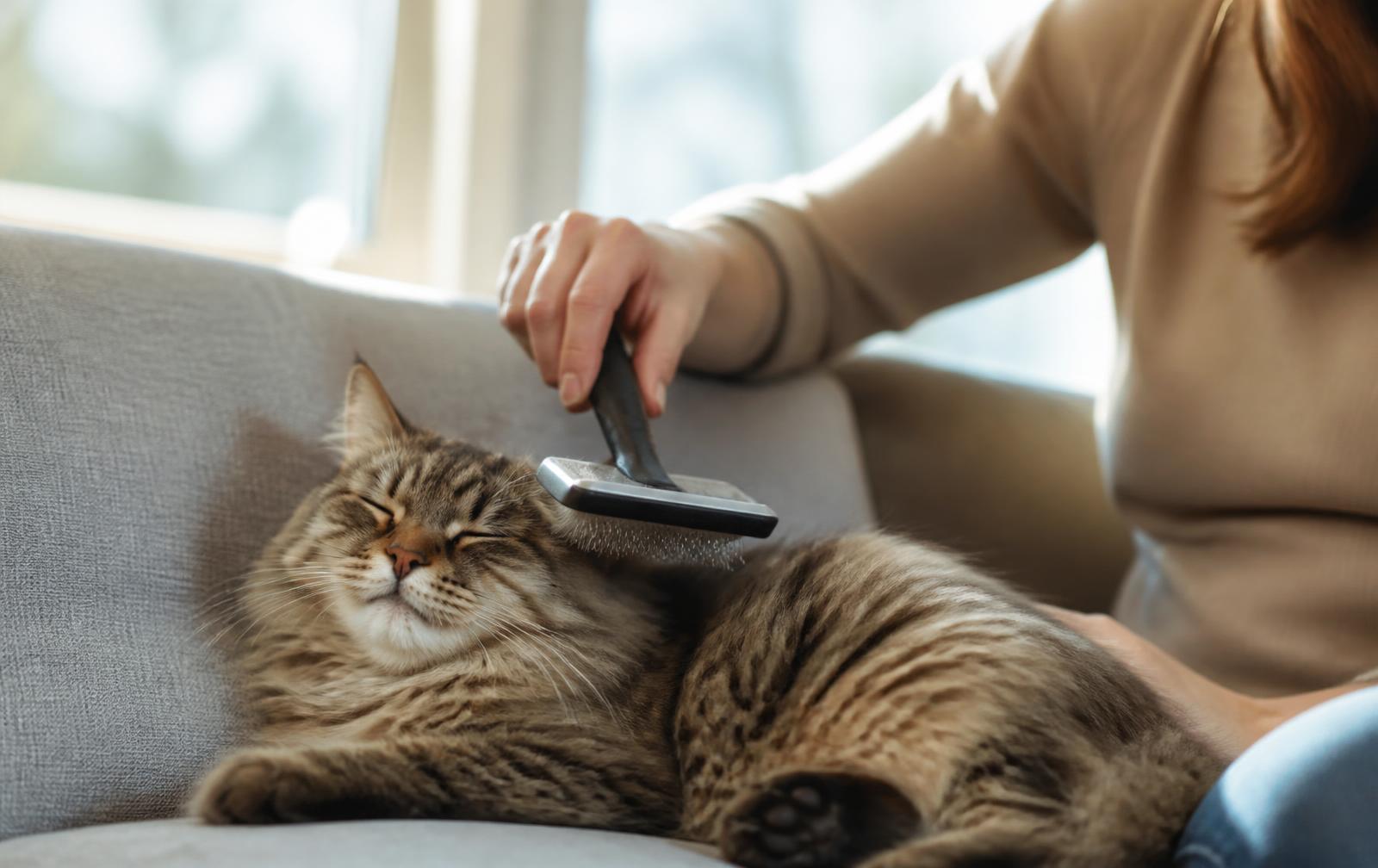
Short and positive beats thorough and traumatic. Start with sixty-second sessions in a place your cat already likes. Brush along the cheeks, chin and back first — the areas most cats enjoy — and leave the belly and back legs until later. Stop before she asks you to stop, and finish every session with something she values, such as a lick of a favourite treat, so the routine builds a positive association rather than a grudge.
If your cat consistently reacts badly to being touched in one specific area, treat that as possible pain rather than stubbornness and mention it at the next check-up.
A Starter Kit
For most households: a rubber mitt or slicker brush, a metal comb, scissor-style clippers, styptic powder, a flea comb, unscented wipes, a soft towel, and a cat toothbrush with enzymatic paste. That covers routine care for the vast majority of cats without cluttering a drawer with novelty gadgets.
Grooming by Life Stage
Grooming needs shift across a cat's life, and adjusting the routine matters more than upgrading the tools. Kittens rarely need much practical grooming, but this is exactly the window to build tolerance: brief handling of paws, ears and mouth, paired with rewards, creates an adult who accepts nail trims without a struggle. Adult cats settle into a predictable routine dictated mostly by coat length. Senior cats need the most attention and often get the least, because their needs change gradually. Reduced flexibility means the lower back and base of the tail stop being groomed properly, thickened claws catch on fabric, and dental disease becomes more likely. From around ten years old, it is worth increasing brushing frequency and checking claws every fortnight regardless of what the routine used to be.
Signs That Need a Vet, Not a Brush
Grooming sessions double as health checks, so it helps to know what should prompt a call rather than a change of technique. Sudden over-grooming that creates bald strips, particularly on the belly or inner thighs, often reflects stress, allergy or pain. A cat who abruptly stops grooming and develops a greasy, unkempt coat may be unwell, arthritic or overweight. Flea dirt found on a flea comb — small black specks that turn rust-red on damp paper — needs treatment for every pet in the household and the environment, not just a wash. Scabs along the back, persistent ear debris, cloudy eyes and any lump found under the coat all warrant a veterinary opinion. Regular hands-on grooming is often how these things get caught early, which is a quiet argument for keeping the routine going even with a cat who seems to manage perfectly well on her own.
Frequently Asked Questions
How often should I brush my cat?
Short-haired cats do well with once or twice a week; long-haired cats generally need daily combing to prevent mats.
How often do cats need their nails trimmed?
Every two to four weeks for most indoor cats. Check senior cats more often, since their claws thicken and they scratch less.
What if I cut the quick and it bleeds?
Apply styptic powder or cornflour with light pressure. The bleeding usually stops within a minute; contact your vet if it persists.
Can I use human shampoo or toothpaste on my cat?
No. Human toothpaste can contain fluoride or xylitol, and human shampoos disrupt feline skin pH. Use cat-specific products only.
My long-haired cat has a tight mat. Should I cut it out?
No — cat skin lifts easily into mats and scissors cause frequent injuries. Have tight mats clipped out by a groomer or vet.
Want to end every grooming session on a high note? Join the Cleos waitlist for a high-protein lickable treat that makes the brush worth tolerating.
Keep Cleos close
Get more Cleos stories on Google
Add Cleos as a preferred source to make our cat care guides easier to find in Google.
Add to Preferred SourcesFound this useful? Share it
Treats worth reading the label for.
Cleos lickable treats are built on real, named ingredients — Real Chicken, Real Tuna, Tuna & Shrimp and Chicken & Veggies — with zero artificial fillers.
Join the Cleos waitlistKeep reading
Travel Carriers and Cat Crates: Stress-Free Transport
Choose the right cat carrier or crate and learn practical tips for calmer vet visits, car trips, and moves with your feline companion.
Read more →

Pet Cameras and Monitoring: Tech for Checking on Your Cat
A practical guide to pet cameras and monitoring systems for cats, covering features, placement, and how to use them without over-worrying.
Read more →
Food and Water Bowls: Material, Design, and Health Considerations
Compare cat food bowls and water bowls by material and design, including stainless steel bowls, to protect whisker health and hygiene.
Read more →