Cat Collars, Harnesses and Leashes: Safety First
A safety-first guide to cat collars, harnesses and leashes, covering breakaway buckles, correct fit and gentle harness training at home.
By the Cleos team · 26 July 2027 · 7 min read
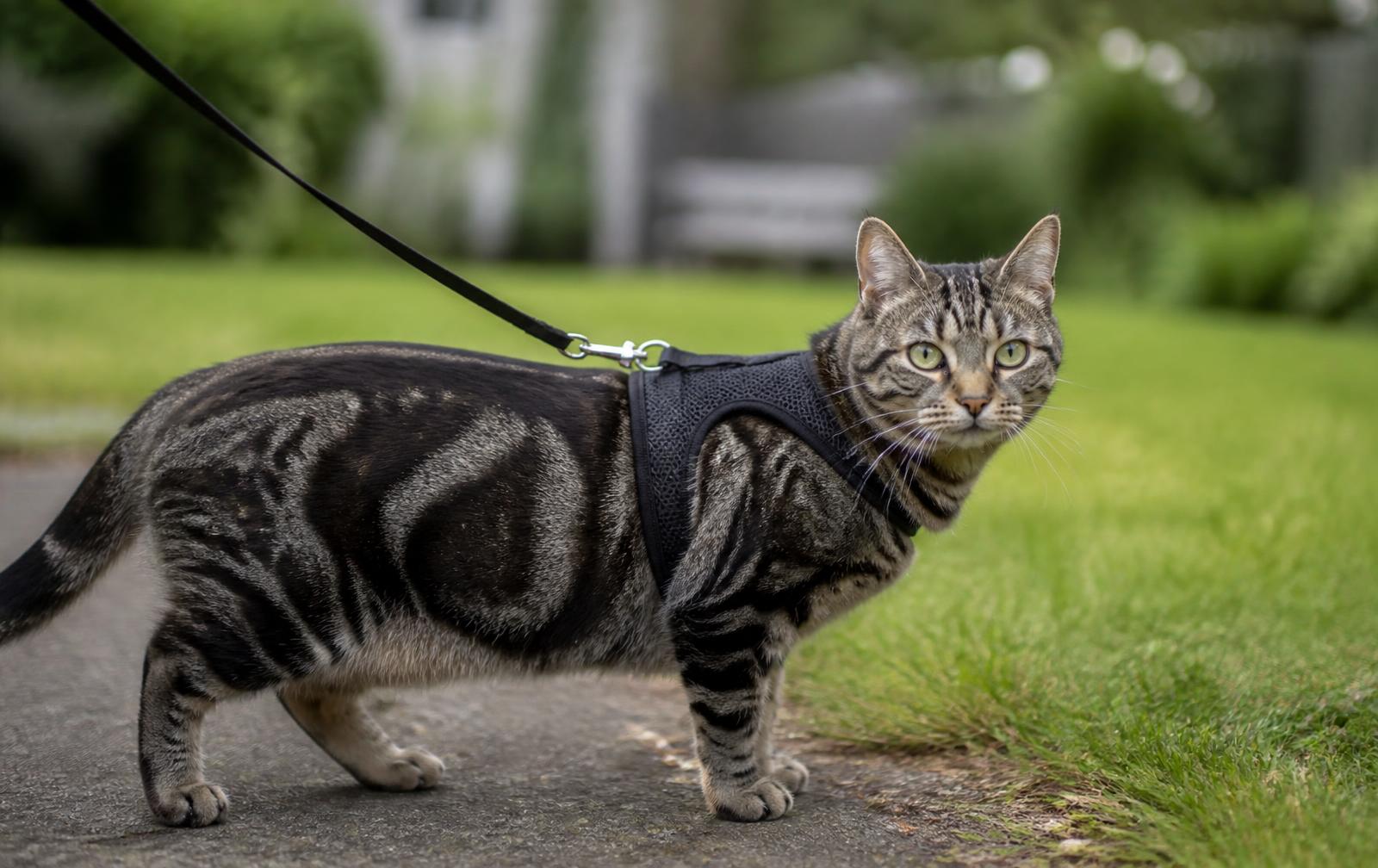
Collars and harnesses sit in an odd corner of cat ownership. Some cats wear one from kittenhood and never think about it; others treat the first fitting as a personal insult and collapse sideways in protest. Getting the equipment right — and the introduction slower than feels necessary — makes the difference between useful safety kit and an expensive drawer ornament.
Are collars safe for cats? In short: yes, provided you use a breakaway safety collar fitted so two fingers slide underneath, and never attach a lead to a collar. For walks or travel, use a properly fitted H-style or vest harness instead, introduced gradually indoors.
Why Collars Still Matter in the Age of Microchipping
A microchip is the definitive form of identification and every cat should have one, registered and kept up to date. But a chip requires someone to catch the cat and take her to a vet or shelter to be scanned. A visible collar tag does something a chip cannot: it tells a neighbour, immediately, that this cat is owned and where she lives.
That is why most welfare organisations, including the RSPCA, recommend both rather than choosing between them.
- A tag can resolve a wandering cat in minutes rather than days.
- A collar signals to well-meaning strangers that the cat is not a stray in need of rescue.
- Reflective or high-visibility collars improve a cat's odds near roads at dusk.
Choosing a Safe Collar
Breakaway Buckles Are Non-Negotiable
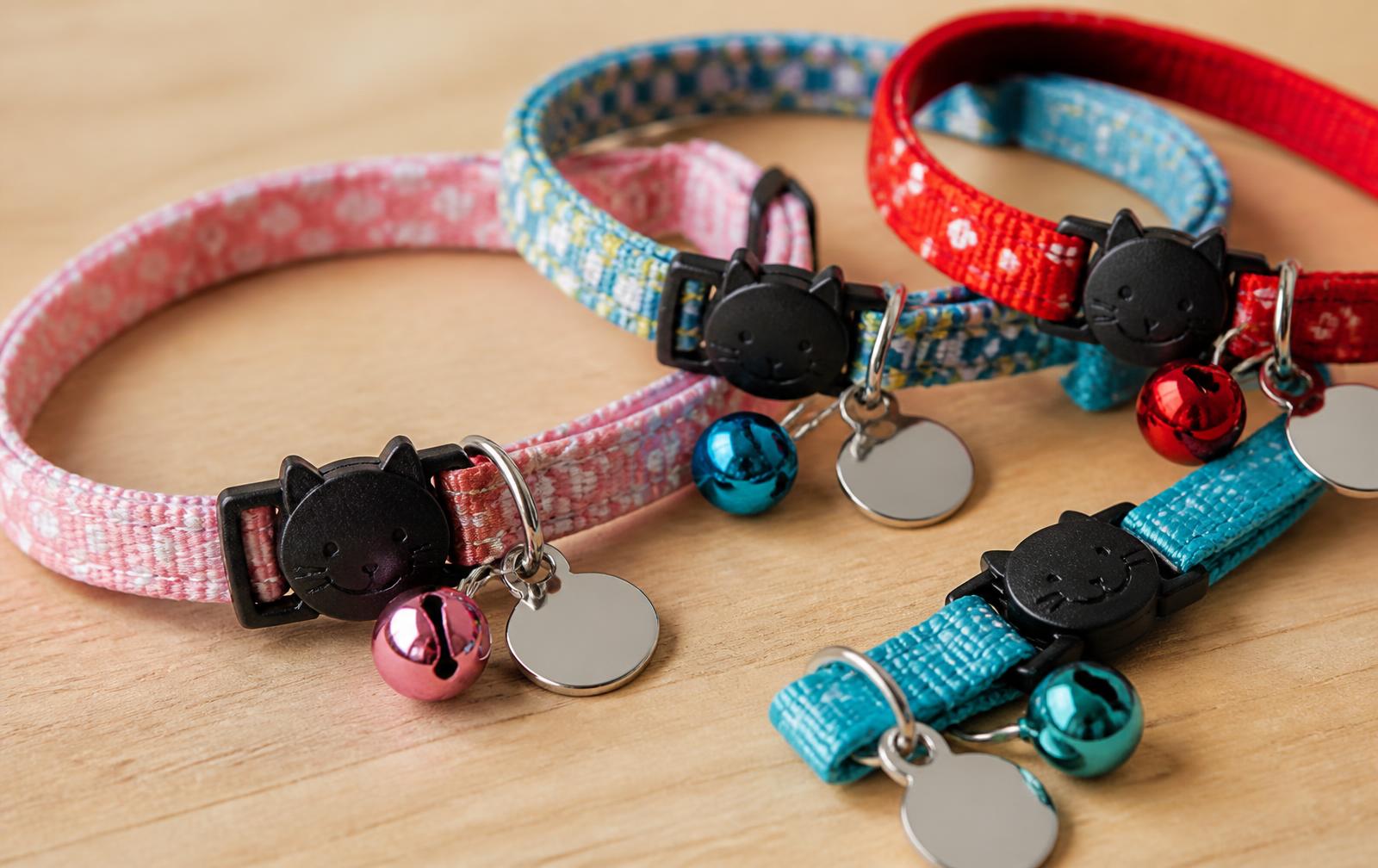
A cat collar must have a breakaway or snap-open buckle that releases under sustained pressure. Cats climb, squeeze through gaps and explore fences, and a fixed-buckle collar that catches on a branch or a latch can be fatal. Dog collars, however small, are not suitable for this reason.
Elasticated collars are sometimes marketed as a safe alternative, but they carry their own hazard: a cat can get a foreleg through the stretched loop and end up with the collar trapped behind the elbow, causing serious injury. A proper breakaway buckle is the safer design.
Fit
The classic guidance is two fingers between the collar and the neck. Tighter risks chafing and restriction; looser risks a leg getting through. Check the fit weekly on adults and every few days on growing kittens, and inspect the skin underneath for any hair loss or soreness.
Bells and Tags
A bell reduces hunting success for cats who go outdoors, which matters for local wildlife. Some cats habituate and learn to move without ringing it, so bells are a mitigation rather than a solution. Keep tags small and light — engraved aluminium or stainless steel with a phone number and, ideally, "I am microchipped".
What to Avoid
Avoid collars with heavy charms, long dangling elements, thin cord that can cut, or untested flea collars bought outside a veterinary recommendation. Never use anything containing permethrin near cats, as it is highly toxic to them.
Harnesses: A Different Piece of Equipment Entirely
A harness is not a sturdy collar. It distributes pressure across the chest and shoulders instead of the throat, which is the only acceptable way to attach a lead to a cat.
| Harness type | How it works | Notes |
|---|---|---|
| H-style | Two loops joined by a strap | Lightweight, adjustable, minimal coverage |
| Figure-8 | Adjusts around neck and chest together | Compact but can tighten if the cat pulls |
| Vest / jacket | Wide fabric panel over the chest and back | Hardest to escape, best for anxious cats |
| Step-in | Cat steps in, closes over the back | Easy to fit on cats who dislike overhead handling |
Cats are exceptionally good at reverse-escaping a loose harness, so fit is more critical than style. You should be able to slide one finger, not two, under the harness straps, and the chest section should sit behind the front legs without rubbing the armpits.
Introducing a Harness Without a Fight
The single most common mistake is putting the harness on and going straight outside. Almost every failure traces back to rushing this stage. Plan on two to three weeks indoors.
- Leave it out. Put the harness near the food bowl or a favourite bed for a few days so it becomes ordinary furniture rather than an ambush.
- Touch and treat. Drape it over her back for two seconds, reward, remove. Repeat over several sessions.
- Fasten briefly. Do it up for thirty seconds while she eats something she loves, then take it off before she objects. Build up gradually.
- Let her walk in it. Many cats flop or walk strangely at first. Ignore it, keep sessions short, and reward normal movement.
- Add the lead indoors. Let it trail under supervision, then hold it loosely and follow her rather than steering.
- Only then go outside, starting with a quiet garden or balcony for a few minutes.
Never pull a cat by the lead. The lead is a safety line, not a steering mechanism; on a cat walk, the cat sets the route.
Leads and Where Walks Make Sense
Use a light four-wheel-free lead of around 1.2 to 1.8 metres. Retractable leads are a poor fit for cats: the constant tension encourages pulling and the sudden lock can startle. Attach only to the harness's back or chest ring, never to the collar.
Harness walking suits confident, curious cats and is particularly valuable for indoor-only cats in flats, giving them controlled outdoor stimulation. It suits nervous cats far less; forcing it can make anxiety worse. Good walking environments are quiet, enclosed and free of loose dogs. Avoid busy pavements, and always carry your cat through doorways and past unpredictable areas rather than letting her navigate them on the lead.
Harnesses are also genuinely useful outside of walks: in a carrier for vet trips, during a house move, or on a balcony, they give you something safe to hold if a cat panics.
Safety Checks and Maintenance
Inspect webbing, stitching and buckles monthly, and replace anything frayed. Wash fabric harnesses occasionally in unscented detergent, since accumulated odour and stiffness can make a cat resistant to wearing them. Re-check fit after seasonal coat changes and after any significant weight change. Remove harnesses indoors; they are for supervised use only and should never be left on an unattended cat.
GPS Trackers and Smart Tags
Tracking devices have become a common addition to cat collars, and they can be genuinely useful for cats who roam. The trade-off is weight. A tracker should not exceed roughly three percent of your cat's body weight including the collar, which rules out most dog-oriented GPS units for smaller cats. Bluetooth tags are lighter and cheaper but only report a position when another compatible phone passes nearby, making them better suited to finding a cat hiding in the neighbourhood than one that has travelled several streets away. GPS units give live location but need charging every few days and add bulk. Whichever you choose, keep it on a breakaway collar; a tracker is not worth compromising the safety mechanism, and a released collar that can be recovered by its own tracker is a reasonable compromise.
Kittens, Seniors and Special Cases
Kittens adapt to collars and harnesses far more readily than adults, so introducing both early — in short, rewarded sessions from around twelve weeks — pays dividends for life. Check the fit of a kitten's collar every few days, since they grow quickly and a collar that fitted last week can be tight this week. Senior cats, by contrast, may have thinner coats and more fragile skin, so inspect underneath the collar regularly for rubbing. Cats recovering from surgery, those with skin conditions, and very anxious cats may be better served by identification through a microchip alone until the situation settles. As with everything else in this guide, the safest equipment is the equipment that fits properly, is checked often, and is introduced slowly enough that the cat never learns to dread it.
Frequently Asked Questions
Are collars dangerous for cats?
A properly fitted breakaway collar is safe and adds visible identification. The danger comes from fixed-buckle dog collars, elasticated designs and collars that are too loose.
Can I attach a lead to my cat's collar?
No. A lead should only ever attach to a harness, since pressure on a cat's neck can cause injury and a breakaway collar will release anyway.
How tight should a cat harness be?
Snug enough that only one finger fits under the straps. Anything looser and most cats can reverse out of it within seconds.
How long does it take to harness train a cat?
Usually two to three weeks of short, positive indoor sessions before the first outdoor attempt. Rushing this stage is the most common cause of failure.
Should indoor cats wear a collar?
It is still worth it. Indoor cats escape through open doors and windows, and a visible tag is often what gets them home quickly.
Want an easier way to reward every calm harness session? Join the Cleos waitlist for a high-protein lickable treat that makes training feel like a win.
Keep Cleos close
Get more Cleos stories on Google
Add Cleos as a preferred source to make our cat care guides easier to find in Google.
Add to Preferred SourcesFound this useful? Share it
Treats worth reading the label for.
Cleos lickable treats are built on real, named ingredients — Real Chicken, Real Tuna, Tuna & Shrimp and Chicken & Veggies — with zero artificial fillers.
Join the Cleos waitlistKeep reading
Travel Carriers and Cat Crates: Stress-Free Transport
Choose the right cat carrier or crate and learn practical tips for calmer vet visits, car trips, and moves with your feline companion.
Read more →

Pet Cameras and Monitoring: Tech for Checking on Your Cat
A practical guide to pet cameras and monitoring systems for cats, covering features, placement, and how to use them without over-worrying.
Read more →
Food and Water Bowls: Material, Design, and Health Considerations
Compare cat food bowls and water bowls by material and design, including stainless steel bowls, to protect whisker health and hygiene.
Read more →