Air Purifiers and Odour Control: Fresh Homes with Cats
Keep a cat home smelling fresh with litter box habits, enzymatic cleaning and the right HEPA and carbon air purifier for pet dander.
By the Cleos team · 12 July 2027 · 7 min read
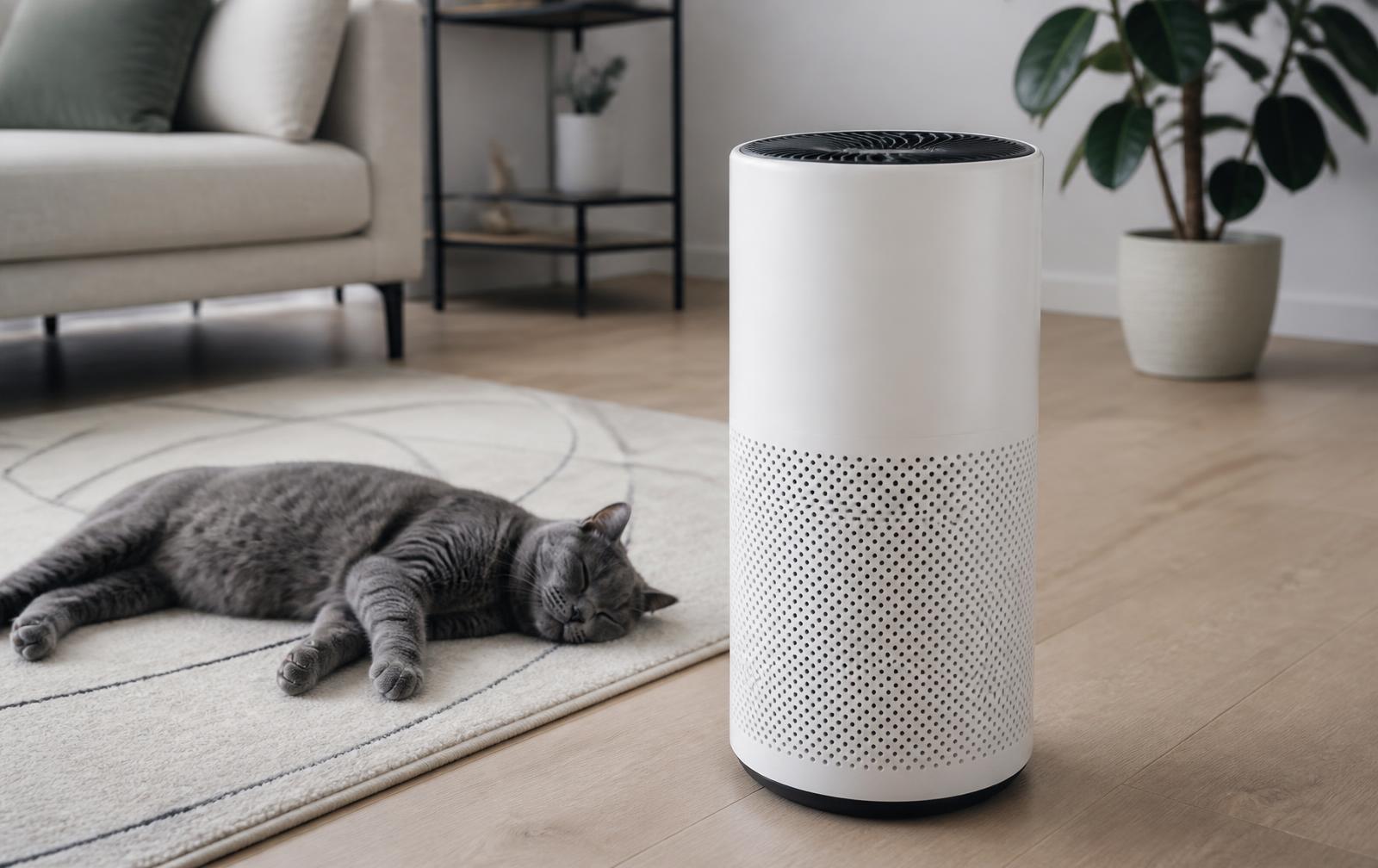
A home with cats should not smell like a home with cats. When it does, the cause is almost always identifiable and fixable, and the fix usually starts somewhere other than the shop shelf full of scented sprays.
How do you keep a cat home smelling fresh? In short: manage the litter box first — enough boxes, scooped twice daily, unscented clumping litter — then add ventilation, washable soft furnishings, an enzymatic cleaner for accidents, and a HEPA air purifier for dander and airborne particles.
Where Cat Odour Actually Comes From
Four sources account for nearly all of it.
- The litter box. Ammonia from urine breakdown is the dominant smell in most homes.
- Soft furnishings. Fabric absorbs and slowly re-releases odour, especially in beds, rugs and curtains.
- Dander and hair. Not strongly smelly themselves, but they carry odour and drive allergy symptoms.
- Food residue. Wet food left out, unwashed bowls and mats sour quickly, particularly in warm weather.
Masking products address none of these. They add a second smell on top of the first, and heavily fragranced air fresheners, plug-ins and scented candles can irritate a cat's far more sensitive respiratory system. Some essential oil diffusers are actively unsafe for cats, so treat them with caution.
Fix the Litter Box First
No purifier compensates for an under-managed litter box.
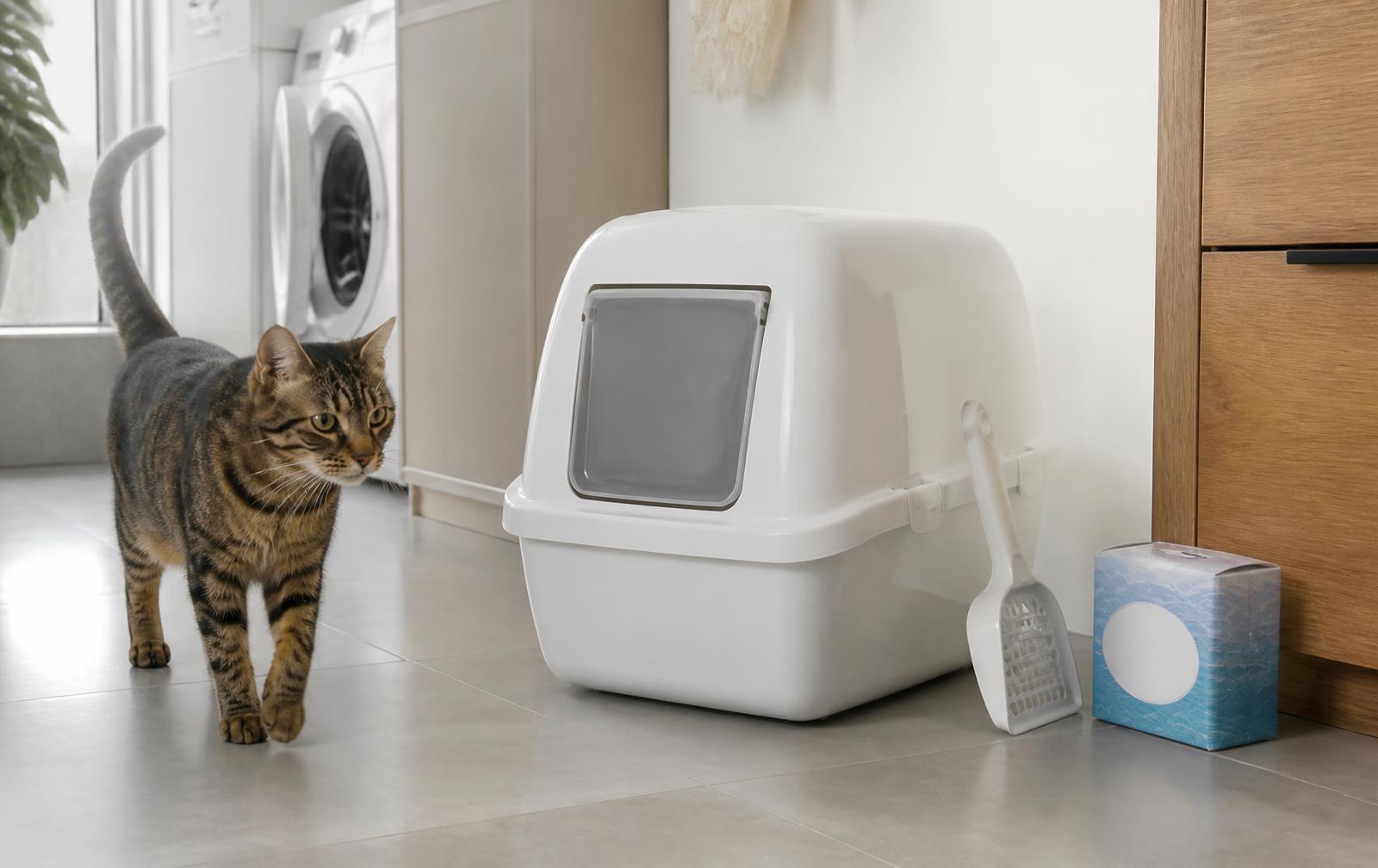
- Count. One box per cat plus one spare is the standard guidance, spread across different rooms.
- Scoop twice a day. This single habit does more for household odour than any product.
- Use unscented clumping litter. Most cats prefer it, and fragranced litter simply layers perfume over ammonia.
- Full change and wash. Empty and wash the box with mild unscented soap every two to four weeks; avoid ammonia-based or strongly citrus cleaners.
- Replace worn boxes. Scratched plastic absorbs odour permanently, so replace boxes every year or so.
- Mind the depth. Roughly five to seven centimetres of litter lets clumps form properly instead of sticking to the base.
If odour is unusually strong or a cat starts going outside the box, treat it as a possible medical sign — urinary tract disease, kidney disease and diabetes all change urine — and book a veterinary check rather than buying stronger cleaner.
Ventilation and Soft Furnishings
Air exchange is free and underrated. Ten minutes of cross-ventilation in the morning and evening moves more odour out of a room than most appliances. Extractor fans in rooms containing a litter box help significantly.
Textiles are the second front. Wash cat bedding every one to two weeks in unscented, non-biological detergent. Choose machine-washable throws for the sofa spots your cat favours, since a throw is far easier to launder than the sofa. Hard flooring holds odour far less than carpet; where carpet stays, periodic deep cleaning with an enzymatic solution makes a real difference.
Enzymatic Cleaners: The Only Thing That Works on Accidents
For urine, ordinary detergents are insufficient. Uric acid crystals remain in the fibres and reactivate with humidity, which is why a spot cleaned months ago can smell again on a damp day. Enzymatic cleaners break those compounds down rather than diluting them.
Blot — do not rub — as much liquid as possible, saturate the area generously so the cleaner reaches as deep as the urine did, then leave it to work for the full time on the label without rinsing early. Avoid ammonia-based products entirely; the smell resembles urine and can encourage repeat marking in the same spot.
Choosing an Air Purifier
A purifier will not fix a dirty litter box, but it does something the cleaning routine cannot: it removes airborne dander, hair fragments and fine particles that keep circulating.
| Feature | Why it matters |
|---|---|
| True HEPA filter | Captures fine dander and allergen particles; the core requirement |
| Activated carbon | The part that actually adsorbs odour molecules; look for a substantial amount |
| CADR rating | Should match or exceed your room size; undersized units disappoint |
| Pre-filter | Catches hair before it clogs the HEPA layer; washable is ideal |
| Noise level | Under about 30 dB on low, or it gets switched off |
| Filter cost | Ongoing replacement cost often exceeds the unit price over a few years |
A thin carbon mesh is largely decorative. For odour specifically, the weight of activated carbon is the number that matters most, and units marketed for pet homes usually carry more of it.
Avoid ozone generators and ionisers marketed as odour eliminators. Ozone is a respiratory irritant, and cats' smaller lungs and lower body mass make them more vulnerable than people. Choose mechanical filtration.
Place the unit in the room where you and your cats spend the most time, or near — not directly on top of — the litter area, keeping intakes and outlets clear of walls and furniture by at least 20 centimetres.
Maintenance Schedule That Keeps Homes Fresh
- Daily: scoop boxes twice, wash food bowls, remove uneaten wet food within an hour.
- Weekly: vacuum floors and upholstery, wash the purifier pre-filter, launder the most-used cat blanket.
- Monthly: deep clean litter boxes, wash all bedding, wipe skirting boards and hard surfaces near feeding areas.
- Every three to six months: replace carbon filters as directed.
- Every six to twelve months: replace HEPA filters and consider a professional carpet clean in heavy-traffic homes.
Multi-Cat Households and Small Flats
More cats mean more of everything: more boxes, more frequent scooping, more washable surfaces. In a small flat, prioritise a well-ventilated litter location away from the kitchen and sleeping areas, hard flooring where you can choose it, and a correctly sized purifier rather than a token desktop model.
Also consider diet. Very poor-quality food with heavy fillers can worsen stool odour, and cats who are not drinking enough produce more concentrated urine. Encouraging water intake with wet food, a fountain, or several water stations helps both the smell and the cat's urinary health.
Litter Choice and Its Effect on Smell
Litter type has a larger influence on household odour than most people expect. Clumping clay remains the most effective at isolating urine, because a solid clump can be lifted out whole rather than leaving saturated granules behind. Silica crystal litters absorb moisture well and control odour for longer between changes, though some cats dislike the texture underfoot. Plant-based litters made from wood, corn or paper are lighter and more sustainable, but they vary widely in clumping strength, and a litter that crumbles leaves residue in the box. Whatever the base material, unscented is almost always the better choice: fragrance does nothing to the underlying ammonia and is a common reason cats begin avoiding the box, which trades a mild smell for a much worse one.
Building a Routine That Actually Sticks
The homes that smell fresh are rarely the ones with the most equipment; they are the ones with habits small enough to survive a busy week. Keep the scoop, a lidded bin and a bag supply beside the litter box so scooping takes twenty seconds rather than a trip across the flat. Keep enzymatic cleaner where accidents happen, not in a cupboard downstairs. Set a recurring reminder for filter changes, since an exhausted carbon filter silently stops working and gives no visual cue. And re-evaluate the setup whenever something changes — a new cat, a house move, a switch of food or litter — because odour problems almost always trace back to a change in circumstances rather than a sudden failure of cleaning effort.
Frequently Asked Questions
Do air purifiers actually help with cat odour?
Yes, for airborne dander and odour particles, provided the unit combines a true HEPA filter with a substantial activated carbon stage. It will not compensate for an unclean litter box.
Are air purifiers safe for cats?
Mechanical HEPA and carbon purifiers are safe. Avoid ozone generators and ionisers, which produce respiratory irritants that affect cats more than people.
What is the best way to remove cat urine smell permanently?
Use an enzymatic cleaner generously, let it dwell for the full recommended time, and never use ammonia-based products, which can encourage repeat marking.
Does scented litter help with smell?
Rarely. It masks rather than removes odour, and many cats dislike it enough to avoid the box, which makes the problem worse.
How often should I scoop the litter box?
Twice a day. It is the single most effective odour-control habit in a cat home.
Ready to make the rest of your cat's routine as good as your air quality? Join the Cleos waitlist for a high-protein lickable treat made with real, named ingredients.
Keep Cleos close
Get more Cleos stories on Google
Add Cleos as a preferred source to make our cat care guides easier to find in Google.
Add to Preferred SourcesFound this useful? Share it
Treats worth reading the label for.
Cleos lickable treats are built on real, named ingredients — Real Chicken, Real Tuna, Tuna & Shrimp and Chicken & Veggies — with zero artificial fillers.
Join the Cleos waitlistKeep reading
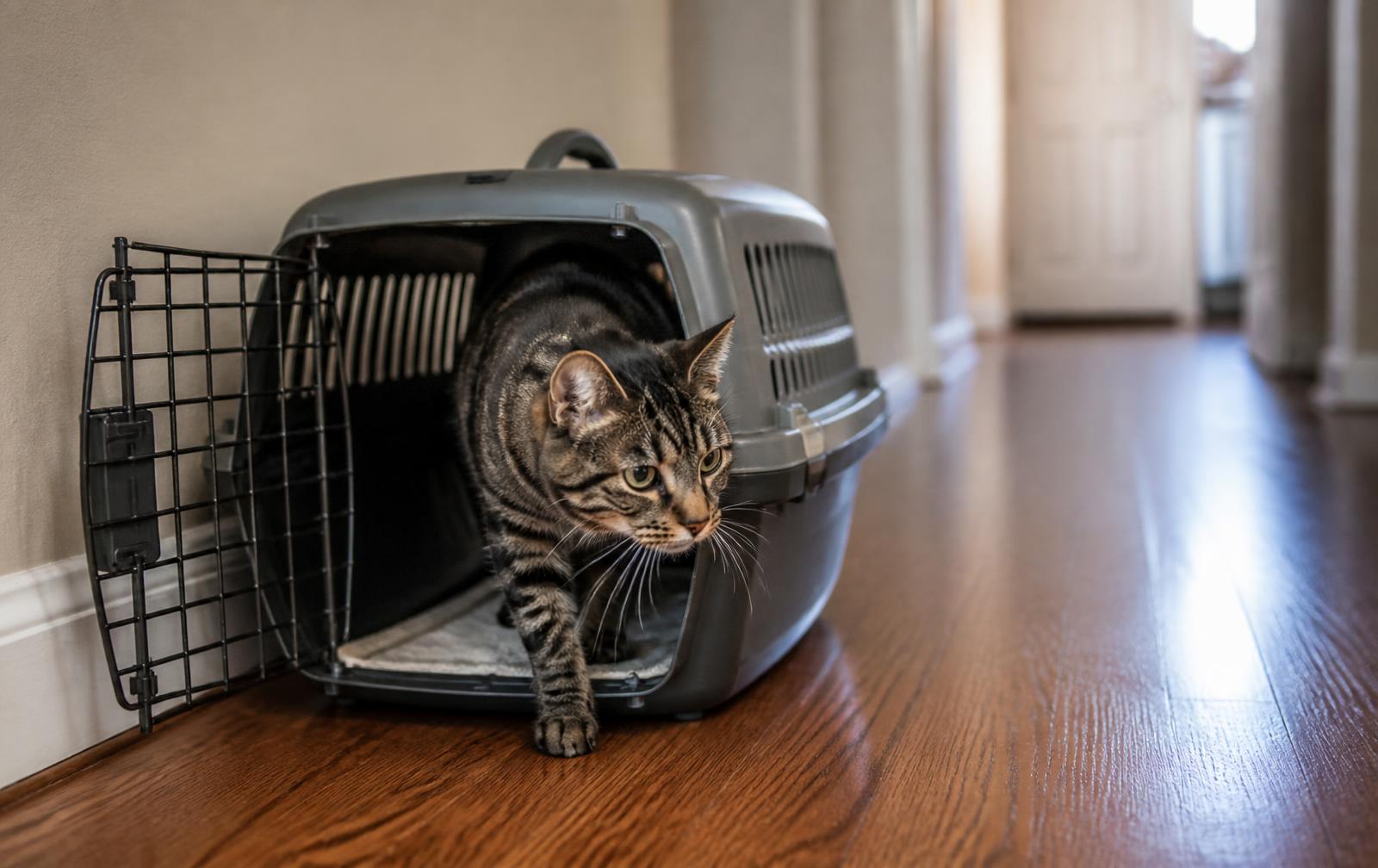
Travel Carriers and Cat Crates: Stress-Free Transport
Choose the right cat carrier or crate and learn practical tips for calmer vet visits, car trips, and moves with your feline companion.
Read more →
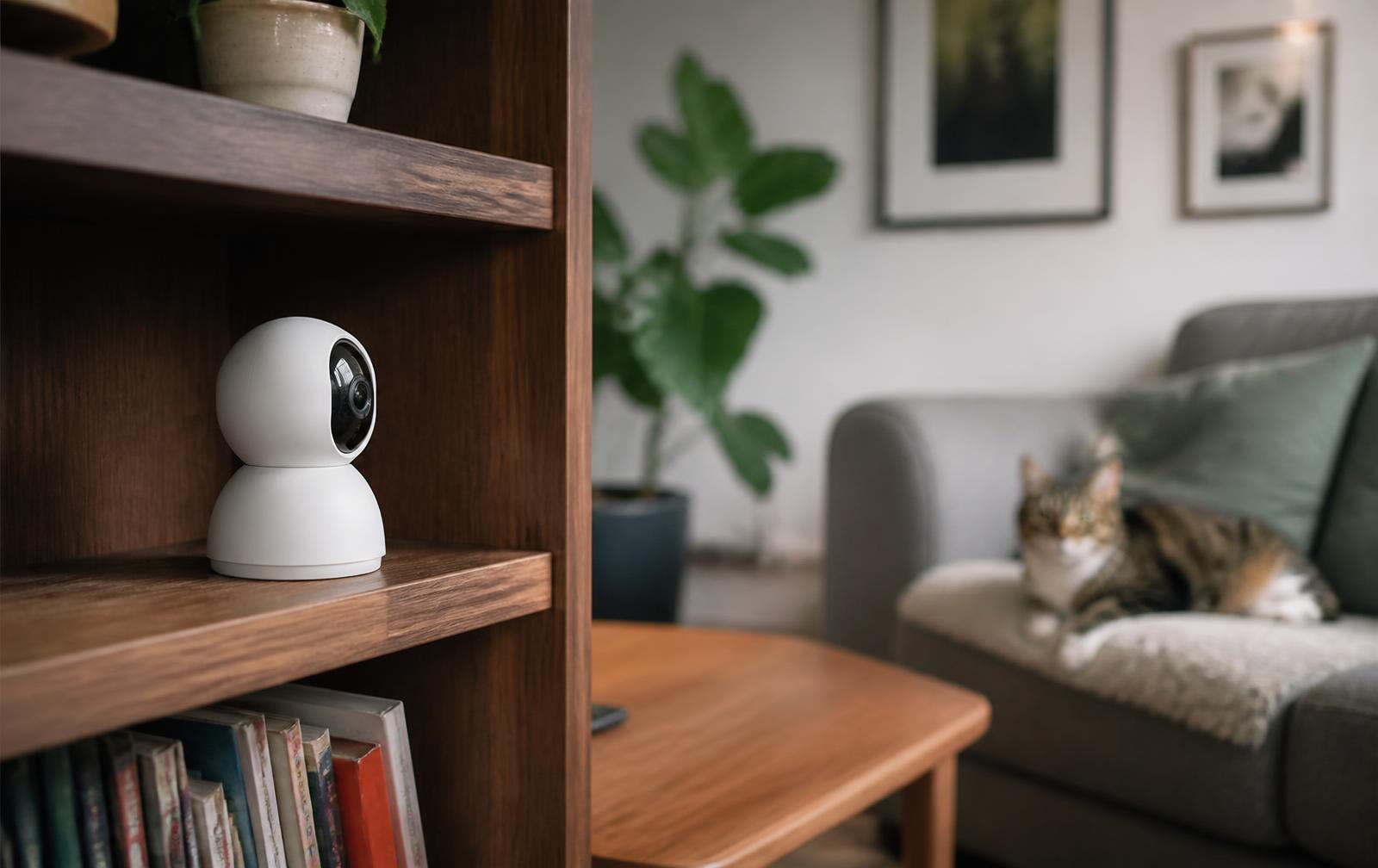
Pet Cameras and Monitoring: Tech for Checking on Your Cat
A practical guide to pet cameras and monitoring systems for cats, covering features, placement, and how to use them without over-worrying.
Read more →
Food and Water Bowls: Material, Design, and Health Considerations
Compare cat food bowls and water bowls by material and design, including stainless steel bowls, to protect whisker health and hygiene.
Read more →